
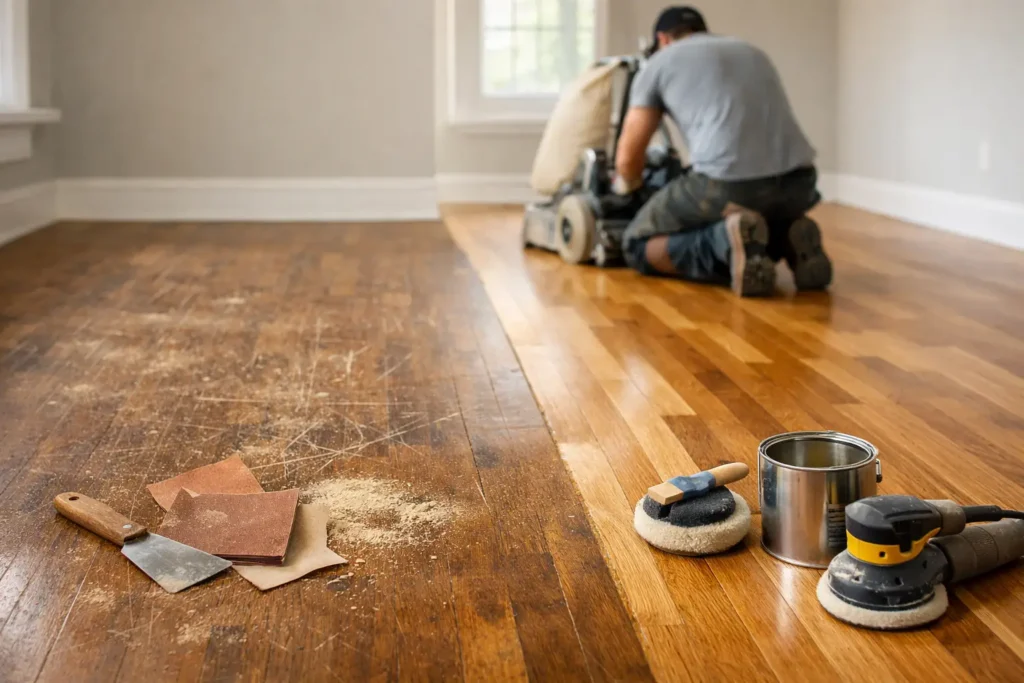
Those light scratch marks near the kitchen, the dull traffic paths in the hallway, the deeper scuffs by the entry door – they all add up fast. If you are searching for how to refinish scratched hardwood floors, the real question is not just how to make them look better. It is how to restore them cleanly, safely, and in a way that actually lasts.
For many Connecticut homeowners, scratched hardwood is not a sign that the floor is ruined. It is usually a sign that the finish has worn down in the busiest parts of the home. That is good news, because in many cases the floor can be professionally refinished and brought back to a rich, even appearance without replacing the boards. The key is choosing the right level of repair and using a process that protects your home while the work is being done.
How to refinish scratched hardwood floors starts with the scratches
Not every scratch means the same thing. Surface scratches that affect only the top finish are very different from deeper gouges that cut into the wood itself. A floor with light wear, faded sheen, and shallow marks may be a strong candidate for screening and recoating. A floor with widespread scratching, worn-through finish, pet stains, uneven color, or older patch repairs usually needs full sanding and refinishing.
This is where homeowners often lose time and money. Spot-fixing one area can sound appealing, but hardwood floors age unevenly. Color changes, sun fading, and wear patterns make isolated repairs hard to blend unless the damage is truly minor and confined. In many living rooms, hallways, and open-concept first floors, a full refinish gives the most consistent result.
A professional assessment matters because it answers three practical questions. Is the scratch only in the finish, is the wood still thick enough to sand, and will a partial repair actually match the surrounding boards? Those answers shape the project more than any stain color or sheen level.
When a hardwood floor needs recoating vs refinishing
Homeowners often use these terms interchangeably, but they are not the same service.
Recoating refreshes the protective layer on top of the floor. It works best when scratches are shallow and the finish is dull but still intact. It does not remove deep marks or level out more serious damage in the wood.
Refinishing goes further. It removes the worn surface, smooths out scratches, prepares the wood evenly, and applies new stain and finish if desired. This is the better solution when the floor has visible wear patterns, deeper scratching, old finish buildup, or discoloration. If your floor looks tired from several angles, not just in one small spot, refinishing is usually the right call.
For families with pets, children, or allergy concerns, the process matters as much as the result. That is why many Connecticut homeowners prefer a true dustless sanding system. With Dustless Hardwood Floors LLC, the sanding process leaves zero dust in the home, which means you get beautifully restored floors without coating your living space in fine particles. That clean approach is a major advantage for occupied homes, especially when indoor air quality matters.
The professional process for refinishing scratched hardwood floors
When homeowners ask how to refinish scratched hardwood floors, they are usually picturing sanding and stain. The actual process is more deliberate than that, because long-lasting results come from preparation and judgment, not just equipment.
1. Evaluate the floor condition
The first step is identifying species, board condition, prior coatings, and the depth of wear. Oak, maple, and pine all respond differently. Some floors have enough wear only in traffic lanes. Others have isolated board damage from moisture, furniture movement, or pet activity that should be repaired before refinishing begins.
2. Complete repairs before sanding
Loose boards, damaged sections, protruding fasteners, and deeper gouges should be addressed first. This is also the stage where minor gaps or board replacement may be considered. If repairs are skipped, they stand out more after the new finish goes down.
3. Sand the floor evenly with a dustless system
This is the heart of the project. Proper sanding removes the old finish, blends out scratch patterns, and creates a smooth, uniform surface ready for stain and finish. Precision matters here. Over-sanding can shorten the life of the floor, while uneven sanding leaves visible imperfections under the new coat.
A dustless sanding system changes the homeowner experience in a meaningful way. Instead of filling the home with airborne debris, the system captures it at the source and leaves zero dust in the home. That is especially valuable for busy households in Manchester, West Hartford, Glastonbury, and surrounding Connecticut communities where homeowners want the upgrade without the usual renovation headache.
4. Apply stain if you want a color change
Some homeowners love their floor’s natural tone and simply want it restored. Others want to modernize orange-toned oak, deepen the color, or create a more consistent appearance between old and newer boards. Staining is optional, but if you do change the color, test areas are important. The right stain has to work with your wood species, room lighting, and wall colors.
5. Apply the protective finish
This is what gives the floor its durability and final look. Matte, satin, semi-gloss, and gloss each change how scratches, dust, and everyday wear appear over time. Satin is a common choice because it gives a refined look without highlighting every mark. Higher gloss can feel dramatic, but it also shows more imperfections. The best finish is not always the shiniest one. It is the one that fits how you actually live.
What homeowners can do themselves and where pros make the difference
There is a reason this project tempts DIY-minded homeowners. On the surface, refinishing can look straightforward. Rent equipment, sand the floor, apply finish, and enjoy the transformation. In practice, the margin for error is small.
Uneven sanding marks, swirl patterns, edge differences, stain lap lines, and finish contamination can all show up after the job is done. Once that happens, fixing the mistake often means sanding again. DIY refinishing may make sense for a small, low-visibility space if the floor has minimal damage and the homeowner has the time and skill to manage the details. For main living areas, stair landings, connected rooms, or higher-value homes, professional refinishing is usually the smarter investment.
The clean-factor matters too. A true dustless sanding system is not just a convenience. It helps protect the rest of the home while work is underway and makes the project more comfortable for families, pets, and allergy-sensitive households.
How long refinished hardwood floors last
A properly refinished floor can last for years before it needs another major restoration, but lifespan depends on traffic, maintenance habits, and finish selection. A busy home with dogs, kids, and constant entry-door traffic will wear differently than a formal dining room.
You can extend the life of the new finish by using felt pads on furniture, keeping grit off the floor, trimming pet nails, and addressing spills quickly. Area rugs help in high-traffic zones, though they should be breathable and safe for wood floors. The goal is not to protect the floor from living. It is to reduce the type of friction that creates avoidable scratch patterns.
Signs it is time to schedule professional refinishing
If scratches are multiplying, the floor looks dull even after cleaning, or the finish is wearing away in pathways and near seating areas, the floor is asking for more than a polish. Blackened edges, water marks, rough spots, and uneven color are also strong signs that a simple maintenance product will not solve the problem.
Older hardwood often has more life left than homeowners think. What looks worn out is frequently a tired finish, not failed flooring. With proper dustless sanding and refinishing, the grain comes back, the color evens out, and the room feels updated again.
For Connecticut homeowners, that matters because hardwood is one of the most visible surfaces in the home. When the floor looks clean, smooth, and well cared for, the whole space feels more finished. If your scratched hardwood is taking attention for the wrong reasons, refinishing is often the point where the home starts looking pulled together again.
The best time to refinish is usually before scratches turn into deeper wear and before small problem areas spread across the room. A professionally restored floor does more than erase damage. It gives you back the warmth, value, and everyday comfort that made you want hardwood in the first place.
In conclusion, understanding how to refinish scratched hardwood floors is a key skill for all homeowners.
Reflecting on how to refinish scratched hardwood floors can inspire others to undertake similar projects.
Those who have mastered how to refinish scratched hardwood floors often enjoy a greater sense of accomplishment.
Ultimately, understanding how to refinish scratched hardwood floors can enhance your living environment.
It is essential to know how to refinish scratched hardwood floors to preserve the beauty of your home.
Every homeowner should be equipped with knowledge on how to refinish scratched hardwood floors for effective maintenance.
Determining how to refinish scratched hardwood floors can be a rewarding endeavor for maintaining your home.
As you learn how to refinish scratched hardwood floors, remember that patience is key to achieving the best results.
Understanding how to refinish scratched hardwood floors will provide more satisfaction in your home improvement projects.
Every homeowner should learn how to refinish scratched hardwood floors to maintain their investment in the long term.
Getting expert tips on how to refinish scratched hardwood floors can make a noticeable difference.
The best insights on how to refinish scratched hardwood floors can often come from professional advice.
Perhaps you are considering how to refinish scratched hardwood floors as a DIY project, which could be rewarding.
Knowing how to refinish scratched hardwood floors properly can be a game changer for your home’s interior.
Homeowners often ask how to refinish scratched hardwood floors, and the answer lies in understanding the types of damage involved.
For many homeowners, discovering how to refinish scratched hardwood floors is an essential skill to keep their floors looking new. Realizing how to refinish scratched hardwood floors can elevate your home’s aesthetic.
Learning how to refinish scratched hardwood floors effectively can help in maintaining your home’s value. Knowing how to refinish scratched hardwood floors will save you both time and money in the long run.
If you are wondering how to refinish scratched hardwood floors, there are several techniques to consider for best results. Understanding how to refinish scratched hardwood floors can significantly enhance the quality of your living space.