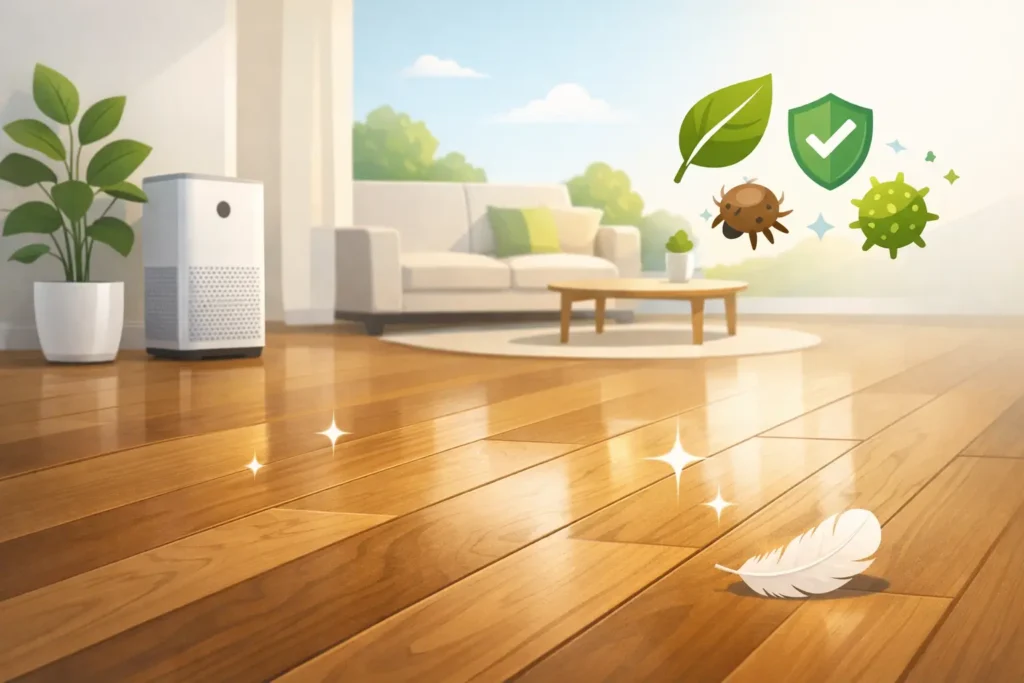
A beautifully refinished floor should make your home feel cleaner, not add another concern for sensitive noses, children, pets, or anyone managing allergies. The best hardwood finishes for allergy homes create a smooth, durable surface that is easy to keep clean while limiting strong odors during the refinishing process. Just as important, the preparation work must protect your indoor air. At Dustless Hardwood Floors LLC, our proprietary dustless sanding system leaves zero dust in the home, giving Connecticut families a clean path to restored hardwood.
What Makes a Hardwood Finish Better for Allergies?
No floor finish can cure allergies. Pollen, pet dander, dust mites, and outdoor contaminants can still enter the home. What the right finish can do is make the floor less likely to hold onto those particles and much easier to clean thoroughly.
The best choice usually has three qualities: low odor and lower VOC content, a fully sealed surface, and strong resistance to wear. A finish that wears through quickly or leaves an uneven surface creates more places for fine debris to settle. A durable, properly applied finish helps your regular cleaning routine work better.
The sanding process matters just as much as the coating. Traditional floor preparation can leave fine particles behind in living spaces and HVAC pathways. Our state-of-the-art dustless sanding equipment is designed to leave zero dust in your home, so allergy-sensitive households can restore their floors without bringing dust into the process. It is a cleaner, more comfortable option for families throughout Hartford County and surrounding Connecticut communities.
The Best Hardwood Finishes for Allergy Homes
Waterborne polyurethane: the leading choice for most families
For most allergy-conscious homeowners, a premium waterborne polyurethane is the strongest all-around recommendation. It forms a clear, protective coating over the wood, offers excellent durability, and typically has a much lower odor than traditional oil-based products. It also dries faster, which can make the refinishing schedule easier to manage.
Waterborne finishes preserve a lighter, more natural wood appearance. That is especially appealing in homes with oak, maple, ash, or lighter stain colors. They are available in matte, satin, semi-gloss, and gloss sheens, although satin and matte are often the practical favorites because they soften the appearance of small scratches and everyday footprints.
Lower odor does not mean no odor at all. Any finish needs appropriate curing time, ventilation, and professional application. However, when indoor comfort is a priority, waterborne polyurethane is generally the best starting point for a conversation about refinishing.
Low-VOC waterborne finishes: best for odor-sensitive households
If someone in the household is particularly sensitive to odors, ask about low-VOC waterborne finish systems. VOCs, or volatile organic compounds, are chemicals that can be released while some coatings dry and cure. A lower-VOC option can reduce that exposure compared with more traditional finish choices.
This category is not a single product or a guarantee that every person will react the same way. The specific finish, the number of coats, humidity levels, ventilation, and cure time all affect the experience in the home. A professional contractor should explain the product plan clearly rather than treating “low-VOC” as a vague label.
For homeowners with asthma, chemical sensitivities, very young children, or pets, this is where professional guidance has real value. The goal is not simply a beautiful floor. It is a finish schedule that respects your household’s comfort while delivering lasting protection.
Oil-based polyurethane: durable, but not usually the first allergy-focused pick
Oil-based polyurethane remains a proven, durable finish with a warmer amber tone that many homeowners love on traditional hardwood. It can be an excellent visual fit for certain older Connecticut homes, particularly when a richer, deeper color is the desired result.
The trade-off is odor and curing profile. Oil-based coatings commonly have a stronger smell and take longer to dry than waterborne systems. For that reason, they are not usually the first recommendation when a household is highly sensitive to odors or focused on lower VOC options.
That does not make oil-based polyurethane a poor finish. It simply means the right decision depends on what matters most: a particular color effect, long-term wear expectations, timing, and the sensitivity level of the people and pets in the home.
Hardwax oil: natural appearance with a maintenance trade-off
Hardwax oil finishes are valued for their natural, low-build appearance. Instead of creating a thicker film on top of the wood, they soak into the grain and leave a warm, tactile look. Some homeowners appreciate the ability to spot-repair a small damaged area without refinishing an entire room.
For allergy homes, the deciding factor is maintenance. A hardwax oil floor must be maintained with the correct products and refreshed as needed to keep its protective qualities. If it is neglected, moisture and everyday grime can become more difficult to manage. It can be a good fit for homeowners committed to the care routine, but a professionally applied waterborne polyurethane is usually the easier choice for busy households seeking a reliably sealed, low-maintenance surface.
A Smooth, Fully Sealed Floor Is the Real Advantage
The finish type matters, but application quality matters just as much. Even the best product cannot perform as intended if the wood is poorly prepared, the coating is applied unevenly, or repairs are overlooked before refinishing begins.
A professional refinishing plan should address scratches, worn traffic lanes, small gaps, surface stains, and areas of prior water damage before the final coating is applied. The result is a more even surface that is easier to sweep, vacuum, and damp-clean. That is a meaningful benefit for homes where pet dander and fine outdoor debris are regular concerns.
Our licensed and insured Connecticut team begins with the condition of your actual floor, not a one-size-fits-all finish recommendation. We can help you weigh sheen, color, durability, odor considerations, and maintenance needs before work begins. You receive clear expectations, transparent pricing, and no hidden fees.
Finish Sheen Matters More Than Many Homeowners Expect
A finish sheen will not change the allergen level in a room, but it can change how easy the floor feels to live with. Glossy floors reflect more light and can make dust, paw prints, and minor scratches more visible. For a household that cleans frequently because of allergies, that can feel like a constant battle even when the floor is genuinely clean.
Matte and satin finishes are often the more forgiving choices. They provide attractive protection without spotlighting every small mark between cleaning days. Satin offers a gentle, classic glow, while matte has a softer, more contemporary appearance. Both work well with quality waterborne polyurethane systems.
Keep the Allergy-Friendly Benefits After Refinishing
Once your floor has been professionally finished, simple habits help preserve its clean, sealed surface. Use a vacuum with a hard-floor setting or a soft microfiber dust mop regularly. Place durable mats at entryways to catch pollen and grit before they reach the wood, and use felt pads beneath furniture to prevent scratches that can compromise the finish over time.
Avoid soaking hardwood floors or using harsh cleaners that leave residue. A lightly damp microfiber mop and a cleaner approved for your specific finish are usually the better approach. If you have pets, wipe up water bowl splashes promptly and keep nails trimmed to reduce surface wear.
Most importantly, do not wait until the finish has worn away completely before addressing dullness or damage. Timely professional maintenance can extend the life of the protective layer and help you avoid more extensive restoration later.
Choose a Clean Refinishing Process, Not Just a Finish
For allergy-sensitive homes, the finish is only half the decision. You also need a contractor who can restore the wood without filling the home with fine sanding particles. Dustless Hardwood Floors LLC uses a proprietary dustless sanding system that leaves zero dust in the home, followed by careful refinishing tailored to your floor and household needs.
Whether your floors in West Hartford, Manchester, Glastonbury, Avon, or another Connecticut community are scratched, faded, dull, or damaged, a professional assessment can identify the finish system that fits your home. Choose the coating that supports clean maintenance, then choose the process that protects the clean indoor environment you have worked hard to create.