
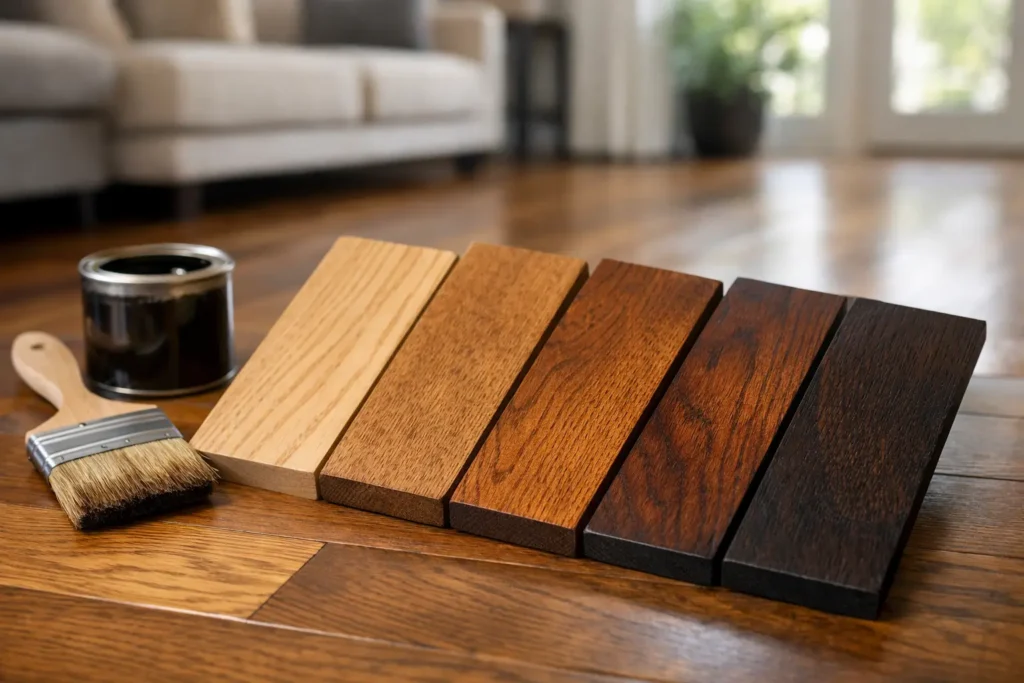
The stain color that looks perfect on a tiny sample can feel completely different once it covers an entire room. That is why a hardwood floor stain color guide matters. The right choice can make a Connecticut home feel brighter, warmer, more current, or more classic. The wrong one can fight the natural light, highlight wear, or leave you wishing you had gone a shade lighter.
For most homeowners, stain selection is not really about what is trendy. It is about how the floor will live in your home every day. Families with kids, pets, and busy schedules usually need a color that looks beautiful without feeling high-maintenance. Property owners getting a home market-ready often want a stain that appeals to the widest range of buyers. In both cases, the goal is the same – a clean, updated look with professional results and no hassle. That is also why many Connecticut homeowners choose dustless hardwood refinishing. With a true dustless sanding system that leaves zero dust in the home, the process stays cleaner, more comfortable, and better suited for family living.
How to use a hardwood floor stain color guide
A good stain guide should help you narrow choices based on your house, not just on a photo. Wood species, existing floor age, room size, sunlight, wall color, and finish sheen all affect the final result. Oak takes stain differently than maple. Older boards often have more variation than newly installed hardwood. A north-facing room may make a medium brown look cooler, while strong afternoon light can warm up the same tone.
That is why stain should always be judged on the actual floor, not only from a chart. Large sample areas show the undertones and grain movement you will really see once the project is complete. What reads as a soft natural brown in one home may look much darker or redder in another.
The main stain color families
Most hardwood stain colors fall into a few broad families, and each creates a different feeling.
Light and natural stains
Light stains are popular because they make rooms feel open, calm, and current. They work especially well in homes that want a clean, airy look without feeling stark. They also tend to show less fine dust, which appeals to busy households.
The trade-off is that very light floors can reveal scratches in high-traffic paths depending on the wood species and finish. They also put more attention on the floor’s natural character, including knots, mineral streaks, and variation. For many homeowners, that is part of the appeal.
Mid-tone stains
Mid-tone stains are the most flexible option for many Connecticut homes. Think warm browns, neutral browns, and soft medium tones that add richness without making a room feel heavy. These shades often pair well with both traditional and updated interiors, which makes them a strong choice for homeowners who want longevity rather than a short-lived trend.
Mid-tones are also practical. They usually hide everyday wear better than very dark stains, and they are forgiving in rooms with changing natural light throughout the day.
Dark stains
Dark stains create contrast, drama, and a more formal look. In the right space, they can be striking. They often work best in larger rooms or homes with strong natural light, where the color can feel grounded rather than closing in the space.
The trade-off is maintenance. Dark floors can show pet hair, footprints, and surface debris more easily. They can also make smaller rooms feel tighter if the walls and furnishings are dark as well. Some homeowners love the bold finish enough to accept that. Others prefer a softer medium tone that gives depth with less upkeep.
Gray and cool-toned stains
Gray stains had a strong design moment, but they are not right for every floor or every home. On some wood species, gray can pull blue, green, or washed-out depending on the underlying grain and the room’s light. In certain interiors, especially modern homes with cooler finishes, a gray or greige stain can still look excellent.
For many Connecticut homes, though, a true neutral brown or warm natural tone ages more gracefully. If you like the cleaner look of gray, a muted brown with subtle cool undertones often feels more timeless.
What works best in Connecticut homes
A lot of homes in Manchester, West Hartford, Glastonbury, and surrounding areas have a mix of classic architecture and practical family use. That usually means stain colors that feel warm, balanced, and adaptable perform best over time. Natural oak tones, medium browns, and soft modern neutrals often fit the widest range of interiors, from older colonials to updated suburban homes.
Seasonal light matters here too. Connecticut homes can look bright and sunny in one season and more muted in another. A stain that is too dark may feel heavy in winter. A stain that is too pale may not have enough warmth in rooms with cooler light. This is where professional sampling and guidance make a real difference.
Match the stain to your lifestyle, not just your paint color
Homeowners often start with cabinets, wall paint, or furniture. Those matter, but daily life matters just as much. If you have dogs running through the house, children playing on the floor, or a schedule that does not allow constant upkeep, practicality should be part of the decision.
Very dark stains are beautiful but usually less forgiving. Extremely light stains can be ideal in active households, but only if you are comfortable seeing more of the wood’s natural variation. Mid-tones often land in the sweet spot. They add character, work with a wide range of decor, and generally hold up visually between cleanings.
If you are refinishing before selling, broad appeal usually beats a highly specific designer look. Neutral natural tones and medium browns tend to make the safest long-term choice because they help buyers picture their own style in the home.
Finish sheen changes the look too
Stain color gets most of the attention, but sheen matters almost as much. A satin finish is a favorite for many homeowners because it gives a soft, polished look without drawing too much attention to every footprint or minor surface mark. Matte finishes feel modern and understated. Glossier finishes reflect more light, but they can emphasize imperfections more easily.
The same stain can look more casual in matte and more formal in semi-gloss. If you are choosing between two colors, the final sheen may be the detail that tips the decision.
Why sampling and dustless refinishing matter
Choosing a stain is easier when you can see it on your actual floor under your actual lighting. That takes guesswork out of the process and helps avoid expensive regret. It also lets you compare undertones side by side rather than relying on memory.
Just as important is how the floor is prepared. A clean, professional sanding and refinishing process is what allows the stain to absorb evenly and look its best. Dustless Hardwood Floors LLC uses a proprietary dustless sanding system that leaves zero dust in the home, which means homeowners can update worn, dull floors without filling the house with airborne dust. For families with children, pets, or allergy concerns, that cleaner approach is not a luxury. It is the standard they want.
A dustless process also keeps the project feeling more manageable from start to finish. When you are making a major design choice like stain color, peace of mind matters. You want to focus on the final transformation, not on cleanup.
When to go lighter, darker, or stay close to natural
Go lighter if your rooms feel closed in, your style leans fresh and casual, or you want a floor color that tends to look more relaxed over time. Go darker if you want contrast, your home has enough natural light, and you are comfortable with a bit more visible day-to-day tracking. Stay close to natural if you want the safest long-term choice, especially in a home with mixed wood tones, changing decor, or resale goals.
The best stain color is usually the one that fits the home honestly. It should work with the age of the house, the amount of sunlight, and the way the space is actually used.
A beautiful floor should not feel like a gamble. With the right stain guidance, proper sample testing, and true dustless hardwood refinishing, you can choose a color that looks right on day one and still feels right years later.