
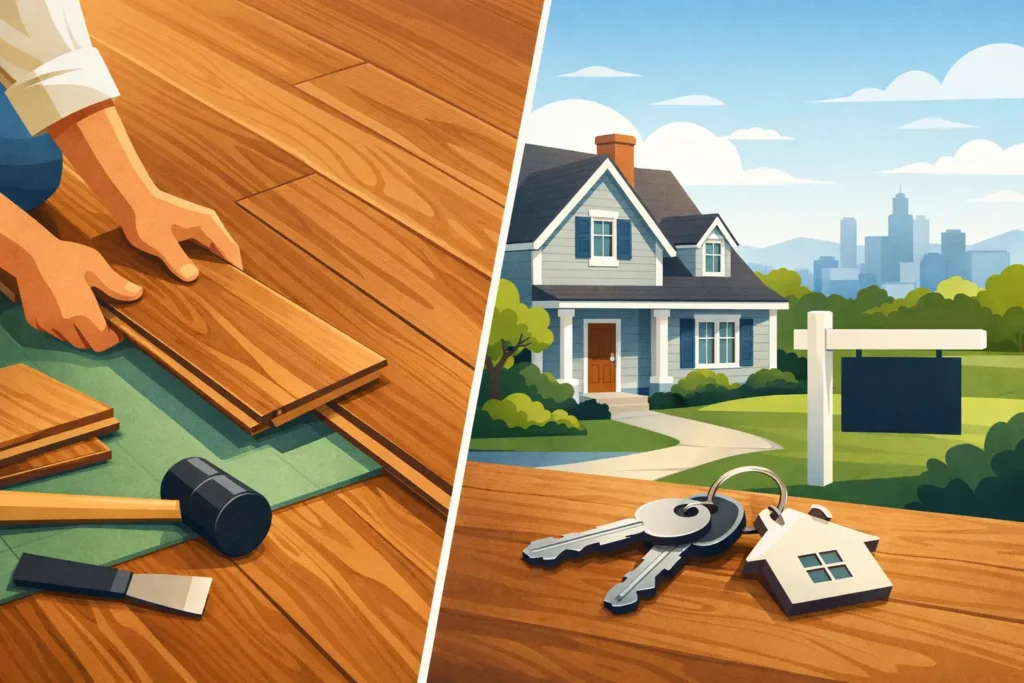
A buyer can overlook an outdated light fixture. They are far less likely to overlook dull, scratched hardwood underfoot in the first room they enter. The best hardwood upgrades before selling are the ones that make the home feel cared for, brighter, and ready to move into without asking the next owner to take on a project.
For Connecticut sellers, hardwood is often already one of the home’s strongest assets. The goal is not automatically to replace it. It is to assess what buyers will see, correct the visible issues, and choose improvements that support a stronger first impression. Professional dustless sanding and refinishing is frequently the highest-impact place to start because it can restore the floor’s original character with zero dust left in the home.
Start With the Floor Buyers Will Notice First
Entryways, living rooms, dining rooms, hallways, and primary bedrooms carry the most visual weight during a showing. These are also the spaces where traffic patterns, pet scratches, faded areas near windows, and old finish wear tend to show most clearly.
Before deciding on a larger renovation, look at the floors in daylight. If the finish appears gray, uneven, dull, or scratched, buyers may read the condition as deferred maintenance even when the hardwood underneath is structurally sound. A well-restored floor changes that impression quickly. It makes walls look cleaner, furniture look more intentional, and rooms feel more open.
This is why flooring improvements often outperform cosmetic add-ons before listing. Buyers may not know the exact species of wood or finish system, but they immediately recognize a floor that looks clean, even, and maintained.
The Best Hardwood Upgrades Before Selling
Refinish worn hardwood instead of covering it
When boards are solid and have enough wear layer remaining, refinishing is often a smarter selling decision than installing new flooring over an existing hardwood floor. Professional sanding removes surface wear, levels minor imperfections, and prepares the wood for a fresh protective finish.
The benefit is visual and practical. Freshly refinished hardwood has a consistent sheen and color, while the protective finish helps the floor look resilient during photography, open houses, and final walk-throughs. It also gives buyers one less immediate expense to factor into their offer.
At Dustless Hardwood Floors LLC, our proprietary dustless sanding system leaves zero dust in your home. That matters when you are preparing a property on a deadline, living in the home while it is being readied for sale, or managing a household with children, pets, or allergy-sensitive family members. You get restored hardwood without filling the home with sanding debris.
Repair isolated damage before refinishing
A few dark water marks, loose boards, gaps, gouges, or damaged sections can pull attention away from an otherwise attractive room. Strategic hardwood repair is especially valuable because buyers tend to focus on imperfections at transitions, near exterior doors, under old rugs, and in high-traffic paths.
Repairs should blend with the surrounding floor as closely as possible. Depending on the wood species, board age, and damage, that may involve replacing individual boards, securing loose areas, filling small gaps, or addressing localized water damage before the floor is refinished.
There is a trade-off here. A small repair that disappears into a full refinishing project can be worthwhile. But widespread moisture problems, structural movement, or extensive board failure may call for a broader repair plan or replacement in the affected room. An experienced hardwood professional can help you distinguish a cosmetic concern from a condition that should be addressed before listing.
Choose a buyer-friendly stain color
A new stain color can make an older floor feel current, but the safest choice is not always the darkest or trendiest one. For most homes, a natural tone, medium brown, or balanced warm-neutral color allows buyers to picture their own furniture and style in the space.
Very dark stains can look dramatic, particularly in formal dining rooms or historic Connecticut homes, but they can also make dust, pet hair, and everyday marks more visible. Very light finishes can create an airy, modern look, though they may not fit every home’s trim, cabinetry, or architectural style. The best color depends on natural light, wall color, wood species, and the overall price point of the property.
If you are selling soon, avoid choosing a stain simply because it is popular online. A professional color consultation and sample areas on your actual floor provide a much more reliable decision. The goal is a cohesive result that photographs well and feels appropriate for the home.
Update the sheen for a cleaner look
Sheen is easy to overlook, yet it has a noticeable effect on how a floor presents. High-gloss finishes reflect more light, but they can also emphasize scratches and unevenness. Satin and matte finishes tend to offer a refined, current appearance while being more forgiving in active family homes.
For many sellers, satin is the practical middle ground. It gives hardwood a finished, polished look without excessive shine. Matte can work beautifully in contemporary homes and spaces with abundant daylight. The right finish should complement the home rather than compete with it.
A quality, low-odor finishing approach also helps keep preparation comfortable for the household. Your contractor should explain the expected timeline, finish options, and care requirements clearly, with transparent pricing and no hidden fees.
When New Hardwood Installation Makes Sense
Refinishing is often the first choice when original hardwood is present, but new installation can be the better upgrade in certain situations. A room with severely damaged flooring, an awkward patchwork of materials, or a dated carpeted area beside beautiful hardwood may benefit from a coordinated installation.
The most valuable installation projects usually improve continuity. For example, extending compatible hardwood into a dining room, bedroom, or connecting hallway can create a more unified layout than leaving several flooring types on the same level. That visual consistency can make a home feel larger and more intentional.
However, sellers should be selective. Installing hardwood throughout every room shortly before listing is not always necessary to earn a strong result. If the existing flooring is in good condition and the home is priced appropriately, focus first on areas where the material change is most obvious or where the current floor is clearly hurting the presentation.
Timing Your Floor Project Before Listing
Hardwood work should happen before photography, staging, deep cleaning, and moving furniture into its final showing arrangement. This sequence protects the finished result and prevents a rushed decision about stain, sheen, or repairs.
If you are working with a real estate agent, coordinate early. They can identify which rooms are most likely to influence buyer perception, while a licensed flooring contractor can recommend the work that delivers the greatest visible improvement. In competitive markets across Hartford County, West Hartford, Glastonbury, Manchester, Avon, and surrounding Connecticut communities, a home that looks move-in ready has a meaningful advantage.
Do not wait until the week before photos if the floors have major wear or damage. A professional evaluation gives you time to choose the right scope instead of settling for a temporary cosmetic fix that may be apparent to buyers.
What Sellers Should Avoid
Avoid hiding worn hardwood beneath a new area rug and assuming buyers will not look. Many buyers lift rugs, inspect corners, and notice uneven color around furniture. Also avoid spot-applying finish to isolated scratches without professional guidance. Those areas can dry differently, catch the light, and become more noticeable than the original flaw.
Be cautious with low-cost shortcut products that promise to restore a floor in a single step. Some leave residue that interferes with future refinishing or creates an unnatural shine. If your floor needs help before sale, it is generally better to improve it correctly once than create a complication for the next owner.
Make the Upgrade Feel Easy for Buyers
The strongest pre-sale flooring projects do more than remove scratches. They help buyers enter a home and feel that the major surfaces have already been handled. Restored hardwood communicates care, permanence, and value in a way few cosmetic upgrades can match.
For homeowners preparing to sell, a licensed and insured Connecticut hardwood professional can evaluate whether refinishing, repairs, staining, or selective installation will best support the listing. Choose work that makes the home look naturally finished, not overdone, and give buyers a floor they will be happy to see on day one.