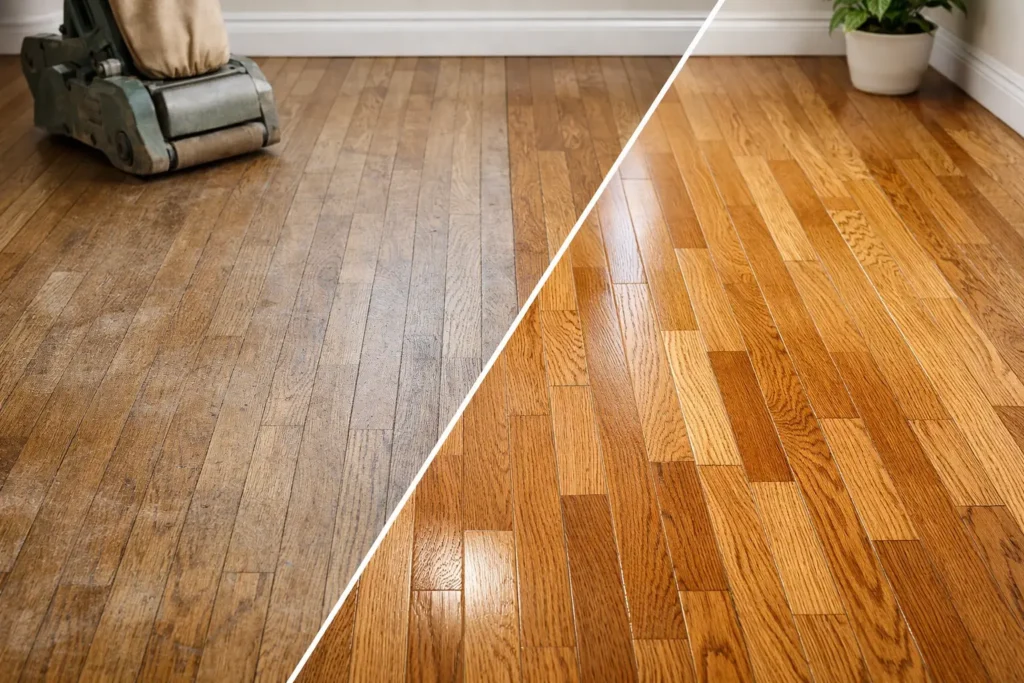
A worn oak floor can make an entire room feel older than it is. The most striking part of before and after oak refinishing is not just the shine at the end – it is how much warmth, grain, and character come back once years of scratches, fading, and dull finish are removed with a true dustless sanding system that leaves zero dust in the home.
For many Connecticut homeowners, oak floors are already one of the best features in the house. They just stop looking like it over time. High-traffic hallways turn flat, dining areas show chair marks, pet nails leave fine scratching, and sunlight can bleach one section while rugs protect another. The floor is still solid, but the finish no longer reflects the quality underneath.
What before and after oak refinishing really shows
When people picture refinishing, they often focus on gloss. That is only part of the transformation. Oak has a naturally expressive grain pattern, and once the old worn finish is removed, the wood starts reading as wood again instead of as a tired surface coating.
In the before stage, red oak and white oak often look similar to the untrained eye because wear mutes their differences. After refinishing, those distinctions become clearer. Red oak tends to show stronger grain movement and warmer undertones. White oak usually looks a bit cleaner, more even, and slightly more contemporary, especially in lighter stain colors or natural finishes.
The biggest visual changes usually include better color consistency, less visible scratching, cleaner board definition, and a stronger sense of light in the room. A floor that looked gray, flat, or patchy can suddenly make trim, wall color, and furniture look more current without changing anything else.
Why oak responds so well to refinishing
Oak is one of the most forgiving and rewarding hardwoods to restore. It is durable, common in Connecticut homes, and well suited to sanding and staining when handled correctly. That matters because not every floor species gives the same range of options.
Oak accepts stain more predictably than many other woods, which gives homeowners flexibility. If you want to stay close to the original look, that is possible. If you want to shift from an orange-toned older finish to something deeper, lighter, or more neutral, oak usually gives you room to do that.
That said, not every oak floor should be stained dark, and not every home benefits from a pale modern look. The right choice depends on board width, natural light, wall color, and how much daily traffic the room gets. A dramatic before-and-after result should still feel right for the house.
Before and after oak refinishing by problem type
Not all tired oak floors start from the same place. Some are structurally sound and just look dull. Others have more visible wear that needs a more careful approach.
Scratches and worn finish
This is the most common case. The floor looks lifeless, especially in walk paths, but the boards themselves are still in good shape. After refinishing, these floors usually show the most dramatic improvement because the underlying wood has not been compromised.
Water spots and black staining
Water damage is more complicated. Light surface marks can often be improved significantly. Dark black stains that have penetrated deeply into the wood may lighten but not always disappear completely without board replacement. A trustworthy contractor should be direct about that. Good refinishing can make the damage far less noticeable, but expectations need to match the condition of the floor.
Orange or yellow aging
Many older oak floors carry a finish color that no longer works with the home. The floor itself may be healthy, but the tone makes the room feel dated. This is where refinishing can create one of the clearest before-and-after changes. A more balanced stain or natural finish can make the entire space feel cleaner and more current.
Gaps, dents, and older repairs
Refinishing improves appearance, but it is not magic. Seasonal gaps may still move slightly in Connecticut homes because wood responds to humidity. Deep dents may soften visually but not vanish if the wood fibers are heavily compressed. Older patchwork repairs can often be blended better, though some will remain visible depending on age and wood match.
The clean difference matters more than most homeowners expect
Homeowners usually start out focused on how the floor will look when it is done. Fair enough. But the process matters too, especially if you have kids, pets, allergies, or a full household schedule that does not leave room for chaos.
That is why a dustless sanding process is such a meaningful part of before and after oak refinishing. The transformation is not only in the floor. It is in how the work gets completed without coating the home in airborne dust. A proprietary dustless sanding system that leaves zero dust in the home helps protect indoor comfort while keeping the project cleaner, safer, and easier on the family.
For allergy-sensitive households, that difference is not a luxury. It is a practical reason to choose refinishing now instead of putting it off. For busy homeowners, it also means the project feels more manageable from start to finish.
Choosing the right finish for your oak floors
The after photo gets the attention, but finish selection is where much of the result is decided. Oak can look traditional, modern, rustic, or upscale depending on the sheen and color you choose.
A natural finish highlights the wood itself and tends to age well visually. It is a strong fit for homeowners who want brightness and flexibility with future paint or furniture updates. Medium brown stains feel classic and forgiving, especially in family homes where daily traffic is part of life. Dark stains can look rich and elegant, but they may show dust, pet hair, and surface marks more quickly than mid-tone options.
Sheen matters too. High gloss reflects more light and creates a polished look, but it also reveals imperfections more easily. Satin is often the most balanced choice because it brings out the beauty of oak without looking overly shiny. Matte can work well in updated homes, especially with white oak or lighter stain choices.
Before and after oak refinishing in older Connecticut homes
In older homes around West Hartford, Manchester, Glastonbury, and surrounding areas, oak flooring often has more value than homeowners realize. It may be hidden under dull finish, old stain color, or years of wear, but the material itself is often worth saving.
Refinishing can preserve the character that makes an older home feel established while still improving the space enough to support modern updates. That balance matters. Full replacement is not always necessary, and in many cases refinishing keeps the original look of the home intact while delivering a cleaner, stronger finish for daily use.
Older floors do require judgment. Some have thinner wear layers from previous sanding. Some have old repairs that need blending. Some have transitions between rooms that should be handled carefully so the result looks consistent. Experience matters here, especially when the goal is not just to refinish the floor, but to make the finished home look better as a whole.
What homeowners should expect from the transformation
The best before-and-after results look dramatic without looking artificial. The floor should appear renewed, not overworked. Grain should read clearly. Color should feel intentional. The room should feel cleaner, brighter, and more finished.
Homeowners should also expect honest guidance. Sometimes a full color change is smart. Sometimes keeping the floor closer to its natural tone is the better long-term decision. Sometimes a few damaged boards should be repaired before refinishing so the final result looks more consistent. Good advice is part of the service.
For homeowners who want beautiful results without unnecessary stress, Dustless Hardwood Floors LLC brings that standard to oak refinishing projects across Connecticut. The value is not only in restored wood, but in getting there with zero dust in the home, clear communication, licensed and insured service, and no hidden fees.
If your oak floors still have solid wood beneath the wear, the before picture is not the end of the story. Often, it is the clearest sign that the floor is worth bringing back properly.