
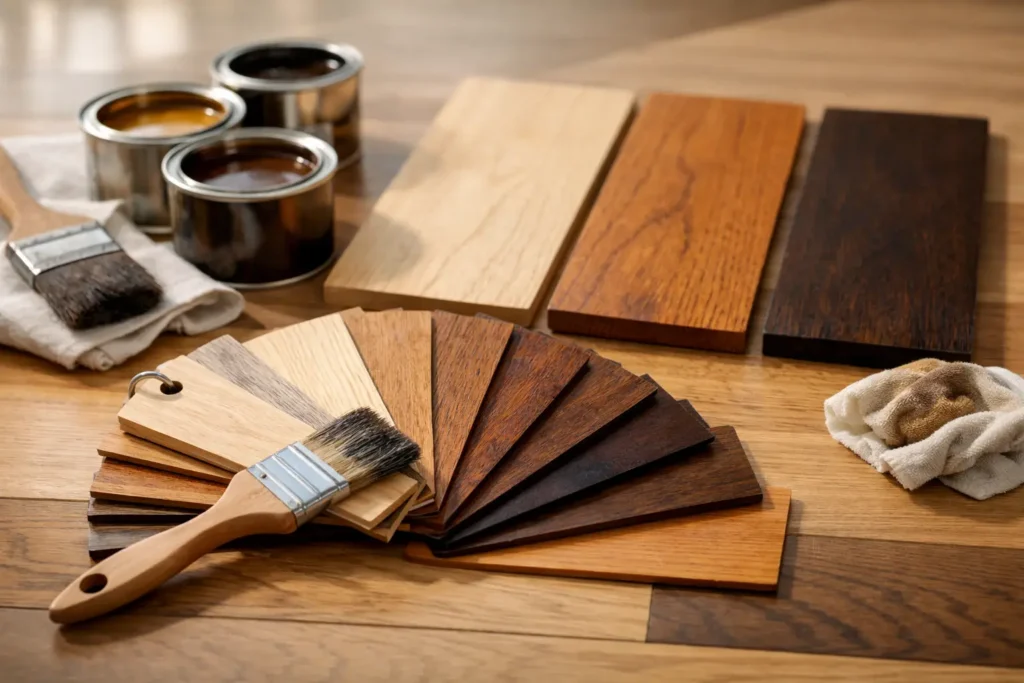
A stain chip that looked perfect under store lighting can turn too red, too dark, or too flat once it is spread across your actual floor. That is why learning how to choose hardwood stain starts with your home, your lighting, and your wood – not a small sample card.
For Connecticut homeowners, stain selection is not just about color. It affects how large the room feels, how much grain shows through, how often everyday wear stands out, and whether the finished floor complements the style of the house. If you are refinishing existing hardwood, the process matters too. A professionally refinished floor should look beautiful without turning your home upside down, which is why many homeowners prefer a dustless sanding system that leaves zero dust in the home and creates a cleaner, safer environment for children, pets, and allergy-sensitive households.
How to choose hardwood stain without regret
The easiest mistake is choosing stain in isolation. A floor covers more visual space than paint, cabinets, furniture, or rugs, so the wrong color feels wrong everywhere. The right choice usually comes from balancing four things at once: the species of wood, the amount of natural light, the style of the home, and the level of day-to-day activity.
If your home gets strong natural light, a very dark stain may look dramatic and elegant, but it can also highlight dust, footprints, and minor surface wear more quickly. A very light stain can feel open and modern, though on some floors it may reveal variation in boards more clearly than expected. Mid-tone stains often give homeowners the most flexibility because they add warmth, work with a wider range of interiors, and tend to age well as furnishings change.
The best stain is rarely the trendiest one. It is the one that still looks right in your home five years from now.
Start with the wood species and its natural color
Different hardwood species take stain differently. This is where many online photos become misleading. Oak, maple, birch, pine, and hickory do not absorb color the same way, so the exact same stain can look completely different from one floor to another.
Red oak naturally has warmer undertones and visible grain, which makes it one of the more forgiving and stain-friendly species. White oak tends to lean more neutral or slightly cooler and can produce a more contemporary look, especially with lighter or muted brown stains. Maple is denser and can absorb stain less evenly, so it often requires a more careful approach if you want a uniform result. Older floors also bring their own history. Sun exposure, previous finishes, repairs, and board replacements can all affect how stain appears.
That is why professional sample testing on the actual floor matters so much. It shows the real color on your real wood, in your real lighting.
Why undertones matter more than homeowners expect
Most people describe stain in broad terms like light, medium, or dark. In practice, undertone is usually the deciding factor. Two medium brown stains can look completely different if one pulls red and the other leans gray.
Warm undertones tend to feel traditional and inviting. Cooler undertones can feel cleaner and more modern. Neutral browns often provide the broadest design flexibility. If your cabinets, trim, or furniture already carry strong red, orange, or yellow tones, the wrong stain can make the room feel off even if the color itself looks attractive on a sample board.
Use the room, not the trend, as your guide
A stain should support how the room is used. In a busy family home, especially with kids and pets, practicality deserves just as much weight as style.
Very dark floors can be striking, but they often show pet hair, fine debris, and scratches more readily. Very light floors can be beautiful and airy, yet some homeowners find that heavy traffic paths become more noticeable over time depending on sheen and maintenance habits. Medium browns and softer natural-looking stains usually offer a strong middle ground. They hide everyday life better while still giving the floor a rich, finished appearance.
This is especially helpful in homes where refinishing needs to improve both looks and livability. A floor should not only photograph well – it should work on Monday morning when everyone is rushing out the door.
Test stain where it will actually live
If you want the most reliable answer to how to choose hardwood stain, insist on seeing samples on the floor itself. Small manufacturer swatches are a starting point, not a decision tool.
A proper test area lets you compare stain colors next to your wall color, trim, cabinets, and incoming daylight. Morning light, afternoon light, and evening lamp light can all shift how the color reads. One stain may appear balanced at noon and suddenly too orange at sunset. Another may seem plain at first and then become the most natural fit once you view it in different conditions.
This is one of the biggest advantages of working with an experienced refinishing contractor. You are not guessing from a catalog. You are evaluating actual results before the full floor is finished.
Look at stain with the final finish in mind
Stain is only part of the final look. The topcoat and sheen change the appearance too. A satin finish usually gives homeowners the best blend of beauty and practicality because it softens reflection and tends to be easier to live with than a high-gloss floor. Matte and low-sheen finishes have become more popular for a relaxed, updated look. Gloss can make a floor look brighter and more formal, but it also reveals more of the floor’s surface activity.
If you love a stain sample, make sure you are judging it with the finish system in mind. Color and sheen work together.
Think about the age and style of the home
Older Connecticut homes often look best with stain colors that respect the character of the space. That does not mean you must choose a traditional red-brown. It means the floor should feel connected to the architecture.
In a classic Colonial or Cape, very cool gray stain may feel out of place even if it looked great in a newer build online. In a more modern interior, a clean natural white oak look may feel exactly right. The goal is not matching a trend. The goal is making the entire home feel intentional.
This is also where transitions matter. If your hardwood connects multiple rooms, the stain should create a smooth visual flow rather than making one space feel disconnected from the next.
Be realistic about maintenance and wear
Every stain color involves trade-offs. There is no zero-maintenance option, only a better fit for your household.
Darker stains often create depth and contrast, but they can require a bit more frequent cleaning to keep that sharp, polished look. Lighter natural stains can soften the appearance of dust and minor scratches, though they may make variation in the boards more noticeable. Mid-tones usually strike the best balance for active homes because they are forgiving without looking plain.
If your floors have existing imperfections, repaired areas, or board variation, stain choice becomes even more important. Some colors blend those differences better than others. A professional can guide you toward tones that enhance the floor instead of calling attention to every flaw.
Why the refinishing process affects the result
Even the best stain choice can disappoint if the floor is not prepared correctly. Consistent sanding and expert stain application are what make the color look even, rich, and professional.
That is also why the process should protect the comfort of your home, not just the appearance of the floor. Dustless Hardwood Floors LLC uses a proprietary dustless sanding system that leaves zero dust in the home, allowing Connecticut homeowners to restore their floors with clean results and less disruption. For families, pet owners, and allergy-sensitive households, that matters just as much as the stain itself. You get the beauty of a newly refinished floor without the lingering debris homeowners worry about with outdated methods.
When homeowners should ask for expert guidance
If you are stuck between two or three stain options, that usually means you are asking the right questions. The final decision often comes down to which color fits the home’s lighting, wood species, and lifestyle best, not which one looked best on your phone screen.
Professional guidance is especially valuable if your floors include mixed repairs, older oak with strong undertones, or rooms that receive uneven light. In those cases, the right recommendation can save you from a result that feels too dark, too warm, or simply not like your home.
Choosing stain is part design decision, part practical decision, and part craftsmanship. When those three line up, the floor feels settled the moment you see it. Aim for that feeling, and the right color usually becomes much easier to recognize.
By understanding how to choose hardwood stain, you contribute to a timeless design.
Finally, revisiting how to choose hardwood stain can be beneficial after years of wear.
Consider consulting professionals as you learn how to choose hardwood stain for the best outcome.
Those who successfully learn how to choose hardwood stain are likely to enjoy their homes longer.
In conclusion, mastering how to choose hardwood stain can transform your living space.
Crafting a strategy on how to choose hardwood stain will lead to a more rewarding experience.
Essential Tips on How to Choose Hardwood Stain
Take your time to learn how to choose hardwood stain that resonates with your design sensibilities.
After you understand how to choose hardwood stain, you’ll appreciate the beauty of your floors more.
Ultimately, knowing how to choose hardwood stain ensures satisfaction with your flooring choice.
As you consider how to choose hardwood stain, think about the atmosphere you want to create.
Those who know how to choose hardwood stain often achieve stunning results in their renovations.
Learning how to choose hardwood stain will help you navigate the many color options available.
Once you understand how to choose hardwood stain, you can confidently select the right finish.
In addition, being aware of how to choose hardwood stain can enhance your home’s overall aesthetic.
Part of knowing how to choose hardwood stain is understanding the impact of light on color.
When learning how to choose hardwood stain, consider the long-term effects of your choice.
Researching how to choose hardwood stain can save you time and ensure the best results for your flooring project.
Understanding how to choose hardwood stain is essential for achieving the desired look and feel in your home.