
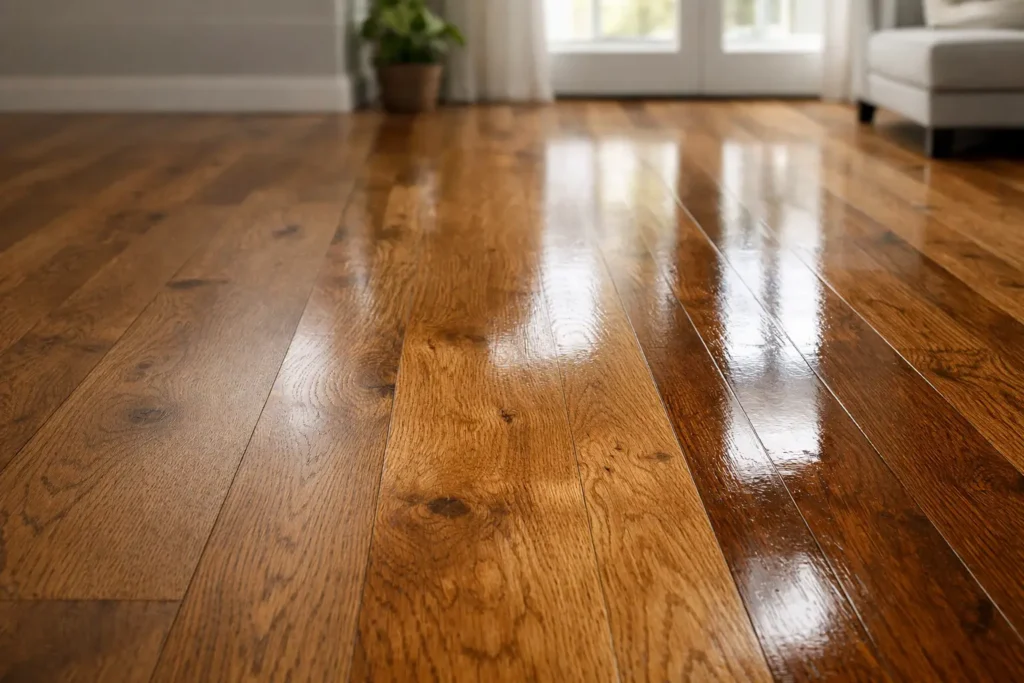
A floor can be freshly refinished and still feel slightly off if the sheen is wrong. Homeowners usually focus on stain color first, but the final finish sheen has just as much impact on how hardwood looks day to day. This hardwood floor finish sheen comparison will help you sort out what actually changes between matte, satin, semi-gloss, and gloss – and which one makes the most sense for your home, your lighting, and your lifestyle.
For Connecticut homeowners, this choice is not only about style. It affects how visible scratches look, how often you notice footprints, and whether a room feels calm and natural or brighter and more formal. If you are refinishing floors in a busy family home, a rental property, or a house you plan to sell, sheen deserves real attention.
What sheen really changes
Sheen refers to how much light the finish reflects. The more reflective the finish, the shinier the floor appears. That sounds simple, but the effect is bigger than most people expect.
A low-sheen floor tends to hide dust, small scratches, and everyday wear more easily. A higher-sheen floor reflects more light, which can make a room feel brighter and more polished, but it also highlights imperfections faster. That is why the right choice often comes down to your priorities. Some homeowners want a clean, understated look. Others want a richer, more formal finish that catches the light.
The species of wood, stain color, and natural light in the room also matter. Red oak with a medium brown stain and satin finish will read very differently than white oak with a natural stain and matte finish. There is no single best sheen for every home.
Hardwood floor finish sheen comparison by level
Matte finish
Matte is the lowest-sheen option commonly used on hardwood floors. It gives wood a softer, more natural appearance and works especially well in homes where homeowners want warmth without shine.
This finish is popular for modern interiors, rustic spaces, and homes with pets or children because it tends to camouflage small scratches, paw traffic, and everyday wear better than shinier options. If your floors get heavy use, matte can be very forgiving.
The trade-off is visual. Matte does not bounce much light around the room, so it will not create that polished, reflective look some homeowners want after refinishing. If you are expecting a dramatic shine, matte may feel too subdued.
Satin finish
Satin is the most widely chosen sheen for a reason. It sits in the middle, giving hardwood a finished, attractive appearance without making every mark stand out. For many homes, satin offers the best balance between beauty and practicality.
It gives floors a soft glow rather than a strong shine. That makes it a smart option for hallways, living rooms, family rooms, and entire main floors where consistency matters. Satin also works well across different design styles, from traditional homes in Glastonbury to more updated interiors in West Hartford.
If a homeowner asks for the safest all-around choice, satin is usually where the conversation starts.
Semi-gloss finish
Semi-gloss adds more reflectivity and a more noticeable shine. Floors look brighter, sharper, and a bit more formal. In the right space, that can be beautiful.
This sheen can work well in rooms where you want a cleaner, more polished look, but it does ask more from the homeowner. Footprints, surface scratches, and dust are generally more visible than they are with matte or satin. In homes with active kids, dogs, or heavy daily traffic, that can become frustrating if you prefer floors to look pristine at all times.
Semi-gloss is not wrong. It is simply less forgiving.
Gloss finish
Gloss is the shiniest standard option and the least commonly chosen for lived-in residential spaces today. It creates a dramatic reflective effect and can make hardwood look striking in formal rooms or specialty spaces.
Still, gloss has the narrowest margin for error. It shows wear quickly, emphasizes surface texture, and tends to spotlight scratches, smudges, and cleaning streaks. For most homeowners, especially those who want a comfortable, everyday finish, gloss feels too high-maintenance.
That is why many modern refinishing projects steer away from it unless the homeowner has a very specific design goal.
Which sheen hides scratches best?
If your biggest concern is making wear less visible, lower sheen usually wins. Matte hides scratches best, with satin close behind. Semi-gloss and gloss reflect more light, so dents, scuffs, and fine abrasions are easier to notice.
This matters in entryways, kitchens, and family rooms where floors take constant use. It also matters in homes with large windows. Strong daylight reveals more than showroom lighting ever will.
Homeowners are often surprised to learn that shinier does not mean tougher-looking over time. A high-gloss finish can look impressive right after application, but in a lived-in home, many people end up preferring the steadier appearance of satin or matte.
Does sheen affect durability?
This is where confusion is common. Sheen and durability are not the same thing.
The protective strength of the floor finish depends more on the product system and how professionally it is applied than on whether it is matte or semi-gloss. In other words, a high-quality satin finish is not automatically less durable than a semi-gloss version of the same product line.
What does change is visibility of wear. A shinier floor may seem less durable simply because it reveals wear sooner. That difference matters in real life, especially for homeowners who want floors to keep looking clean and beautiful between maintenance coats or future refinishing.
How sheen changes room style
For traditional homes
Satin and semi-gloss often suit traditional interiors well. They add enough light reflection to complement classic trim, richer stain colors, and more formal furniture without overwhelming the room.
For modern or natural interiors
Matte and satin are usually the better fit. They let the wood grain stand out without a glossy surface layer pulling focus. If you want a calm, updated look, lower sheen tends to feel more current.
For small or darker rooms
A little more sheen can help reflect light, but this is not always a reason to jump straight to semi-gloss. Satin often provides enough brightness without increasing maintenance visibility too much.
The best choice for busy Connecticut households
For most family homes, satin is the practical favorite, and matte is close behind. Both are easier to live with than shinier finishes, especially in homes with pets, children, or allergy-sensitive family members who want a clean, comfortable environment.
Just as important as the sheen itself is how the refinishing work is done. A beautiful new finish loses its appeal quickly if the process turns the home upside down. That is why many Connecticut homeowners choose a contractor that uses a true dustless sanding system. Dustless Hardwood Floors LLC uses a proprietary dustless sanding process that leaves zero dust in the home, which means refinishing can restore the beauty of hardwood floors without coating the house in airborne residue. For families, pet owners, and anyone sensitive to indoor air quality, that clean result matters as much as the final sheen.
Questions to ask before choosing your sheen
A good sheen decision usually comes from a few practical questions. How much natural light hits the floor? How much traffic does the room get? Do you want the wood to look natural or more formal? Are you the type of homeowner who notices every footprint, or would you rather have a finish that forgives daily life?
It also helps to think room by room. Not every home needs the shiniest possible finish, and not every homeowner wants the same visual effect in a dining room that they want in a mudroom or upstairs hallway. Most of the time, consistency throughout the home still looks best, but the intended use of the space should guide the conversation.
The sheen most homeowners regret least
If you want the safest choice with broad appeal, satin is usually it. It looks finished, works with almost any style, and stays easier to maintain than semi-gloss or gloss. If your taste leans more natural and understated, matte may be the better long-term fit.
The real mistake is choosing sheen based only on how a sample looks under perfect lighting. Floors need to perform in real homes, under real traffic, with real pets, kids, shoes, and sunlight. When sheen matches the way you actually live, your refinished hardwood tends to keep looking right long after the project is done.
If you are deciding between two options, lean toward the one that will still make sense on an ordinary Tuesday afternoon, not just on the day the finish dries.