
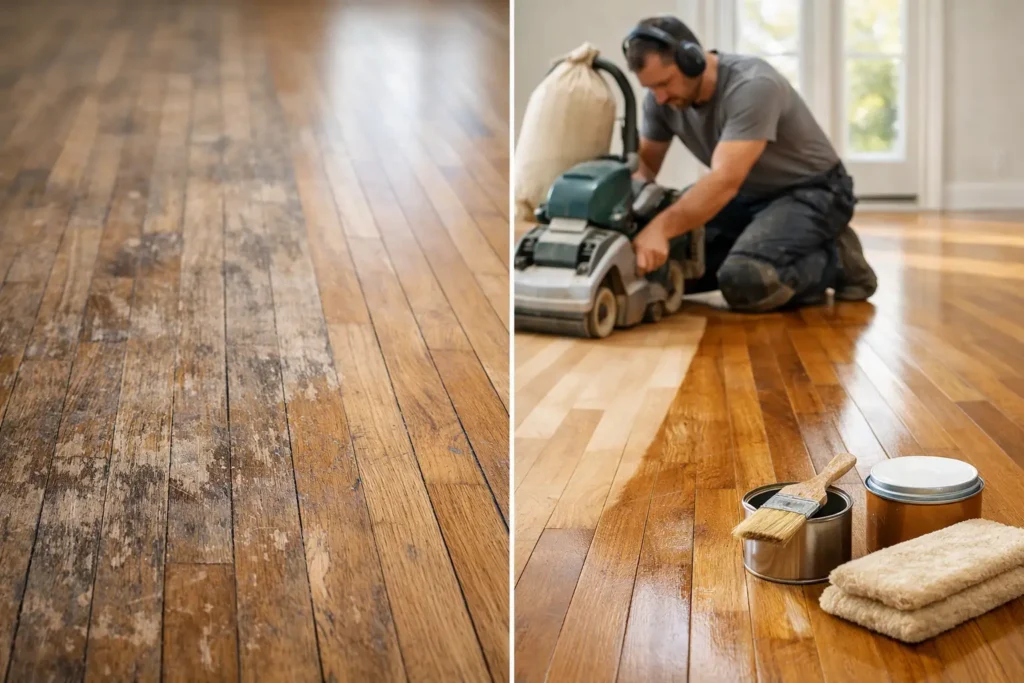
The change usually sneaks up on you. One day your hardwood floors look warm and inviting, and the next, they seem tired no matter how often you clean them. If you are noticing that your floors never quite look fresh anymore, those visual cues matter. The top signs floors need refinishing often show up well before the wood is beyond repair, and catching them early can save both time and money.
For Connecticut homeowners, especially busy households with kids, pets, or allergy concerns, refinishing is not just about appearance. It is also about protecting the wood you already have and restoring your space without turning your home upside down. With a professional dustless sanding system that leaves zero dust in the home, refinishing can be a clean, safe, family-friendly upgrade rather than a project you keep putting off.
Top signs floors need refinishing before damage gets worse
A floor rarely fails all at once. Most hardwood gives you a series of warnings, and the sooner you respond, the more options you usually have.
Your floors look dull even after cleaning
This is one of the most common signs homeowners notice first. If your floors still look flat, cloudy, or lifeless right after they have been cleaned, the issue is usually not dirt. It is often a worn finish.
The finish is what gives hardwood its protection and its healthy sheen. Once that layer starts breaking down, regular sweeping and mopping will not bring back the look you want. In many cases, the wood underneath is still in good shape, which makes refinishing a smart next step.
Surface scratches are everywhere
A few light scratches in a high-traffic home are normal. When scratches become widespread and easy to spot from across the room, that is different. You may notice them in entryways, hallways, under dining chairs, or in the areas where dogs tend to run.
If the scratching is only in the finish, refinishing can restore the floor beautifully. If it is left too long, those marks can deepen and start affecting the wood itself. That is where delay becomes expensive.
The finish is wearing off in traffic paths
Look closely at the areas people use most. If the center of a hallway, the path around an island, or the stretch in front of a sofa looks faded compared to the rest of the room, your finish is likely wearing thin.
This uneven appearance is not just cosmetic. It means the most-used parts of the floor are losing their protection first. Once bare wood is exposed, moisture, dirt, and daily wear can do more lasting damage.
Water spots, dark stains, or discoloration are showing up
Hardwood and moisture are never a great combination. A small water spot from a plant, pet bowl, or wet shoes may seem minor, but staining often means the protective finish is no longer doing its job.
Dark marks are especially worth attention because they can point to water getting into the wood. Not every stain means the floor needs a full replacement. Often, refinishing can remove or dramatically reduce the damage, but timing matters. The longer moisture sits, the harder it is to correct.
When wear becomes a protection problem
Many homeowners wait until the floors look seriously damaged. That is understandable, but hardwood is easier to restore when the warning signs are addressed early.
Splinters or rough patches are developing
A hardwood floor should feel smooth underfoot. If you notice rough areas, raised grain, or small splinters, the finish may be gone in those spots. That leaves the wood exposed to everyday friction and humidity changes.
This is more than an appearance issue, especially in homes with children who play on the floor or families who walk barefoot. Refinishing restores a smooth, sealed surface and helps protect the wood from further breakdown.
Gray or bare-looking wood is visible
When hardwood starts turning gray, that often means the protective coating has worn away completely and the raw wood is oxidizing. This is one of the clearest top signs floors need refinishing now rather than later.
At that point, the floor is no longer simply dull. It is vulnerable. Bare wood absorbs moisture more easily, stains faster, and can deteriorate sooner. The good news is that many floors with this kind of wear can still be saved with professional sanding and refinishing if the boards are structurally sound.
Minor damage is spreading room by room
Sometimes the issue is not one dramatic problem. It is the fact that small problems keep multiplying. A little fading in the living room, a few scratches in the dining room, a couple of stains near the back door. Together, that pattern tells you the finish is aging throughout the home.
This is often the best time to plan refinishing because you can address the wear before it becomes severe in any one space. For property owners preparing a home for sale or landlords between tenants, this timing can be especially valuable.
Signs that refinishing makes more sense than replacement
Homeowners sometimes assume worn floors need to be torn out. Often, they do not. Solid hardwood in particular can usually be refinished multiple times, depending on its thickness and past work.
The boards are solid, but the surface looks tired
If your floors feel stable underfoot and the boards are not badly warped or structurally failing, refinishing is often the more practical solution. You keep the existing hardwood, restore its beauty, and avoid the larger cost and disruption of replacement.
This is why a professional assessment matters. Some floors need repairs before refinishing. Others are ideal candidates as they are. The right recommendation depends on the age of the floor, the wood species, the depth of damage, and whether there have been previous sanding cycles.
You want a different color or finish level
Not every refinishing project starts with major damage. Sometimes homeowners are simply ready to update the look of their space. If your current floor color feels dated, too orange, too dark, or too glossy for your home, refinishing gives you the chance to change it.
That can be especially helpful in older Connecticut homes where the floors are full of character but no longer match the rest of the interior. A new stain and finish can completely change the room while preserving the original hardwood.
Why homeowners delay refinishing and regret it
The biggest reason people put off refinishing is simple. They assume it will be a major hassle inside the home. For years, that concern stopped many families from moving forward.
That is exactly why a dustless sanding system matters. When the process leaves zero dust in the home, refinishing becomes far more manageable for households with children, pets, or anyone sensitive to indoor air quality. Clean results are not a luxury. They are a practical part of making the project comfortable and safe.
For many homeowners in Manchester, West Hartford, Glastonbury, and surrounding Hartford County communities, the real relief is knowing they can restore their floors without dealing with the lingering residue people often fear from older sanding methods. A licensed and insured contractor with a proven dustless process gives you both peace of mind and a better finished result.
What to do if you notice these signs
If several of these issues sound familiar, the next step is not guessing whether the floors are too far gone. It is having them evaluated by a professional who specializes in hardwood restoration.
A good refinishing assessment should tell you whether the floor needs a full sand and refinish, a repair plus refinishing, or whether another option makes more sense. It should also be clear about timeline, pricing, and expected results. Homeowners should never feel like they are getting vague answers when they are making an investment in their home.
If you are seeing dullness, scratches, worn traffic paths, water marks, or bare wood, waiting usually does not improve the situation. Hardwood tends to reward timely care. And when that care is done with a proprietary dustless sanding system that leaves zero dust in the home, the path to restored floors feels much easier.
Beautiful hardwood does not need to be perfect to be worth saving. It just needs the right attention before everyday wear turns into permanent damage.