
A floor can look beautiful on day one and still be the wrong choice five years later. That is usually where the oak vs pine hardwood flooring question becomes real for homeowners. The decision is not just about color or price. It is about how the floor will live in your home, how it will age under kids, pets, furniture, and Connecticut seasons, and what it will take to keep it looking its best.
If you are choosing between oak and pine, the short answer is this: oak is typically the better fit for busy households that want long-term durability, while pine appeals to homeowners who love a softer, more casual look and are comfortable with visible wear over time. Neither is automatically better in every room. The right choice depends on how you want the floor to perform, not just how you want it to look on install day.
Oak vs Pine Hardwood Flooring: The Main Difference
Oak is a true hardwood with a denser structure, while pine is a softwood that dents and scratches more easily. That single difference affects almost everything else, from durability to maintenance to how the floor looks after years of daily use.
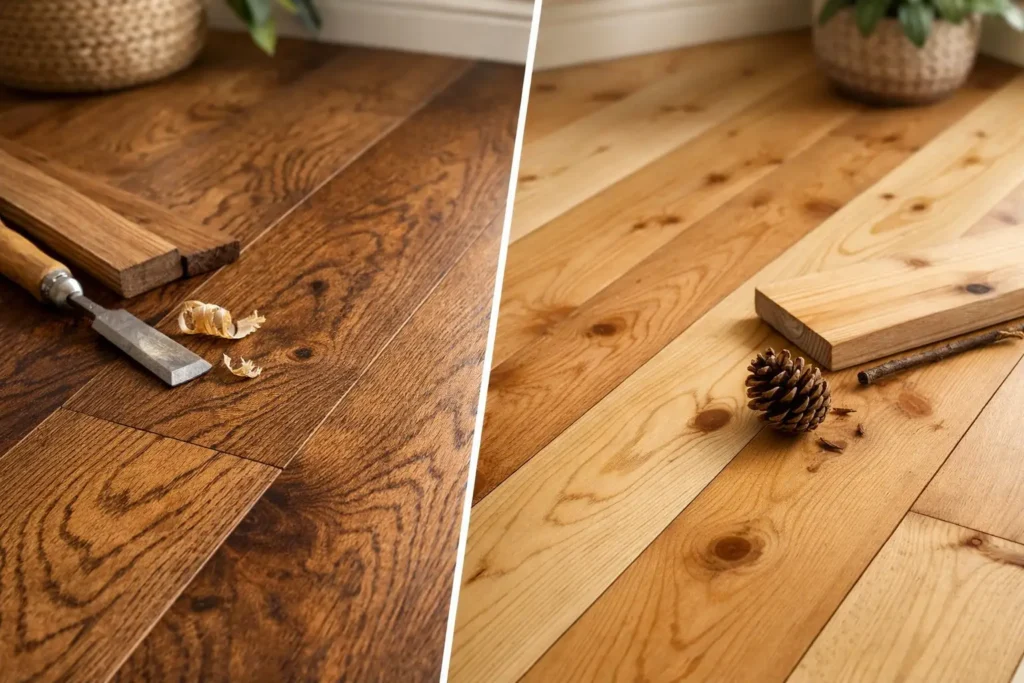
Red oak and white oak are among the most common flooring choices because they strike a strong balance between appearance, hardness, and refinishing potential. Pine has a very different personality. It feels warmer and more rustic, often with more knots, more movement in the grain, and a lived-in character that shows up faster.
For some homeowners, that character is the whole point. For others, especially families who want a cleaner, more uniform look that holds up well, oak tends to be the more practical investment.
How Oak and Pine Look in a Finished Home
Oak has a classic grain pattern that works with almost any design style. It can feel traditional, modern, farmhouse, or upscale depending on the stain and finish. White oak usually leans a bit more contemporary and subtle, while red oak has warmer undertones and a more familiar, prominent grain.
Pine has a softer, more relaxed appearance. It often shows knots, color variation, and a less formal texture. In the right home, that can look charming and authentic. In the wrong setting, it can feel too casual or too uneven.
This is where homeowner expectations matter. If you want crisp, polished floors that stay visually consistent across high-traffic areas, oak generally gives you more control. If you want a floor that develops patina and wear as part of its appeal, pine may suit your style better.
Durability Matters More Than Most Homeowners Expect
The biggest advantage of oak is durability. It handles foot traffic, moving chairs, dropped toys, and everyday life better than pine. That makes it a smart choice for living rooms, hallways, kitchens, and homes with active families or large dogs.
Pine is softer, so dents happen sooner and more often. Even normal use can leave marks. Some homeowners love that because it creates an aged, storied surface. Others are surprised by how quickly those marks add up.
There is no wrong preference here, but there is a wrong assumption. If you install pine expecting it to behave like oak, you will likely be disappointed. If you choose pine because you genuinely like a worn, natural look, you may be very happy with it.
Cost: Lower Up Front vs Better Long-Term Value
Pine is often less expensive than oak at the time of purchase, which makes it attractive for larger projects or tighter budgets. But material price is only part of the story.
A less expensive floor that shows wear quickly may need more attention sooner. A more durable floor may cost more initially but hold its appearance longer. For many Connecticut homeowners, especially those planning to stay in the home, oak delivers stronger long-term value because it is more resistant to the kind of daily wear that leads to early frustration.
That said, budget still matters. In a low-traffic bedroom, guest room, or certain investment property applications, pine can make sense. The better question is not which wood is cheaper. It is which wood gives you the result you want for the life of the floor.
Refinishing Oak vs Pine
Both oak and pine can be refinished, but they do not respond exactly the same way. Oak is generally more forgiving. It sands evenly, accepts stain predictably, and offers a wide range of finish options. That is one reason it remains such a popular flooring species.
Pine can also be refinished, but it requires a careful approach. Because it is softer and often more variable in texture, the final appearance can be less uniform, especially with certain stains. Pine also tends to show wear patterns differently, which can be part of its charm or part of its challenge, depending on your expectations.
For homeowners restoring existing floors, species matters a great deal. Older pine floors can be beautiful when properly refinished, but they need the right process and realistic goals. Older oak floors often have more flexibility if you want to update the color or create a cleaner, more refined look.
That is also where professional sanding quality becomes critical. A proper dustless sanding system leaves zero dust in the home, which matters for every household but especially for families with children, pets, or allergy concerns. When your floors are being restored, the result should be a cleaner, healthier process along with a beautiful finish.
Which Floor Is Better for Connecticut Homes?
Connecticut homes vary widely, from older colonials with original planks to newer homes with more open floor plans and heavier daily traffic. In many of these homes, oak is the safer all-around choice because it performs well in changing seasons and stands up better to regular use.
Pine often fits best in older homes where its natural softness and character feel true to the architecture. It can also be a strong design choice in cottages, farmhouses, and rooms where a more relaxed look is the goal.
If resale is part of your thinking, oak usually appeals to the broadest range of buyers. It is familiar, dependable, and easier for most people to picture in their own home. Pine has a more specific audience. Some buyers love it. Others see it as a floor they will need to be careful with.
Stain and Finish Flexibility
Oak gives you more versatility if you want a custom look. It works well with natural finishes, medium browns, darker stains, and many modern low-sheen options. If your goal is to match existing flooring or create a specific visual style, oak usually offers more predictable results.
Pine can be finished beautifully, but it is often best when the finish works with the wood rather than trying to force it into a look it does not naturally support. Many homeowners prefer pine in lighter, warmer, more natural tones where the knots and grain variation remain part of the final design.
The finish itself matters just as much as the wood choice. A quality finish protects the surface, shapes the sheen, and affects how much maintenance the floor needs over time. If you are refinishing instead of replacing, selecting the right finish can change how the entire room feels.
When Pine Is the Right Choice
Pine is a good option when appearance and character matter more than hardness. It suits homeowners who want warmth, softness, and an authentic lived-in feel. It can also work well in spaces that do not see constant heavy traffic.
It is not the best pick for everyone, and that is fine. Pine is a style decision as much as a flooring decision. If you love the look of aging wood and are not bothered by dents or wear, pine can be exactly right.
When Oak Is the Better Choice
Oak is usually the better choice when you want durability, flexibility, and a floor that stays attractive under real family use. It is especially well suited to main living areas, hallways, and homes where pets, children, or entertaining put more pressure on the floor.
It is also the more forgiving option if you are unsure. For many homeowners, oak offers fewer surprises. It performs well, refinishes well, and supports a wide range of design choices over time.
A Better Question Than Oak or Pine
Sometimes the real issue is not whether you should install oak or pine. It is whether your current hardwood floors can be restored instead. Many homeowners assume worn floors need replacement when professional refinishing would bring them back beautifully.
If your existing floors are scratched, faded, dull, or uneven in color, refinishing may be the smarter move. With a professional dustless sanding process that leaves zero dust in the home, you can transform the space without turning your house upside down. For Connecticut homeowners who want clean results and minimal interruption, that matters just as much as the species itself.
Whether you are comparing new materials or evaluating older floors, the best flooring decision is the one that fits your home honestly. Oak gives you strength and versatility. Pine gives you softness and character. The right answer is the one you will still feel good about after real life has had a chance to walk all over it.