
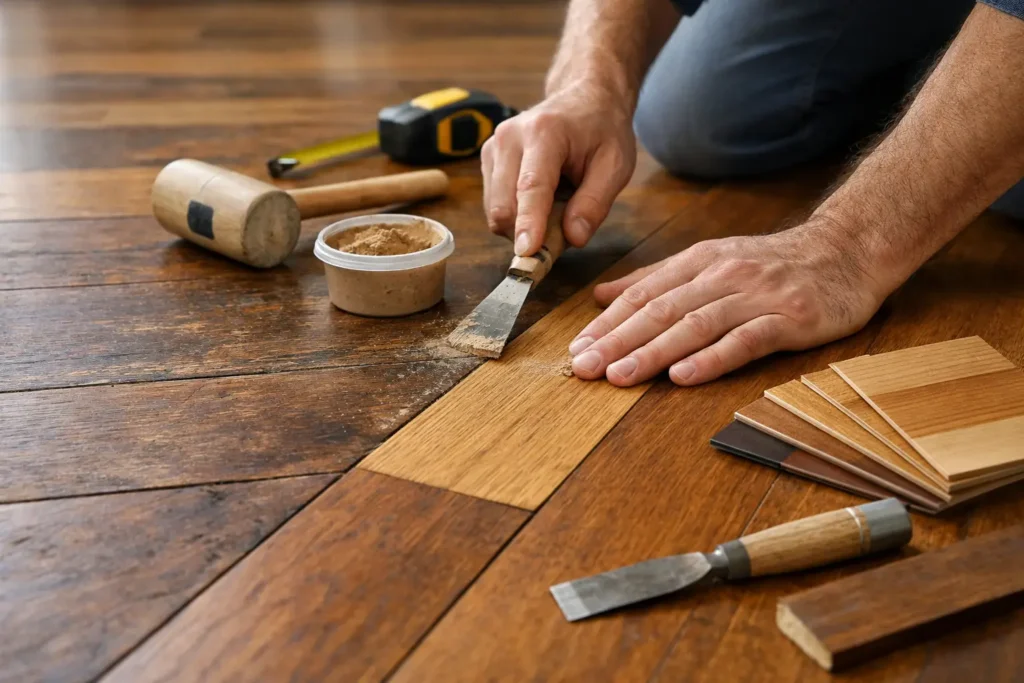
A hardwood floor repair stands out for all the wrong reasons when the color is close but the board width is off, or the stain matches in daylight but not at night. That is why homeowners asking how to match hardwood floor repairs are usually not worried about the repair itself. They are worried about whether the fix will disappear into the rest of the floor or keep catching their eye every time they walk by.
The truth is that matching a repair is part flooring knowledge, part finish work, and part judgment. Even when you know the species, stain, and age of the existing floor, there is still some variation to manage. Sun exposure changes color. Older finishes amber over time. Different board cuts reflect light differently. A successful repair is not just about replacing damaged wood. It is about making the repaired area look like it belongs.
What makes hardwood floor repairs hard to match
The first challenge is wood itself. Red oak, white oak, maple, birch, and hickory all take stain differently. Even within the same species, grain pattern and mineral streaks can change from board to board. If the original floor was installed years ago, the exact product may no longer be available.
Finish adds another layer. Color is only one part of the visual match. Sheen matters just as much. A satin floor next to a semi-gloss patch can make a well-colored repair look obvious. The age of the finish matters too. Older polyurethane often develops a warmer tone, so a freshly coated repair can look newer and lighter until the surrounding floor is blended correctly.
Then there is the condition of the existing floor. If the area around the damage is scratched, faded, or worn, a brand-new patch may look too perfect. In those cases, the real question is not just how to match hardwood floor repairs, but whether a spot repair alone will look right or whether the floor needs blending, screening, or refinishing across a larger section.
How to match hardwood floor repairs the right way
The best matches start with identification, not stain charts. Before any repair is made, the floor should be evaluated for species, board width, thickness, cut, finish type, and overall age. That sounds simple, but it is where many mismatches begin. If you start with the wrong wood, no stain adjustment later will fully correct it.
Start with the wood species and board dimensions
A repair board needs to match the species and size of the existing floor as closely as possible. Width is easy to notice, but thickness matters too, especially if the floor will be sanded and blended. The grain pattern should also be considered. Plain-sawn oak will not read the same as quarter-sawn material, even if the stain is close.
In Connecticut homes, oak floors are common, but “oak” is not specific enough. Red oak and white oak absorb stain differently and show different undertones. Mixing them in a visible area usually creates a patch that never fully disappears.
Match the color after understanding the finish
Many homeowners assume stain is the entire color story. It is not. The final look comes from a combination of the raw wood color, stain, sealer, finish coats, and the age of the floor around it. That is why professionals rely on test samples and real-time comparison rather than guessing from a label.
If the floor has aged to a warmer tone, the repair may need custom stain adjustment or blending into adjacent boards. If the existing floor is natural and unstained, the challenge can actually be harder, because wood color differences are more exposed without pigment to help even them out.
Blend the repair into the surrounding floor
Some repairs can be isolated cleanly. Others need a wider approach. If water damage affected a few boards in the middle of a room, replacing only those boards may solve the structural issue but still leave a visible transition. In that case, sanding and refinishing the repaired area and surrounding floor often produces a more natural result.
This is where process matters. A dustless sanding system allows the repair and blending work to be completed with zero dust in the home, which is a major advantage for families, pet owners, and allergy-sensitive households. Clean containment is not just about comfort. It also helps maintain a better work environment for precise finish matching.
When a spot repair works – and when it does not
A localized repair can work well when the damaged boards are near a wall, in a closet, under furniture lines, or in an area where natural variation already exists. It also works better when the floor is newer and the original finish is still consistent across the room.
It gets more complicated in open spaces with older floors. Sun fading near windows, wear paths in hallways, and yellowing finish in high-traffic areas make exact matching less predictable. In those situations, a homeowner may save time by choosing a small repair, but not necessarily get the best visual outcome.
That does not always mean full refinishing is required. Sometimes the right answer is a board replacement plus professional blending over a larger section. Sometimes it is a repair now and a room refinish later. The right choice depends on where the damage is, how visible it will be, and how closely you expect the final repair to disappear.
Common repair situations and what to expect
Pet stains, water damage, deep gouges, and removed walls are some of the most common reasons a floor needs matching work. Each one behaves differently.
Water damage often darkens the surrounding wood, not just the boards that need replacement. That means the repair area may need more than fresh material. It may require careful sanding, color adjustment, and finish blending around the perimeter.
Pet stains can soak below the surface, especially in oak. If discoloration has penetrated deeply, board replacement is usually the cleanest fix. Trying to sand out severe staining can leave uneven color and weak boards.
Repairs after a wall removal are a different challenge. The floor may need lace-in work where new boards are woven into the old pattern. This can look excellent when the species, grade, and finish are matched correctly, but it is not a place for rough approximations. Every detail shows in the middle of an open floor plan.
Why professional sanding and finishing matter so much
The final match is won or lost during sanding and finishing. Even with the correct replacement wood, poor sanding can leave edges that catch the light or finish overlap that outlines the repair. The repair should feel integrated, not patched.
For homeowners who want beautiful floors without turning the house upside down, a dustless system makes a real difference. Dustless Hardwood Floors LLC uses a proprietary dustless sanding system that leaves zero dust in the home, allowing repairs, blending, and refinishing to be completed with clean results that are safe for families, children, pets, and allergy-sensitive homes. That matters when the project is happening in the rooms you actually live in.
It also helps protect the finish quality. Cleaner sanding conditions support better stain consistency and smoother topcoat application. When you are trying to make a repair vanish into an existing floor, those details count.
Signs your floor needs more than a repair match
Sometimes the repair is not the main issue. It is simply the spot that made the bigger problem visible. If the surrounding floor is dull, scratched, uneven in color, or worn through in traffic areas, even a perfectly executed repair may still look out of place because the rest of the floor is showing its age.
A good contractor should tell you when a repair-only approach is likely to leave a cosmetic mismatch. That is not upselling. It is being honest about the result. Homeowners usually appreciate straightforward guidance when the goal is long-term appearance, not a short-term patch.
Choosing the right contractor for matching work
Matching hardwood repairs takes more restraint than many homeowners expect. It is not just about replacing boards quickly. It is about knowing when to isolate, when to blend, and when a wider refinish will give a better result.
Look for a licensed and insured contractor who handles both repair and refinishing, not just one or the other. Ask whether they custom-test stain, evaluate sheen, and use dustless sanding equipment. For Connecticut homeowners, especially in older homes around Hartford County, local experience matters because floor species, aging patterns, and previous finish choices vary from house to house.
The best repair is the one you stop noticing. If you are trying to figure out how to match hardwood floor repairs, the smartest starting point is not the stain color. It is finding a professional who understands how wood, finish, age, and light all work together – and who can restore the floor with clean, dust-free results that let your home feel cared for from the first day forward.