
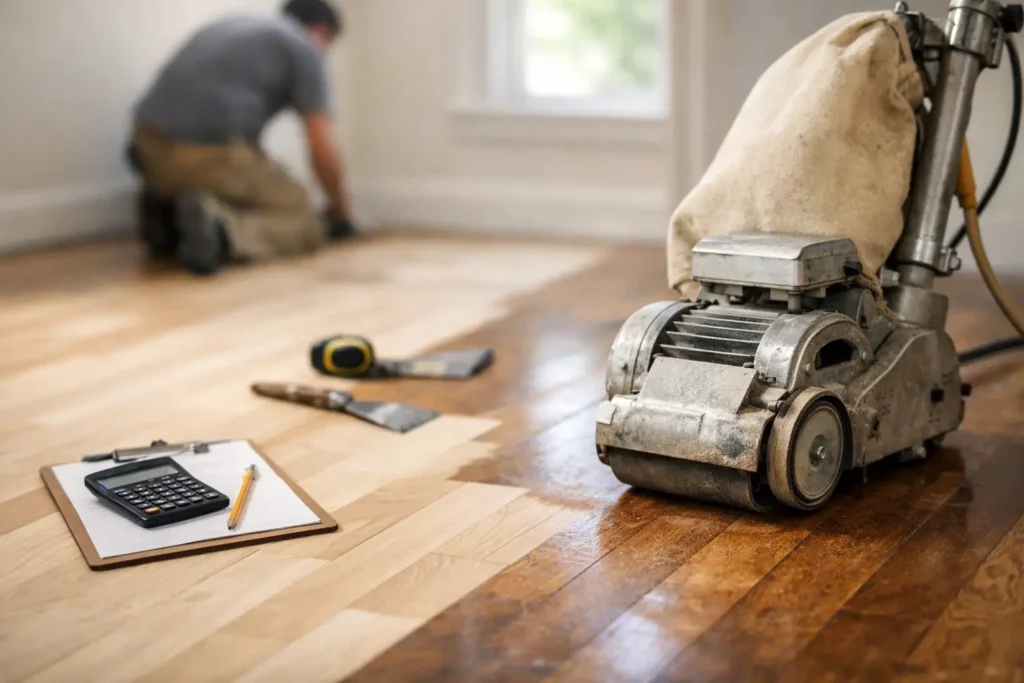
If you are pricing a hardwood floor refinishing project, the estimate can feel vague until you know what a contractor is actually measuring. A hardwood floor refinishing estimate what to expect question usually comes down to five things: the floor’s condition, the square footage, the finish you want, whether repairs are needed, and how the sanding system affects your home during the job. For Connecticut homeowners, that last point matters more than most people realize. A true dustless sanding process means you can restore your floors without filling your home with airborne residue, which is especially important for families with children, pets, or allergy concerns.

What a hardwood floor refinishing estimate should include
A professional estimate should be clear enough that you understand what you are paying for before work begins. At a minimum, it should spell out the scope of work, the approximate square footage, the sanding and refinishing process, the number of finish coats, and whether stain is included. If repairs are needed, those should be listed separately rather than buried inside a single flat number.
This is also where homeowners can tell the difference between a rushed quote and a thoughtful one. A careful contractor will look at the wood species, current wear pattern, existing finish, transitions to other rooms, stair edges, and any damaged boards. If you have pet stains, deep gouges, water marks, or previous patchwork, those details affect both labor and material cost.
The estimate should also explain the finish system being used. Water-based finishes, oil-based finishes, natural-tone looks, and darker stain colors each affect drying time, appearance, and sometimes labor. Good estimates do not hide those trade-offs. They explain them.
Why estimates vary from one home to another
Two homes with the same square footage can receive very different pricing. That is because refinishing is not just about area. It is about condition and complexity.
A simple open living room in good shape is faster to refinish than a space with tight closets, detailed borders, floor vents, multiple room transitions, or damaged boards that need to be removed and blended. Older homes in places like West Hartford, Manchester, or Glastonbury often have beautiful original hardwood, but they may also have uneven wear, previous coatings, or repairs from years of use. That can increase the labor involved while still being well worth it for the final result.
Wood condition is often the biggest cost variable. Light surface wear is one thing. Black pet stains, cupping, separated boards, or sections softened by water exposure are another. Some issues can be corrected during refinishing. Others require board replacement before the sanding and finishing stages begin.
Hardwood floor refinishing estimate: what to expect on pricing
Most homeowners want a simple number, but refinishing estimates are usually built from layers. The base price often covers sanding the existing hardwood, preparing the surface, and applying the agreed finish system. From there, add-ons may include stain application, custom color work, board replacement, trim work, stair refinishing, furniture moving, or repairs around old vents and thresholds.
That is why a very low estimate can be misleading. It may not include repairs, extra coats, or the level of detail needed to produce an even, long-lasting finish. A higher estimate is not automatically better either. What matters is whether the proposal is specific, honest, and matched to the condition of your floor.
For many Connecticut property owners, the clean process matters just as much as the price. A proprietary dustless sanding system adds value because it protects indoor comfort while the work is being done. That means zero dust in the home, cleaner air, and a more comfortable experience for families, pets, and allergy-sensitive households. It is not just a feature on the estimate. It directly affects how livable the project feels.
What may be listed as separate charges
Some line items are commonly separated so you can see exactly what is included. These often include stained finish upgrades, individual board replacement, subfloor corrections, stair treads and risers, or moving large furniture. If your floor has deep damage, patch areas, or previous finish failures, those may be quoted after the floor is inspected in person.
Separate pricing is not a red flag. In fact, it is often a sign that the contractor is being transparent instead of guessing.
What happens during the in-home estimate
A real estimate should start with an on-site evaluation, not a blind price over the phone. Square footage helps, but it does not reveal enough about condition, layout, or repair needs.
During the visit, the contractor should inspect the wood species if known, identify worn or damaged areas, and ask what outcome you want. Some homeowners want to keep the original natural character. Others want to update the color and make dated red or orange tones look more current. Some are preparing a home for sale and want the best return without over-improving. The estimate should reflect those goals.
This is also the time to ask practical questions. How many coats are included? What finish options are available? Are repairs likely to match well? How long before you can walk on the floors, move furniture back, or resume normal use? Clear answers now prevent frustration later.
If the contractor specializes in dustless hardwood floor sanding and refinishing, ask how the dustless system is handled on-site. Homeowners who have never experienced it often assume all refinishing is the same. It is not. A true dustless approach protects your home environment while still delivering the full beauty of professionally restored hardwood.
Factors that can increase or lower your estimate
There are a few common reasons your estimate may move up or down after inspection. The first is floor condition. If the finish is simply dull, the job is more straightforward than if the wood has severe staining, cupping, or damaged boards.
The second is stain selection. Natural or clear-coated floors are often more forgiving. Dark stains and custom color matching usually require more care because they can highlight imperfections and variation in the wood. The result can be beautiful, but it requires precision.
The third is room layout. Large open spaces are generally more efficient than small segmented rooms with many edges and transitions. Stairs are another category entirely and are usually priced separately because they require hand detail work.
The fourth is finish choice and timeline. Faster is not always better if it sacrifices the result, but certain finish systems may affect scheduling and return-to-use timing. A good estimate explains that clearly so you can plan around it.
Red flags to watch for in a refinishing estimate
If an estimate is one sentence long and does not break out what is included, ask for more detail. If repairs are vaguely promised but not priced, ask how those will be handled. If the finish system is not identified, ask what product type and how many coats you are receiving.
Another red flag is a contractor who cannot explain the condition of your floor in plain language. Homeowners do not need a technical lecture. They do need honest guidance. You should come away knowing whether your floors are a good candidate for refinishing, what results are realistic, and whether repairs will improve both appearance and longevity.
For homeowners concerned about health and cleanliness, the sanding method should never be an afterthought. Dustless sanding is a meaningful part of the estimate because it protects the living environment during the project. For busy households, that peace of mind matters.
How to compare estimates fairly
The easiest mistake is comparing only the bottom-line price. A better approach is to compare scope, finish system, repair allowances, timeline, and process. One estimate may look lower because stain is excluded, repairs are omitted, or fewer finish coats are included.
You should also compare professionalism. Is the contractor licensed and insured in Connecticut? Are the terms clear? Are there hidden fees, or is the pricing straightforward? Does the estimate reflect confidence in the process and the outcome?
That matters because floor refinishing is not just cosmetic. Done well, it restores beauty, extends the life of the wood, and can completely change how a home feels. Done carelessly, it creates avoidable problems that show up every time light hits the floor.
The best estimate leaves you with fewer surprises
A strong refinishing estimate should make the project feel more predictable, not more confusing. It should show you what is included, what may change if repairs are uncovered, how long the project should take, and what kind of result you can expect when the work is done.
For Connecticut homeowners, there is one more expectation worth having from the start: your home should stay clean and comfortable during the process. Dustless Hardwood Floors LLC built its service around that standard with a proprietary dustless sanding system that leaves zero dust in the home, along with clear pricing, licensed and insured workmanship, and no hidden fees.
When an estimate is thorough, honest, and built around clean results, you are not just buying a floor service. You are buying confidence in how your home will look and feel when the job is complete.
