
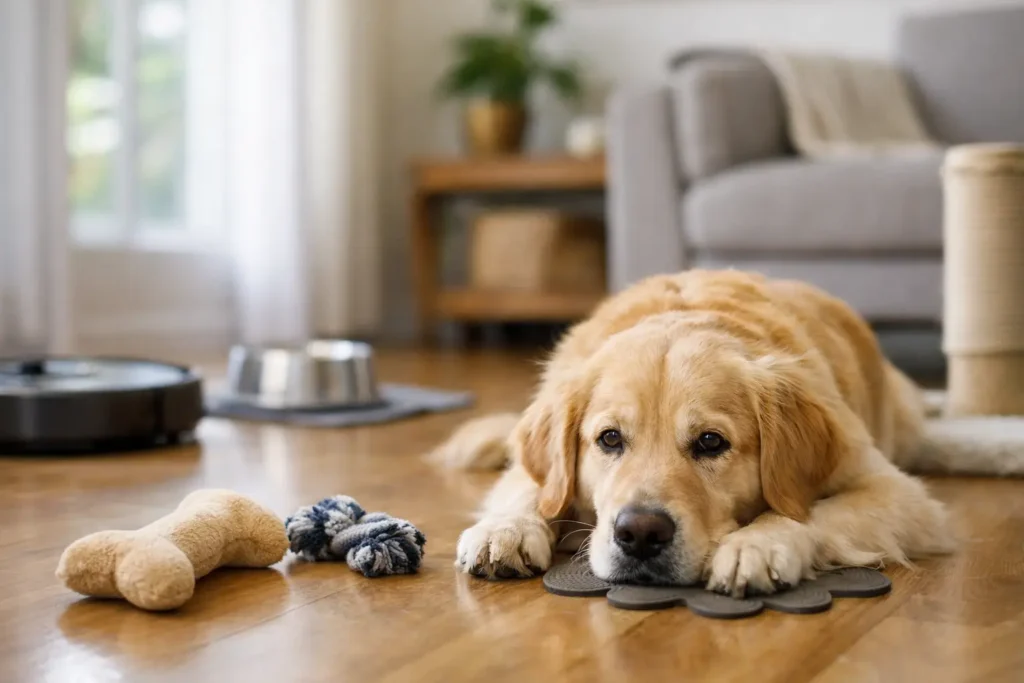
That click-click of nails across the hallway usually means your dog is happy, curious, or racing to the door. It can also mean fresh scratches, worn finish, and water spots around bowls. If you are wondering how to protect floors from dogs, the good news is that you do not need to choose between a clean, beautiful home and a pet-friendly one.
For Connecticut homeowners, the real goal is not making floors dog-proof. It is making them resilient enough for daily life. That starts with understanding what actually damages the floor, then choosing the right mix of prevention, maintenance, and professional restoration when wear starts to show.
How to protect floors from dogs without overcorrecting
Most dog-related floor damage comes from four things: nails, moisture, dirt, and repeated friction. A large dog launching off the same corner of a rug every day can wear down a finish faster than most people expect. Water from a bowl that sits unnoticed for hours can leave dark marks, especially on hardwood. Dirt and grit tracked in from the yard act like sandpaper under paws.
The mistake many homeowners make is focusing on only one issue, usually nails. Nail trimming matters, but it is only part of the picture. A better approach is to create layers of protection so the floor is not taking the full impact of daily activity.
Start with the habits that make the biggest difference
The most effective change is often the simplest one: keep your dog’s nails trimmed consistently. Shorter nails reduce scratching and lessen the force of impact when your dog turns, jumps, or sprints across hardwood. If your dog dislikes nail trims, walking them regularly on pavement can help wear nails down between grooming sessions, though it will not replace clipping altogether.
Paw care matters too. Wet paws bring in moisture and debris, and in winter they may also carry salt or deicing residue. Keeping a towel near the door and wiping paws after walks is one of the easiest ways to reduce wear. This matters even more in Connecticut, where snow, slush, mud, and road treatment products can all end up on your floors in the same week.
The next habit is cleaning frequency. Dirt buildup is harder on wood floors than many people realize. Sweeping or vacuuming with a hard-floor setting several times a week removes the gritty particles that cause micro-scratches. If you wait until the floor looks dirty, the finish has already taken a beating.
Use mats and rugs where dogs actually move
Floor protection works best when it matches your dog’s routine. Instead of covering random areas, watch where your dog runs, stops, eats, and naps. Those are the zones that need reinforcement.
Entryways are first. A durable mat inside each exterior door helps catch water and grit before it spreads across the house. Food and water stations are another major trouble spot. A waterproof mat under bowls protects against splashes, drips, and the slow seepage that can damage wood over time.
Hallways, stairs, and the stretch between the back door and the kitchen often take the most traffic. In those areas, low-pile runners with a non-slip backing can reduce direct wear while still looking clean and intentional. If your dog is older or slips on smooth hardwood, rugs do double duty by protecting the floor and improving traction.
Choose the right rug backing
Not every rug is safe for hardwood. Some rubber or latex backings can trap moisture or react with the finish over time. It is better to use a rug pad designed for wood floors, especially in areas where water is likely. Breathability matters as much as grip.
Protect hardwood floors from dogs around water and accidents
Moisture is often more damaging than scratching, especially when it sits unnoticed. Water bowls should never go directly on hardwood. Use a tray or waterproof mat with a raised edge, and place it where splashing is easy to spot and clean.
If your dog is still being house-trained or has occasional accidents, timing matters. Clean spills immediately with a wood-safe cleaner and dry the area fully. Letting moisture soak into seams can cause staining, cupping, or finish breakdown. For older dogs, it may be worth creating a more forgiving zone with washable runners in the rooms they use most.
Humidity control also helps. Wood naturally expands and contracts with seasonal changes, and extra moisture from wet paws and repeated cleaning can add stress. A stable indoor environment supports both the floor and the finish.
Don’t ignore traction – slipping causes damage too
When dogs struggle for grip, they often scramble with their nails, which creates clusters of scratches rather than light surface wear. This happens a lot on smooth, glossy floors. If your dog skids around corners or hesitates on stairs, that is a floor protection issue as much as a comfort issue.
Area rugs, runners, and stair treads can reduce that scramble effect. In some homes, the finish itself also plays a role. A lower-sheen finish usually shows less scratching than a high-gloss one, and it can offer a more practical look for active households with pets.
Floor finish matters more than many homeowners realize
If your hardwood is already showing wear, the finish may be the real problem, not the wood itself. A worn finish leaves the floor more exposed to moisture, scratches, and staining. Once that protective layer thins out, dog traffic accelerates the damage.
That is where professional refinishing can make a major difference. A properly refinished hardwood floor is easier to maintain and better equipped for everyday life with pets. For many homeowners, this is the turning point between constantly managing visible damage and finally enjoying the space again.
At that stage, it helps to work with a licensed and insured Connecticut hardwood flooring contractor that understands how families actually live in their homes. Dustless Hardwood Floors LLC uses a proprietary dustless sanding system that leaves zero dust in the home, which is especially valuable for households with children, pets, or allergy concerns. When your floors need repair or refinishing, clean results matter just as much as beautiful ones.
When scratches are cosmetic and when they need repair
Not every mark means you need to refinish the whole floor. Light surface scratches in the finish may be manageable with better maintenance and strategic protection. Deeper gouges, dark water stains, gray wear patterns, or rough areas around high-traffic zones usually signal a bigger issue.
The location of the damage matters too. If only one room or one lane of traffic looks worn, targeted repair may be enough. If the finish is failing across a broader area, refinishing often makes more sense than repeatedly patching symptoms.
Signs your dog has outpaced your current floor protection
You should take a closer look if you notice recurring scratches shortly after cleaning, dull pathways through the finish, darkening around water bowls, or raised edges where moisture may be getting in. Those are not just appearance issues. They are signs the floor is becoming more vulnerable.
The best floor-friendly routine for dog owners
A realistic routine beats an ambitious one you will not keep. For most homes, that means trimming nails on schedule, wiping paws when needed, cleaning grit before it gets ground in, and checking water bowl areas daily. Add rugs where your dog actually runs and stands, not just where they look nice.
If your dog is young and energetic, you may need more traction solutions. If your dog is older, focus more on stability and moisture control. If you have multiple dogs, expect wear patterns to show up faster and plan maintenance earlier. It depends on the size of the dogs, the floor species, the age of the finish, and how the home is used.
What Connecticut homeowners should keep in mind
Seasonal changes in Connecticut can be rough on hardwood. Spring mud, summer humidity, fall debris, and winter salt all create different kinds of wear. Dog owners in towns like Manchester, West Hartford, Glastonbury, and surrounding Hartford County communities often see the same pattern: entryways and kitchen paths take the hit first.
That is why prevention should be paired with periodic floor evaluation. Waiting until the boards look severely damaged usually limits your options. Catching finish wear early gives you more flexibility and helps preserve the wood underneath.
How to protect floors from dogs for the long term
The long-term answer is not one product or one cleaning trick. It is a system. Keep nails short, block moisture, reduce grit, improve traction, and maintain the finish before wear becomes structural damage. That approach protects your investment while still letting your dog live comfortably in the home.
And if your hardwood floors already look tired, scratched, or faded, restoring them does not have to mean turning your house upside down. With modern dustless sanding and refinishing, you can bring back the beauty of your floors with zero dust in the home and a safer, cleaner experience for the whole family.
A good floor should hold up to real life, paws included.