
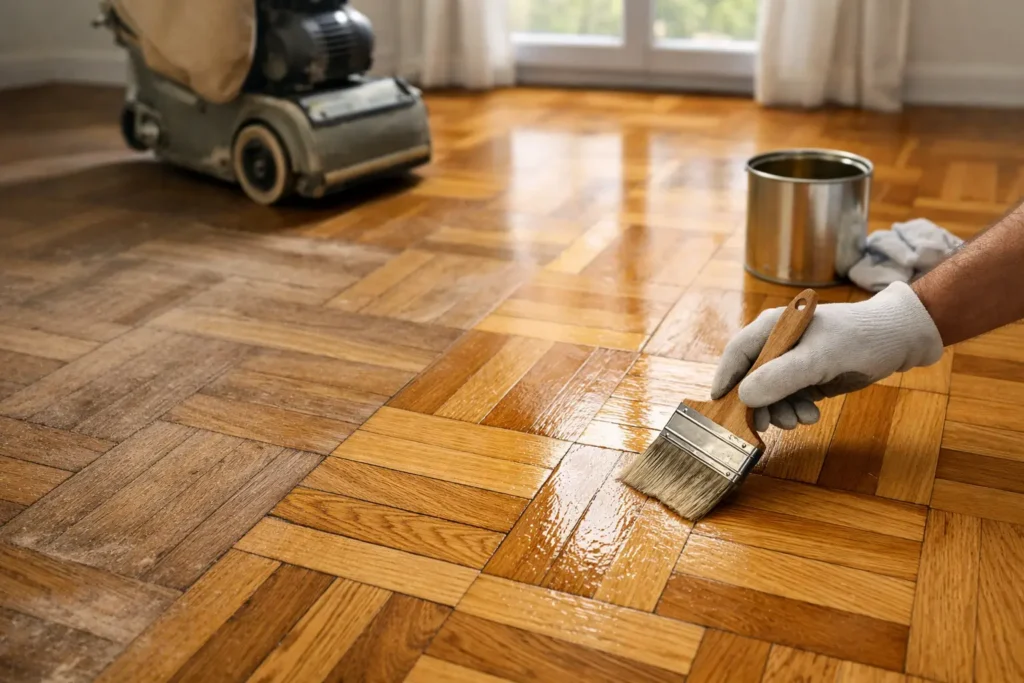
Parquet floors can stop people in their tracks for all the right reasons – until the finish wears down, the color dates the room, or the surface starts looking tired around high-traffic areas. If you are asking, can parquet floors be refinished, the short answer is yes in many cases. The better answer is that it depends on the wood thickness, the condition of the pattern, and whether the floor needs skilled sanding that protects its design while restoring its beauty.
For many Connecticut homeowners, parquet is worth saving. It adds character that newer floors often cannot match, and when it is refinished properly, it can look elegant, clean, and current again without losing what made it special in the first place.
Can parquet floors be refinished without damage?
Yes, parquet floors can often be refinished without damage, but parquet is less forgiving than standard strip hardwood. The reason is simple: parquet is made from small wood pieces arranged in patterns, and those pieces may have thinner wear layers than traditional solid planks. A floor with enough remaining wood can usually be sanded and refinished successfully. A floor that has been sanded too many times, has loose sections, or has deep damage may need repairs first or a different restoration approach.
This is where experience matters. Aggressive sanding can flatten edges, blur pattern lines, or expose adhesive problems. A professional evaluation should look at the age of the floor, the type of parquet, any prior refinishing, and signs of movement or moisture. Homeowners often assume a faded parquet floor is beyond repair when the opposite is true. In many homes, the finish is the real issue, not the floor itself.
When refinishing parquet makes sense
Refinishing is usually the right move when the floor is dull, scratched, lightly stained, or uneven in color but still structurally sound. Surface wear, pet marks, furniture scratches, and old amber-toned finishes are common reasons to refinish. If the parquet blocks are still firmly attached and the top layer of wood is thick enough, refinishing can dramatically improve the room.
It can also make sense if you want to update the look. Many older parquet floors were finished in glossy coatings or warmer tones that can make a space feel dated. A new stain color or a clear natural finish can shift the entire feel of the room while keeping the original floor.
For homeowners preparing a property for sale, refinished parquet can be a smart upgrade. Buyers notice floors quickly, and a restored parquet floor often reads as a premium feature rather than an old one.
When parquet floors may not be good candidates
Some parquet floors need more than refinishing. If sections are lifting, buckling, or separating, the pattern may need repair before any sanding begins. If the individual wood pieces are very thin or the floor has already been refinished multiple times, there may not be enough material left to sand safely.
Water damage is another variable. A small stain can often be addressed. Widespread moisture damage that causes swelling, warping, or adhesive failure is different. In that case, selective replacement or partial rebuilding may be necessary before refinishing is even on the table.
Engineered parquet also requires caution. Some engineered products can be refinished once or twice, while others have wear layers too thin for sanding. That is why the question is not just can parquet floors be refinished, but can your parquet floor be refinished safely and successfully.
Why parquet refinishing is different from plank floor refinishing
Parquet has visual rhythm. The pattern is the whole point. Whether it is basket weave, herringbone, brick, or square tile parquet, the floor depends on crisp lines and consistent height across many small pieces. That makes precision essential.
The sanding process must level and renew the surface without compromising the pattern. Repairs also need to blend with the surrounding layout, grain direction, and tone. A color choice that works beautifully on long oak planks may look too busy or too dark on a small-scale parquet design. The finish has to support the pattern, not overpower it.
That is one reason many homeowners prefer a professional team with a dustless sanding system. Dustless refinishing keeps the home clean while allowing close attention to detail throughout the project. For families with children, pets, or allergy concerns, that clean process matters just as much as the final appearance. Dustless Hardwood Floors LLC uses a proprietary dustless sanding system that leaves zero dust in the home, which means your parquet can be renewed without coating your living space in fine particles.
What to expect during parquet floor refinishing
A proper parquet refinishing project starts with an inspection, not a guess. The floor should be checked for loose pieces, previous patching, pet stains, water damage, and wear layer depth. Once the condition is clear, the next step is deciding whether the goal is restoration or a full style update.
Some homeowners want to preserve the original character with a clear finish that shows the natural variation of the wood. Others want a darker, more modern stain, or a low-sheen coating that softens glare and makes the room feel more current. Both can work, but parquet tends to show contrast strongly, so stain selection should be deliberate.
Repairs, if needed, usually come first. Loose or damaged sections can be reset or replaced before sanding begins. Then the surface is sanded evenly and carefully, followed by stain if desired, then protective finish coats. With a true dustless system, the work stays cleaner and more comfortable for the household throughout the process.
Can old parquet floors be stained a different color?
Usually, yes. That said, stain behaves differently depending on species, age, and the floor’s history. Oak parquet tends to accept stain well. Maple or mixed-species parquet can be less predictable. Older floors may also have uneven coloration from sun fading, rugs, or prior finishes.
A darker stain can hide some variation, but it may also emphasize the pattern and make the floor feel busier. A lighter or natural finish often feels fresher and lets the geometry of the parquet stand out without making the room heavy. There is no one right answer. It comes down to the room, the amount of natural light, and the look you want when the project is complete.
How long do refinished parquet floors last?
A professionally refinished parquet floor can last many years before it needs major work again. Lifespan depends on traffic, pets, maintenance, sunlight, and the type of finish used. In an average household, the new finish can hold up well for a long stretch if the floor is cleaned properly and protected from excessive moisture and scratching.
The bigger point is this: refinishing is often what extends the life of the floor. Waiting too long can allow wear to reach the wood itself, which turns a simpler refinishing project into a larger repair job.
Why Connecticut homeowners should not treat parquet as a DIY floor
Parquet looks flat, but it is detailed. That detail is what raises the risk of DIY mistakes. Uneven sanding, edge rounding, skipped repairs, and poor stain selection can all leave permanent visual problems. Once the pattern is compromised, fixing it is harder and more expensive.
Homeowners in Manchester, West Hartford, Glastonbury, and surrounding Hartford County towns often want two things at once: beautiful results and a clean, low-stress process. That combination is exactly why dustless professional refinishing makes sense. You get a restored floor without turning your home into a cleanup project, and you avoid the trial-and-error that parquet simply does not forgive.
The real answer to can parquet floors be refinished
Most parquet floors can be refinished if they are stable, thick enough, and handled correctly. Some need repairs first. A few are too thin or too damaged for sanding. The common thread is that parquet should be judged individually, not written off because it is old.
If your parquet floor still has solid bones, refinishing can bring back warmth, pattern, and value in a way replacement often cannot match. The best next step is not to assume the floor is done for. It is to have it evaluated by a licensed and insured hardwood flooring professional who can tell you what is possible, protect the design, and restore the surface with a true dustless system that leaves zero dust in your home.
A well-made parquet floor has already proven it can last. Sometimes it just needs the right hands to show it off again.