
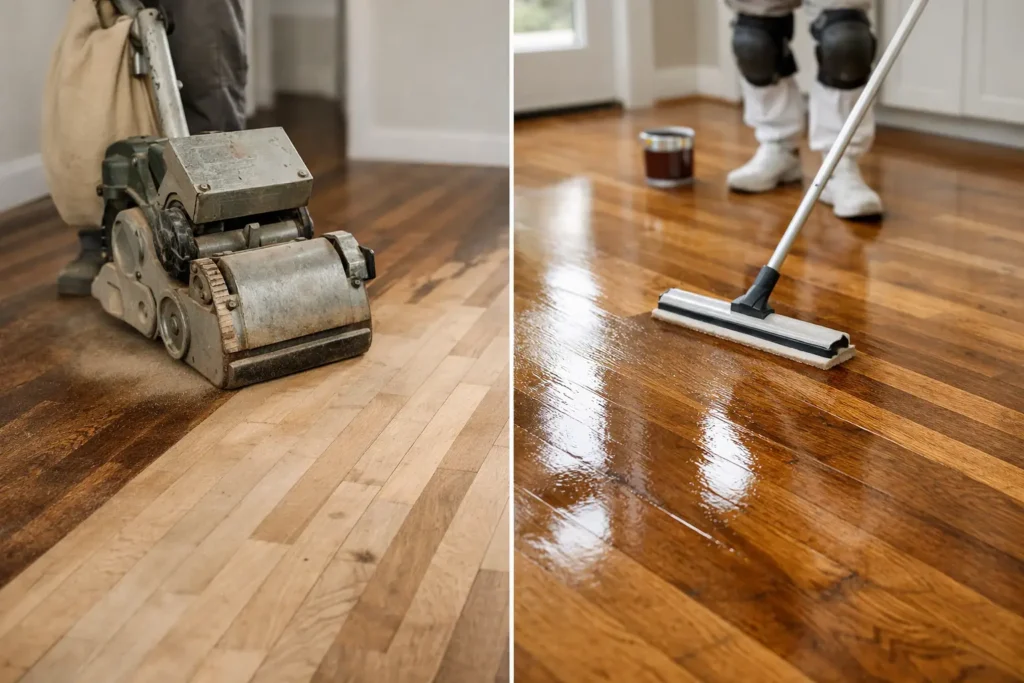
A floor can look tired long before it is truly worn out. That is why refinishing vs recoating wood floors is one of the most common questions homeowners ask when scratches, dull traffic paths, and fading start to show.
The right choice depends on what kind of wear you are seeing and how much of the existing finish is still protecting the wood. Recoating is a maintenance service that refreshes the top layer. Refinishing goes deeper, removing the old finish and restoring the wood itself. If you choose correctly, you can protect your floors, improve their appearance, and avoid paying for more work than you actually need.
Refinishing vs recoating wood floors: what is the difference?
Recoating means adding a new protective finish over an existing hardwood floor after the surface is properly cleaned and prepared. It is best for floors that are structurally sound and still have finish in place, but have lost some sheen from regular use. Think of a floor that looks dull, has light surface scratches, or no longer feels as protected as it once did.
Refinishing is a more complete restoration. It removes the old finish and sands the floor down so a new finish system can be applied. This is the better option when the finish has worn through, scratches are deeper, stains have penetrated, or the floor has visible damage that a fresh topcoat will not hide.
For homeowners, the easiest way to think about it is this: recoating refreshes the finish, while refinishing restores the floor.
When recoating is the better option
Recoating makes sense when your floors still look generally good, but not as vibrant or protected as they used to. If you catch wear early, a recoat can extend the life of your floor and delay the need for full sanding.
This is often the right choice when you notice light surface scratching from everyday foot traffic, minor scuffing, or a finish that looks flat in sunny areas. A recoat can also be smart after a home purchase, before listing a property for sale, or as part of routine maintenance in rental or light commercial spaces.
There are limits, though. Recoating will not remove deep gouges, fix black water stains, correct cupping, or solve areas where bare wood is exposed. It also will not change the stain color. If the floor has serious wear, adding another coat on top will not create the result most homeowners are hoping for.
When refinishing is worth it
Refinishing is usually the right move when the floor itself needs help, not just the finish on top. If you can see wear patterns down to raw wood, pet stains, discoloration, old finish buildup, or damage from years of use, recoating will not be enough.
This is also the better option if you want a bigger visual change. Refinishing gives you the chance to restore a more even appearance, repair certain issues, and in many cases adjust the stain color and sheen level. For older homes in Connecticut with original hardwoods, refinishing can dramatically improve the entire room while preserving the character homeowners want to keep.
It costs more than recoating because it is more involved, but it also delivers a much more complete transformation.
The biggest mistake homeowners make
The most common mistake is waiting too long for a recoat, then being surprised that the floor now needs refinishing. Once the protective finish wears away in traffic lanes, the wood becomes vulnerable. Dirt, moisture, and daily abrasion begin affecting the wood itself instead of just the topcoat.
At that point, a maintenance service is no longer enough. This is why timing matters. A well-timed recoat can preserve your floors for years. Delaying service can turn a simpler refresh into a full restoration.
The second mistake is assuming every scratched floor needs refinishing. Some floors look worse than they are. Under the right lighting, normal wear can seem severe, but if the finish is still intact, recoating may be the more practical and cost-effective option.
How to tell which service your floor needs
A professional inspection is the best way to know for sure, but there are a few signs homeowners can look for. If the floor looks dull but the color is consistent and scratches seem light, recoating may be possible. If you see gray, black, or raw-looking areas, that usually points to finish failure and a need for refinishing.
Water behavior can also offer clues. If small drops soak in quickly rather than bead on the surface, the protective layer may be worn down. High-traffic areas near entryways, kitchens, and hallways tend to show this first.
Previous products matter too. Some floors have been treated with waxes or cleaning products that interfere with adhesion. In those cases, recoating may not be advisable until the condition of the surface is properly evaluated.
Appearance, cost, and longevity
Recoating is usually the more affordable option because it keeps the existing color and condition of the floor intact while renewing protection. It is a smart value when the floor is still in good shape and you simply want it to look fresher and last longer.
Refinishing costs more, but it resets the floor in a much more meaningful way. It can address years of wear, improve uneven appearance, and bring older hardwood back to life. If the floor has visible damage or you want a more dramatic result, the added investment is often justified.
Longevity depends on traffic, maintenance habits, pets, and the quality of the finish system. In general, recoating is a preservation step, while refinishing is a restoration step. One extends the life of the current floor condition. The other gives the floor a new starting point.
Why the process matters as much as the choice
Whether your home needs a recoat or full refinishing, the quality of the process has a direct impact on the result. Homeowners often worry about what floor work will mean for indoor comfort, especially in homes with children, pets, or allergy-sensitive family members.
That is where dustless sanding makes a real difference. When refinishing is necessary, Dustless Hardwood Floors LLC uses a proprietary dustless sanding system that leaves zero dust in the home. That means restored beauty without a cloud of fine particles settling through your living space. For Connecticut homeowners who want clean results and less stress, that matters just as much as the finish itself.
This is especially valuable in busy households and occupied homes where people want the floors renewed without turning the project into a major disruption. Clean, dust-free workmanship is not a luxury feature. It is part of what makes a professional hardwood restoration service safer, more comfortable, and more practical for modern family life.
What Connecticut homeowners should keep in mind
In Connecticut, seasonal changes can be tough on wood floors. Winter dryness and summer humidity affect how hardwood behaves over time, especially in older homes throughout areas like West Hartford, Manchester, Glastonbury, and surrounding Hartford County communities. That does not automatically mean your floor needs refinishing, but it does mean regular evaluation is worth it.
If your floors are starting to lose their protection, acting early can preserve them. If they already have visible wear, discoloration, or damage, refinishing may be the smarter long-term decision. The goal is not choosing the cheaper service or the bigger service. It is choosing the one that matches the floor you actually have.
Refinishing vs recoating wood floors: the right answer is condition-based
There is no one-size-fits-all answer to refinishing vs recoating wood floors. A newer floor with light wear may only need a fresh protective coat. An older floor with exposed wood, stains, or deeper scratches usually needs full refinishing to look right again.
The best decision comes from an honest assessment of the finish, the wood, and your goals. If you want to maintain a floor that is still in good shape, recoating can be a smart preventive move. If you want to truly restore a floor that has seen better days, refinishing is often the better investment.
Beautiful hardwood floors do not always need a complete reset, but they do need the right kind of care at the right time. When you make that call early, you protect not just the floor, but the comfort and value of your home.