
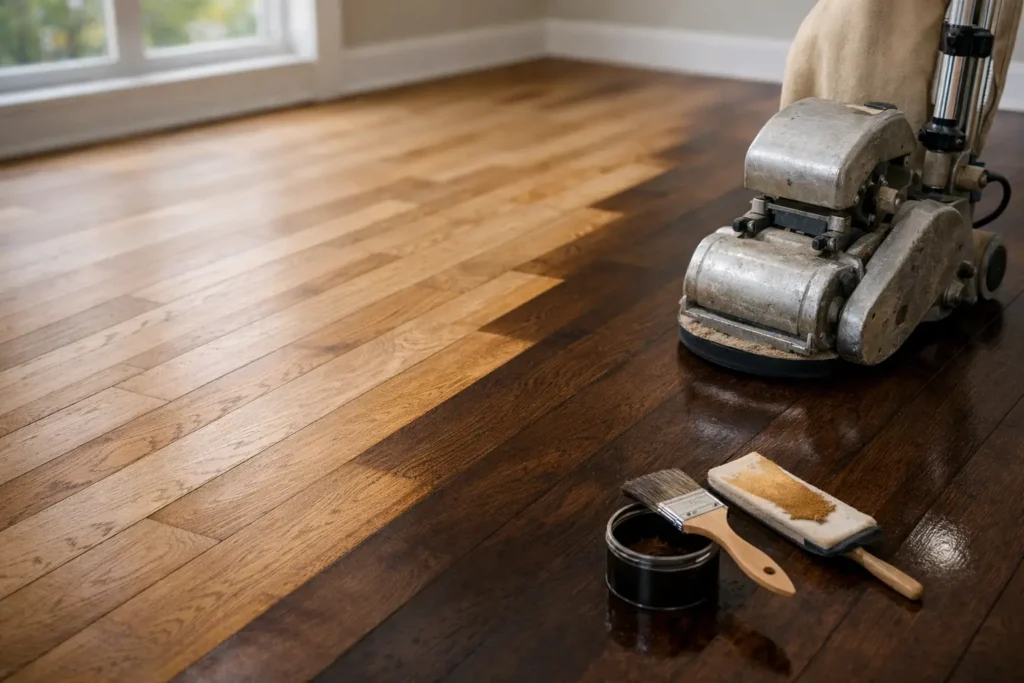
A floor can make an entire room feel dated even when the furniture, paint, and lighting are right. If your hardwood looks too orange, too dark, too red, or simply worn out, hardwood floor color change refinishing is often the smartest way to transform the space without replacing the flooring you already own. For many Connecticut homeowners, it is the fastest path to a cleaner, more current look while keeping the character and value of real wood.
Changing floor color is not just about stain samples on a chart. The wood species, the existing finish, the age of the boards, and the lighting in your home all affect the final result. That is why this project works best when it is approached as a full refinishing decision, not just a cosmetic quick fix.
What hardwood floor color change refinishing really involves
When homeowners say they want to change the color of their hardwood floors, they usually mean one of two things. They either want to remove an outdated tone, like old amber or red hues, or they want to shift the floor to better match a renovation, such as lighter walls, modern trim, or a new kitchen.
A real color change requires the floor to be sanded down to bare wood so the new stain or natural finish can be applied evenly. Surface-level coatings do not create a dependable color correction. If the old finish remains in the grain or around the edges, the new color can look blotchy or inconsistent.
This is where process matters. A professional dustless sanding system removes the old finish cleanly while leaving zero dust in the home. That matters for everyone, but especially for families with children, pets, or allergy concerns. It also means the project feels far more manageable for busy households that want beautiful results without the usual construction-zone experience.
Why homeowners change hardwood floor color
Some color changes are style-driven. Others are practical. Many older homes in places like West Hartford, Manchester, and Glastonbury have solid hardwood floors in excellent structural shape, but the finish reflects a different era. Heavy red tones, yellowed polyurethane, or very dark stain can make a room feel smaller and older than it really is.
Lighter tones often make spaces look more open and current. Medium brown finishes tend to be a safe choice because they feel warm, timeless, and forgiving. Darker floors can look elegant and dramatic, but they also tend to show more dust, pet hair, and fine scratches. That does not make them a bad choice. It simply means the right color depends on how you live.
Real estate owners also choose color change refinishing to improve market appeal. If you are preparing a property for sale or updating a rental, changing the floor color can give the entire interior a fresher look without the cost of new hardwood installation.
Best color directions for Connecticut homes
Trends matter, but they should not be the only factor. The best floor color is the one that fits your home, your light, and your maintenance expectations.
Light and natural finishes
Natural-looking floors remain popular because they brighten rooms and let the wood grain stand out. This direction works especially well in homes with smaller rooms, limited natural light, or a more modern design plan. On oak, a natural or lightly toned finish can reduce the heavy amber look that many older floors developed over time.
Medium brown tones
Medium brown is often the most versatile choice. It adds warmth without making the room feel heavy and tends to work well with both traditional and updated interiors. For homeowners who want a refined look that will still feel right years from now, this is often the safest lane.
Dark stain colors
Dark floors can be beautiful, especially in larger rooms with strong natural light. They create contrast and can make trim and cabinetry stand out. The trade-off is visibility. Scratches, footprints, and hair are usually easier to see on very dark floors, so the finish has to match your lifestyle as much as your taste.
Neutralizing red or orange tones
This is one of the most common goals in hardwood floor color change refinishing. Many older oak floors carry warm undertones that homeowners no longer want. A skilled refinishing plan can neutralize those tones and move the floor toward a more balanced, current appearance, but results depend on the species and the existing stain history.
What affects the final color result
The biggest misconception about refinishing is that every floor can become any color. In reality, wood has limits. Red oak, white oak, maple, birch, and pine all accept stain differently. Grain pattern, age, sun exposure, previous coatings, and repaired areas can all influence the final look.
Red oak, for example, has stronger pink and red undertones than white oak. That does not mean you cannot shift it lighter or cooler, but it does mean sample testing matters. Maple can be more challenging because it does not always absorb stain as evenly as oak. Older floors may also contain boards from different lots or repairs from past work, which can create natural variation.
This is not necessarily a problem. Variation is part of what makes real hardwood attractive. The goal is not to make wood look artificial. The goal is to create a consistent, intentional finish that complements the room.
Dustless sanding changes the homeowner experience
For most homeowners, the biggest hesitation around refinishing is not the color decision. It is the fear of what the process will feel like inside the house. That concern is exactly why dustless sanding matters.
With a professional dustless hardwood floor sanding system, the old finish is removed while leaving zero dust in the home. That means cleaner air, cleaner surfaces, and a far more comfortable experience from start to finish. For families, pet owners, and allergy-sensitive households, this is not a small upgrade. It is the difference between putting off the project and finally moving forward with confidence.
Dustless Hardwood Floors LLC uses a proprietary dustless sanding system designed to deliver that clean result homeowners want. It supports the same goal as the color change itself – a transformed floor without turning your home upside down.
When refinishing makes sense and when it does not
Hardwood floor color change refinishing is a strong option when the boards are solid, structurally sound, and thick enough to be sanded. It is ideal for floors with scratches, dull finish, fading, minor water marks, and outdated stain color.
There are times when expectations should be adjusted. Deep pet stains may not disappear completely. Severe water damage may require board replacement before refinishing. Engineered wood can sometimes be refinished, but not always – it depends on the thickness of the wear layer. Floors with extensive patchwork may also show some natural differences after staining.
That does not mean the project is not worthwhile. It means a professional assessment should guide the plan so you know what can be improved, what may remain visible, and what finish direction will give the best overall result.
How to choose the right new color
Start with the rooms around the floor, not with social media photos. Cabinet tone, wall color, trim, natural light, and the age of the home all influence what will look right. A floor color that looks perfect in a bright new build may feel flat or cold in a classic Connecticut colonial.
Think about maintenance honestly. If you have large dogs, active kids, or constant foot traffic, a mid-tone satin finish may be more practical than a very dark glossy stain. If your goal is resale, it usually makes sense to stay in a neutral range that appeals to more buyers.
Most important, sample the color on your actual floor. Wood tells the truth better than a brochure. Seeing stain choices in your own lighting helps avoid expensive second-guessing.
A better way to update your home
Replacing hardwood is expensive, and in many homes, it is unnecessary. If the wood itself still has life left, changing the color through refinishing can completely shift how the house feels. Rooms look brighter, cleaner, more current, and more connected to the rest of your design choices.
For Connecticut homeowners who want that transformation without debris circulating through the house, dustless refinishing offers a far better path. You keep the strength and character of real hardwood, gain the updated color you actually want, and enjoy the process with zero dust in the home.
If your floors are the one feature holding the room back, changing the color may be the update that finally makes everything else fall into place.