
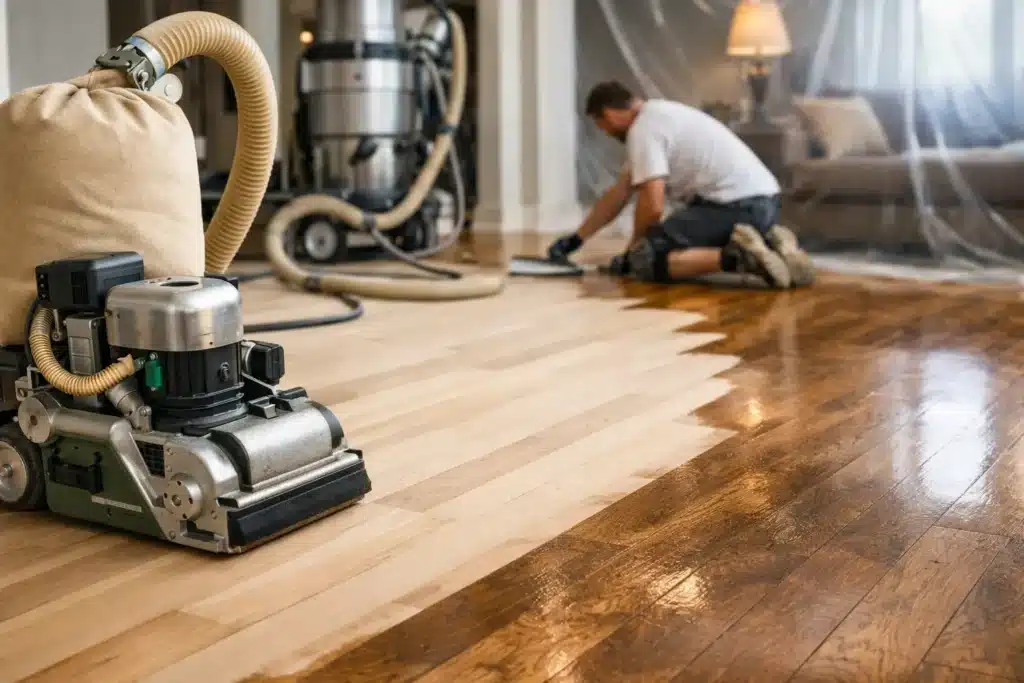
A beautiful hardwood floor should not require putting your household on hold. If you are researching a dustless refinishing timeline occupied homes can realistically follow, the answer depends on your floor’s condition, the rooms involved, and the finish system selected. With the right plan, most Connecticut homeowners can remain at home while their floors are restored—with clean work areas, clear access instructions, and zero dust in the home. Understanding the dustless refinishing timeline occupied homes will help you prepare better and stay organized.
At Dustless Hardwood Floors LLC, our proprietary dustless sanding system captures dust at the source. That means your family is not left dealing with airborne residue throughout the house. It is a cleaner, more comfortable approach for children, pets, and allergy-sensitive households, especially when refinishing a home that is actively lived in. Knowing the dustless refinishing timeline occupied homes can expect will ease concerns.
For clarity, let’s summarize the key aspects of the dustless refinishing timeline occupied homes should keep in mind throughout the process.
When you know the dustless refinishing timeline occupied homes typically experience, you can better manage your expectations and plan accordingly.
The dustless refinishing timeline occupied homes rely on can vary based on the specific conditions and requirements of each project.
What Is the Typical Dustless Refinishing Timeline for Occupied Homes?
Most occupied-home refinishing projects take three to five days from preparation through the point when normal foot traffic can resume. A single room or smaller, straightforward area may move faster. A whole first floor, extensive repairs, a color change, intricate borders, or high-humidity conditions can extend the schedule. Familiarizing yourself with the dustless refinishing timeline occupied homes often follow can help set realistic expectations.
The project does not mean every part of your home becomes unavailable. The goal is to create a practical work zone and preserve a safe route to bedrooms, bathrooms, kitchens, or another level of the house whenever the layout allows. Before work begins, a professional crew should walk through access needs with you, including pets, school schedules, remote work, and any mobility considerations. This discussion can clarify the dustless refinishing timeline occupied homes can effectively manage.
The biggest timing distinction is between a floor that is dry enough to enter carefully and a floor that has fully cured. Your contractor will provide exact instructions for the finish used on your project. Following those instructions protects the new finish from early scratches, impressions, and uneven sheen. Understanding the dustless refinishing timeline occupied homes need can significantly help.
Day-by-Day: What Homeowners Can Expect During Refinishing
Day 1: Site Setup, Preparation, and Dustless Sanding
The first day is focused on preparing the floor for its new finish. Furniture must be removed from the active area, and rugs, floor decor, and breakable items should be relocated before the crew arrives. If a room has heavy furniture, built-ins, or appliances, discuss those details during the estimate so the schedule is accurate from the start. Knowing the dustless refinishing timeline occupied homes can expect will streamline this stage.
Our state-of-the-art dustless sanding equipment keeps the sanding process contained and leaves zero dust in the home. Homeowners do not have to plan for dust cleanup in adjacent rooms, on furniture, or inside vents. The restored wood is then inspected for loose boards, minor gaps, surface damage, and repair needs that can affect the final appearance. This is crucial for understanding the dustless refinishing timeline occupied homes rely on.
For occupied homes, this is also the day when a good traffic plan matters most. Family members and pets should remain out of the active work zone. A clear alternate route through the home makes the experience much easier, particularly in homes with one central hallway or a first-floor bedroom. This preparation can help you better visualize the dustless refinishing timeline occupied homes will experience.
Day 2: Advanced Custom Staining or Initial Finish Application
If you are changing the floor color, staining generally occurs after sanding and preparation. This step needs time to settle and dry evenly before protective coats are applied. Natural wood tones and clear refinishing can sometimes shorten the overall schedule because there is no stain-drying window, but every floor should be evaluated individually. Knowing the dustless refinishing timeline occupied homes encounter can make this process smoother.
The first finish coats are then applied according to the product system and the condition of the wood. Connecticut weather can matter here. High humidity, lower temperatures, and limited airflow may affect dry times, while a controlled indoor environment supports more predictable results. Familiarity with the dustless refinishing timeline occupied homes typically see can aid your planning.
A homeowner can usually stay in the home during this stage, but the refinished section remains closed. Plan meals, laundry, pet care, and bedtime routines around the rooms that will be temporarily unavailable. For a first-floor project, some families choose to use an upstairs living space for a day or two. For a bedroom-floor project, setting up a temporary sleeping area ahead of time removes last-minute stress. This is essential for understanding the dustless refinishing timeline occupied homes will experience.
Days 3 and 4: Additional Protective Coats and Mandatory Dry Time
Many hardwood refinishing projects require additional coats for lasting protection and a smooth, even appearance. Between coats, the floor needs the proper drying time. Rushing this step is not a benefit to the homeowner. A well-built finish is what helps your restored floor stand up to everyday footsteps, pets, furniture, and family life. Keep the dustless refinishing timeline occupied homes need in mind during this phase.
Your crew will tell you when it is safe to walk on the surface in socks and when shoes are permitted. Even after light foot traffic is allowed, treat the floor carefully. Do not place area rugs, heavy furniture, or rolling chairs back on the surface until the recommended cure period has passed. This caution is part of understanding the dustless refinishing timeline occupied homes should be aware of.
For many projects, homeowners regain cautious access within about 24 hours after the final coat. Full cure takes longer, often several days or more depending on the finish and site conditions. This is not downtime that requires leaving the house. It simply means protecting the investment while the finish gains its full strength. The dustless refinishing timeline occupied homes experience can vary based on these factors.
Day 5 and Beyond: Curing Windows and Returning Rooms to Normal Use
Once your contractor confirms that the floor is ready, furniture can return according to the finish schedule. Use clean felt pads under table legs, chairs, and sofas, and lift furniture instead of sliding it. Wait to lay rugs until the recommended cure period is complete, because covering a newly finished surface too early can interfere with curing. This final step is crucial in the dustless refinishing timeline occupied homes should follow.
For property managers, landlords, and homeowners preparing a home for sale, this final stage should be scheduled around move-in dates and cleaners. Refinishing before other indoor work is complete can help preserve the finished floor. If painters, movers, or installers must enter later, coordinate their timing and floor protection plan in advance. Understanding the dustless refinishing timeline occupied homes need for these scenarios can be helpful.
Technical Variances: What Can Unexpectedly Alter the Schedule?
A reliable timeline starts with an honest evaluation, not a guess. Floors with deep scratches, water marks, severe pet damage, loose boards, old coatings, or prior patchwork may need additional repair and preparation. Those steps are worthwhile because they improve both the appearance and durability of the finished result. A clear understanding of the dustless refinishing timeline occupied homes face is essential.
Room layout also matters. A compact living room with easy entry is different from a connected first floor that includes a kitchen, hall, dining area, and stair access. In some homes, refinishing one section at a time is the best way to keep household routines moving. In others, completing the connected area together produces a more consistent color and finish. Keep the dustless refinishing timeline occupied homes have in mind during planning.
Finish choice is another factor. Homeowners who prioritize a specific sheen, stain color, or performance level should allow for the dry and cure times that protect that choice. The fastest schedule is not always the best schedule. The right schedule delivers a floor that looks exceptional and holds up after the crew leaves, adhering to the dustless refinishing timeline occupied homes can effectively manage.
In-Home Logistics: How to Prepare for Floor Sanding Without Disrupting Your Household
Preparation is simple when it is planned early. Remove furniture and personal items from the work area, identify an alternate path through the home, and arrange a comfortable space for pets away from active rooms. If you work from home, choose a room on another level or schedule calls outside the main work period. Understanding the dustless refinishing timeline occupied homes need is vital for a smooth transition.
Keep essential items accessible. Families often appreciate having medications, chargers, school supplies, pet food, and a few days of clothing outside the refinishing zone. If the project affects a kitchen or laundry route, decide in advance how you will handle those routines while the floor receives its finish coats. This foresight is part of understanding the dustless refinishing timeline occupied homes face.
Most importantly, rely on the access and care instructions provided for your specific project. A licensed and insured Connecticut flooring professional should explain the timing clearly, confirm what areas are available each day, and give you transparent expectations before work starts. Knowing the dustless refinishing timeline occupied homes should expect can alleviate many concerns.
The Cleanest Path to Transformed Wood: Safe, Reliable, and Zero-Dust Operations
For homeowners living in their properties during a remodel, working with a National Wood Flooring Association (NWFA) compliant contractor changes the entire remodeling experience. Protecting your family’s indoor air quality is a primary objective, not an afterthought. Keeping in mind the dustless refinishing timeline occupied homes can follow will enhance your overall experience.
As a trusted, family-owned contractor licensed and insured in Connecticut (HIC#0640958) since 2006, our process balances speed with precision. Contact Dustless Hardwood Floors LLC today to book your free, transparent in-home estimate. Let’s coordinate a custom-tailored dustless refinishing timeline occupied homes can benefit from, bringing the warmth and strength back to your hardwood floors cleanly and efficiently.
Understanding the Dustless Refinishing Timeline for Occupied Homes
In this section, we will discuss the dustless refinishing timeline occupied homes need to consider for a smooth and efficient process.