
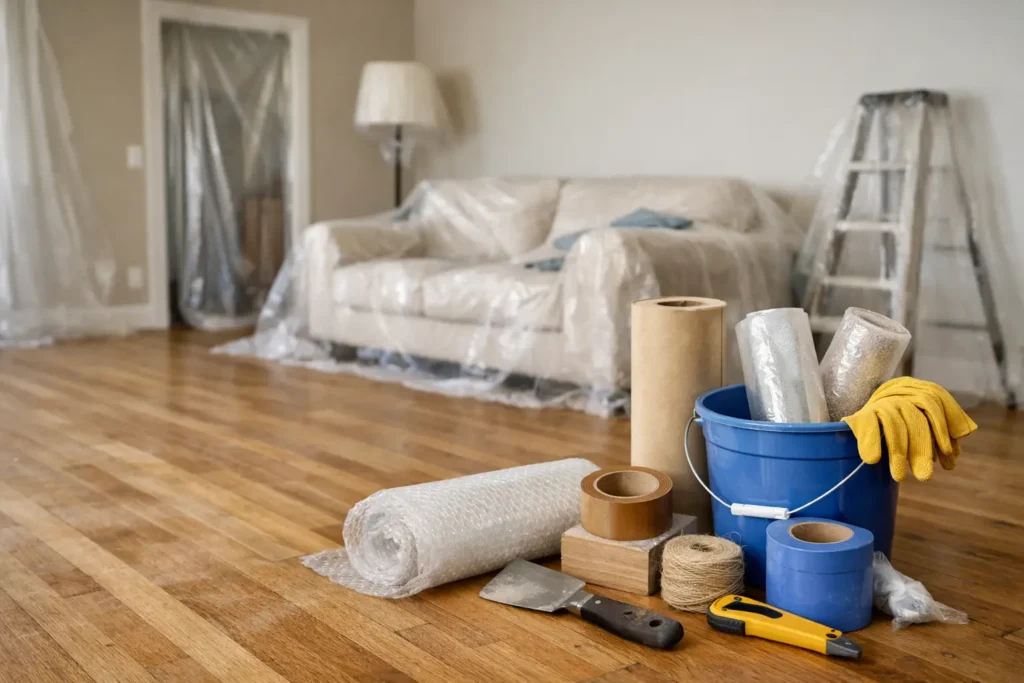
If your hardwood floors are about to be refinished, the quality of the result starts before the first machine is turned on. Homeowners often focus on stain color or finish sheen, but knowing how to prep house for floor refinishing can make the project faster, smoother, and much less stressful from day one.
The good news is that preparation does not have to be complicated. With the right plan, you can protect your belongings, keep your routine manageable, and help your contractor deliver the clean, beautiful finish you want. For Connecticut homeowners, especially busy families with children, pets, or allergy concerns, the goal is simple – get the home ready without turning life upside down.
How to prep house for floor refinishing before work begins
Start with the room itself. Anything sitting on the hardwood should be removed before the crew arrives. That includes furniture, rugs, floor lamps, plants, toys, baskets, pet beds, and small decor. If a room feels only half full, it still needs to be fully cleared. Refinishing works best when the entire floor surface is open and accessible.
Wall hangings are worth a second look too. In many homes, vibrations from equipment can shift lightweight frames or decorative items. You do not necessarily need to strip every wall bare, but it is smart to remove fragile pieces, leaning mirrors, and anything valuable in nearby spaces.
Window treatments depend on the layout. If curtains hang low and brush the floor, take them down. If they stay well above the work area, they can usually remain. The point is to create open access and avoid anything dragging into the refinished space.
Closets are another area homeowners forget. If the hardwood continues into a closet and that section is being refinished, empty it completely. Shoes, storage bins, and hanging clothes near the floor can get in the way and slow the process.
Focus on access, not just the floor
A successful refinishing project depends on easy movement through the home. Your contractor will need clear paths to the work area, especially from the entry door to the rooms being refinished. Move breakable items off hallway tables, clear stairs if they are part of the access route, and make sure there is enough space to carry equipment in and out safely.
Parking also matters more than many homeowners expect. If you have a driveway, leave room for the crew to park close to the house. That helps the job stay efficient and organized. If you live in a busy neighborhood in West Hartford, Manchester, Glastonbury, or another part of Hartford County, it helps to think through access ahead of time rather than sorting it out on arrival day.
If your building has condo rules, service elevators, or restricted parking hours, let your contractor know in advance. Small details like this can affect timing, and clear communication keeps the schedule on track.
Plan where you will live around the work zone
You may not need to leave your home, but you do need a plan for daily movement. Think about how you will get from bedrooms to bathrooms, kitchens to mudrooms, or one level to another if the hardwood is part of a major traffic path. This is especially important for families with young children, older adults, or dogs that follow the same indoor routes every day.
Set up temporary alternatives before the project begins. If dining room floors are being refinished, use the kitchen table instead. If the main family room is part of the job, prepare another area for evening use. These small adjustments make the project feel much easier once work starts.
What to do with furniture and fragile items
The simplest answer is to move everything out of the refinishing area before the start date. For some homeowners, that means using a garage, basement, spare room, or storage pod. For others, especially in larger homes, furniture can be shifted to finished spaces that are not included in the current phase.
Try not to stack heavy furniture on top of rugs, cushions, or delicate pieces. If you are moving items yourself, protect legs, corners, and glass surfaces. Larger sectionals, china cabinets, and solid wood bed frames often require a professional moving plan. It is better to solve that early than to scramble the night before.
Electronics deserve extra attention. Unplug televisions, gaming systems, speakers, computers, and charging stations in any affected room. Coil cords, label them if needed, and store everything together so setup is easier after the floors are complete.
For especially valuable items such as artwork, antiques, or heirloom furniture, use the most secure room in the house or move them off-site if that gives you peace of mind. Floor refinishing is a home improvement project, but your prep should still reflect what matters most to you.
Pets, children, and household routines
Families usually ask the same practical question: how do we keep everyone comfortable while the work is happening? The answer starts with boundaries. Decide which rooms are off-limits and make that clear before the first day. Children and pets do best when routines stay predictable, so create a simple plan they can follow.
For pets, set up food, water, and resting areas away from the refinishing zone. If your dog reacts to visitors or your cat is sensitive to changes in routine, choose a quiet room with a closed door. If needed, arrange daycare or a visit with family during the busiest hours.
For children, explain that the floors need time and space to be restored properly. A temporary play area in another room can make a big difference. If the project affects homework spots or nap routines, adjust those ahead of time rather than waiting until the house feels in transition.
This is one reason many Connecticut homeowners prefer a dustless refinishing company. A true dustless sanding system keeps the home clean during the sanding phase, which is a major benefit for families, pets, and allergy-sensitive households. It creates a much more comfortable experience than old-fashioned methods and helps protect indoor air quality while the floors are being renewed.
Cleaning before refinishing – what helps and what does not
Homeowners often assume they should deep-clean the floors before refinishing. Usually, a light pre-project cleanup is enough. Pick up loose debris, remove items from the floor, and make sure surfaces are accessible. There is no need to scrub hardwood with water-heavy products right before refinishing, and doing so can actually complicate preparation.
What helps most is basic order. Clear counters near the work zone, tidy adjoining rooms, and remove anything that could be knocked over during movement through the house. If you want to clean baseboards, window sills, or nearby furniture after everything is moved out, that can be useful, but keep it simple.
If there are problem areas on the floor such as pet stains, water marks, deep scratches, or boards that feel loose, mention them before the project starts. These details affect expectations and may shape the repair plan.
Confirm finish details in advance
Part of prep is decision-making. Do not wait until the crew arrives to choose stain color, finish type, or sheen level if those choices are part of the project. Satin, semi-gloss, and natural matte looks can all change how the room feels. So can stain tone, especially in homes with strong natural light.
If you are unsure, ask for guidance before the start date. A floor can look very different once refinished, and the best choice depends on your wood species, lifestyle, design preferences, and how much everyday wear the room sees.
Questions to settle before refinishing day
Good prep is not only physical. It also means knowing the plan. Before work begins, confirm the project schedule, room sequence, and when you can return furniture to each area. Ask where the crew will enter, whether pets should be secured during arrival, and what parts of the home need to stay clear.
If you work from home, mention that early. If you manage a rental, coordinate with tenants before the schedule is locked in. If you are preparing a house for sale, tell the contractor your timeline so the job supports showings, photos, or move-in dates.
A licensed and insured professional should make this part easy. Clear expectations reduce stress and help the entire job run better from start to finish. That is especially valuable when you are balancing family life, work schedules, or multiple renovation projects at once.
The smartest way to prep is choosing the right refinishing team
When homeowners ask how to prep house for floor refinishing, they usually mean furniture, closets, and pets. Those things matter. But one of the biggest decisions is hiring a company whose process supports a cleaner, more comfortable experience in the first place.
Dustless Hardwood Floors LLC uses a proprietary dustless sanding system that leaves zero dust in the home. For homeowners who want restored beauty without the usual hassle, that changes the entire project experience. It means clean results, less disruption to daily life, and a safer environment for children, pets, and anyone sensitive to airborne particles.
Prep still matters, but it should feel manageable. Clear the space, plan your routine, protect what is valuable, and ask questions before the start date. When the refinishing team is experienced, licensed in Connecticut, and committed to clean, guaranteed results with no hidden fees, your home feels easier to prepare – and a lot more exciting to see when the work is done.