
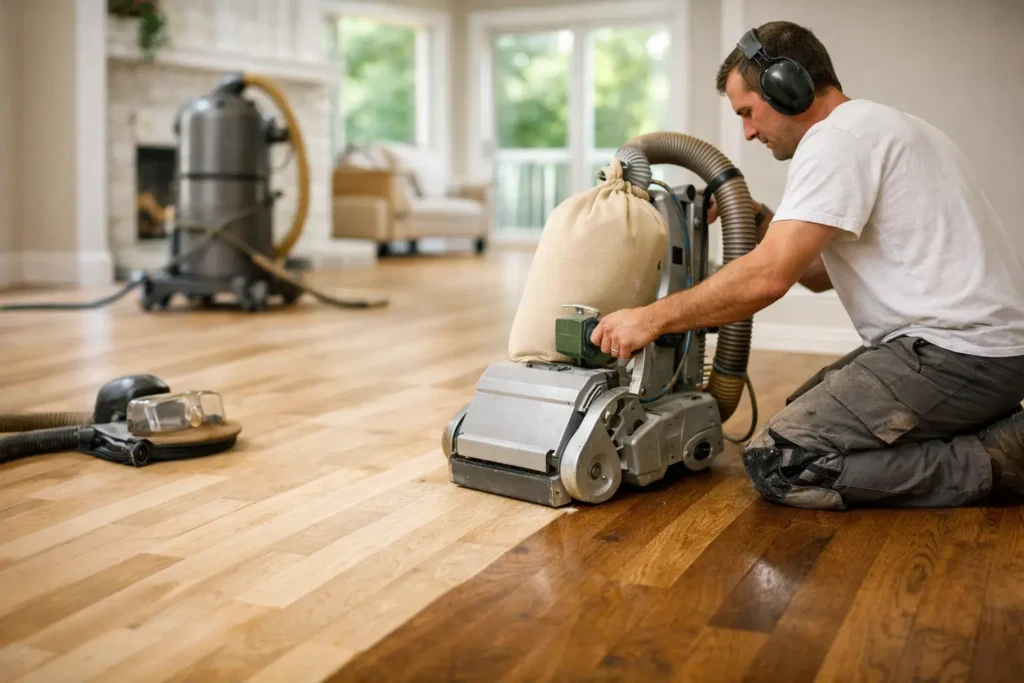
Hardwood floors do not usually fail all at once. It starts with traffic patterns near the entry, a dull patch under the dining table, light scratches in the hallway, or water marks that seem small until the whole room looks tired. This Connecticut dustless floor refinishing guide is for homeowners who want those floors restored without turning their home into a construction zone. The goal is simple – bring back the beauty of real wood with a process that leaves zero dust in the home and keeps the space comfortable for families, children, pets, and allergy-sensitive households.
Why Connecticut homeowners choose dustless refinishing
In Connecticut, hardwood floors take a beating. Snow, road salt, wet boots, sandy grit, pet nails, moving furniture, and years of daily use all show up on the surface. Many homes in places like Manchester, West Hartford, Glastonbury, and surrounding Hartford County neighborhoods also have older hardwood that deserves to be preserved rather than covered up.
That is why dustless refinishing has become the smarter choice for so many homeowners. You get the restored look people want from sanding and refinishing, but without the lingering particles that can settle throughout the home. For households with children, pets, or sensitivities to indoor air quality, that difference matters.
The biggest misunderstanding is that all floor refinishing is basically the same. It is not. Equipment, containment, finish quality, and contractor experience all affect the result. A true dustless system is designed to capture debris at the source so the home stays clean throughout the project. That is a major advantage if you want a beautiful floor without added stress.
What a Connecticut dustless floor refinishing guide should help you decide
Homeowners usually come to refinishing with three questions. Is the floor worth saving, how long will the project take, and what will my home feel like while the work is happening?
In many cases, solid hardwood floors are absolutely worth refinishing. Surface scratches, worn finish, discoloration, and many common signs of aging can often be corrected. Even some dents, stains, and localized damage can be improved or repaired before the final finish goes down. If the wood itself still has life left in it, refinishing is often far more cost-effective than replacement.
Timing depends on the floor condition, the square footage, whether repairs are needed, and the type of finish selected. Smaller, straightforward rooms move faster than homes with multiple species, custom stain work, or damaged boards that need attention first. A licensed and insured contractor should walk you through that clearly before the work begins, not surprise you mid-project.
As for day-to-day comfort, the right dustless system changes the entire experience. Instead of bracing for a dirty, drawn-out process, homeowners can expect a cleaner project with professional handling from start to finish. That is especially valuable in occupied homes.
Signs your hardwood floors are ready for refinishing
Some floors clearly need help. Others are still structurally sound but no longer show well. If you are unsure, look at how the floor behaves in natural light. A floor that looks flat, patchy, or worn despite regular cleaning is often a good candidate.
Common signs include dull finish, light to moderate scratches, fading from sunlight, gray traffic lanes, minor cupping from older moisture exposure, and spots where the protective coat has worn thin. Water marks around sinks, pet stains near entry points, and uneven color between rooms are also worth evaluating.
There are limits, of course. If boards are severely warped, deeply rotted, or have already been sanded too many times, replacement or partial replacement may make more sense. That is why a professional assessment matters. The best advice is not always the most expensive option – it is the one that protects the floor and the homeowner’s investment.
How the dustless refinishing process works
A quality dustless refinishing project starts with inspection, not machinery. The contractor should identify board movement, previous patching, finish buildup, pet damage, moisture issues, and any transitions that need special care. This is also when stain goals, sheen level, and expected timeline should be discussed.
Next comes sanding with a proprietary dustless system that captures debris immediately, leaving zero dust in the home. That is the standard Connecticut homeowners should expect if they are specifically searching for dustless refinishing. Clean containment is not a luxury feature. It is the feature.
After sanding, repairs can be completed where needed. Gaps, damaged boards, small problem areas, and uneven spots may be addressed before stain or finish is applied. Then the floor is refined to the desired look, whether that means keeping a natural tone, deepening the color, or modernizing an older orange or yellow cast.
The final step is applying the finish system. This is where durability, appearance, and household needs all come together. A family with dogs may prioritize resilience. A homeowner preparing a property for sale may want broad appeal and a clean satin look. A historic home may call for a different finish strategy than a newer build. There is no single best answer for every floor.
Choosing the right stain and finish for your home
Color changes the whole room. Some homeowners want to keep the warmth of classic oak. Others want a lighter, cleaner tone that helps the space feel larger and more current. Dark stains can look dramatic and elegant, but they also tend to show more surface dust, pet hair, and scratches. Mid-tone and natural finishes are often more forgiving in busy homes.
Sheen matters too. High gloss reflects the most light, but it also shows imperfections more easily. Satin is a popular choice because it feels polished without looking overly shiny. Matte finishes continue to gain popularity in Connecticut homes because they create a softer, more updated appearance.
If you have children, pets, or a high-traffic household, this is where practical decision-making matters more than trends. The best-looking floor is the one that still looks good after real life happens on it.
When refinishing makes more sense than replacement
A lot of homeowners assume that worn floors need to be torn out. Often, they do not. If the boards are solid, the layout works, and the species has good character, refinishing is usually the better value. You preserve the original material, improve the appearance, and avoid the cost and complexity of full replacement.
Replacement makes more sense when the floor has major structural failure, severe water damage across large areas, or mismatched repairs that cannot be blended effectively. In some homes, a hybrid approach is best – repair or replace isolated sections, then refinish the full surface for a consistent result.
That is especially useful in older Connecticut homes where the existing hardwood has more quality and character than many modern alternatives.
What to ask before hiring a floor refinishing contractor in Connecticut
Not every contractor who offers floor sanding delivers the same level of cleanliness, finish quality, or reliability. Homeowners should ask whether the company is licensed and insured in Connecticut, whether the sanding system is truly dustless, and whether the estimate clearly explains repairs, staining, finish options, and timeline.
You should also ask how the contractor handles homes with pets, children, and occupied living spaces. A professional should be able to explain the process in plain language and set realistic expectations without vague promises.
If you are planning work in a primary residence, communication matters as much as craftsmanship. You want a contractor who shows up when scheduled, respects the home, and delivers the result without hidden fees or unnecessary confusion.
A local note for Hartford County homeowners
In areas like Manchester, Ellington, South Windsor, and West Hartford, many homes have hardwood under existing rugs or within older room layouts that can look dramatically better after refinishing. Even investment properties and light commercial spaces can benefit from dustless sanding when presentation and turnaround matter.
For local homeowners, there is real value in choosing a company that understands Connecticut homes, seasonal wear patterns, and the expectations of families living in the space during the project. Dustless Hardwood Floors LLC is licensed and insured in Connecticut, and that local accountability gives homeowners added confidence when they are trusting someone with one of the most visible surfaces in the home.
The result should feel as good as it looks
Refinished hardwood should not just photograph well. It should change how the room feels when you walk into it. Cleaner lines, richer color, smoother texture, and a fresh protective finish can make an older space feel cared for again.
That is the real value behind dustless refinishing. It is not only about restoring wood. It is about making the process easier on the people who live there. When your floors are renewed with zero dust in the home, the project feels less like an interruption and more like a smart upgrade you are glad you made.
If your hardwood floors are worn but still worth saving, the right next step is not to wait for them to get worse. It is to have them evaluated by a licensed Connecticut professional who can tell you what is possible, what is practical, and how to restore them beautifully without the mess homeowners used to expect.