
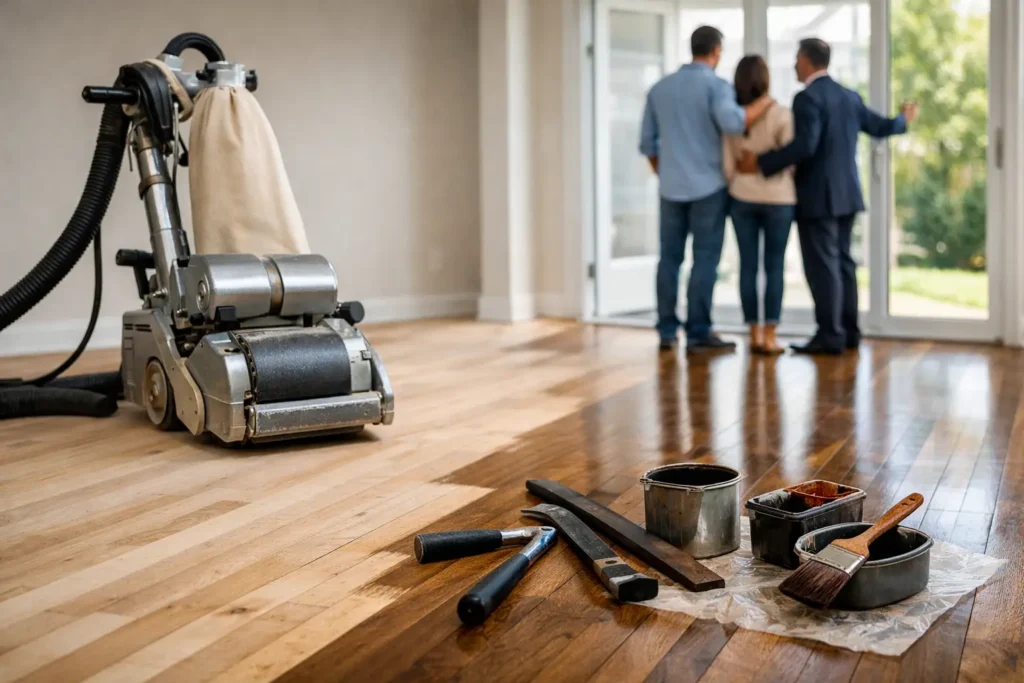
A buyer can forgive an outdated light fixture. It is much harder to overlook floors that look gray, scratched, uneven, or neglected the moment they walk through the front door. That is why hardwood floors for home resale are often one of the most practical upgrades a Connecticut seller can make before listing. Beautiful wood floors make rooms feel cleaner, larger, and better cared for – without requiring a full-scale renovation.
The key is choosing the right level of work. Some homes need professional refinishing to bring original floors back to life. Others need targeted repairs, a color update, or new hardwood in an area where mismatched flooring weakens the overall impression. The goal is not to over-improve the house. It is to present a home buyers can picture themselves moving into confidently.
Why Buyers Respond to Hardwood Floors
Hardwood has lasting appeal because it feels permanent. Unlike a temporary cosmetic update, a well-maintained hardwood floor suggests quality beneath the surface. Buyers see a material that can be cleaned, repaired, refinished, and enjoyed for years.
For sellers, that perception matters. A bright, even floor can make paint colors look fresher, cabinetry look more intentional, and furnishings photograph better for a listing. It also reduces one common buyer concern: the possibility of immediately needing to replace worn flooring after closing.
In many Connecticut homes, original hardwood is already hiding under a faded finish, surface scratches, old stains, or years of daily wear. Restoring it can preserve a feature buyers actively look for while helping the home retain its character. This is particularly valuable in established neighborhoods in West Hartford, Glastonbury, Manchester, and greater Hartford County, where original details often help a property stand out.
Do Hardwood Floors Increase Resale Value?
They can, but the return depends on the starting condition of the home, the local price range, and how the floor project fits into the full presentation of the property. Hardwood flooring is not a guarantee of a specific dollar increase. It is, however, a strong tool for improving buyer appeal and reducing objections during showings.
A home with restored wood floors may attract more attention than a comparable home with visibly worn surfaces. More interest can support stronger offers, especially when the floors make the property feel move-in ready. Buyers often make emotional decisions quickly. When the flooring looks beautiful and consistent from room to room, it creates a positive first impression before they begin evaluating smaller details.
The best resale result usually comes from restoring what is already there rather than replacing sound hardwood unnecessarily. If boards are structurally solid, professional sanding and refinishing can deliver a dramatic transformation at a more measured investment than installing entirely new floors. If the floor has severe water damage, missing sections, loose boards, or extensive pet staining, repairs may be needed before refinishing can deliver the right result.
Refinishing Often Delivers the Strongest Pre-Listing Impact
A dull finish can make even high-quality oak look tired. Refinishing removes the worn surface layer and gives the floor a uniform, refreshed appearance. It can address common sale-preparation concerns such as shallow scratches, fading near windows, traffic paths, minor dents, and inconsistent sheen.
For homeowners preparing to sell, the process should improve the home without making life harder while the listing timeline is already moving. Dustless Hardwood Floors LLC uses a proprietary dustless sanding system that leaves zero dust in the home. That means sellers can restore the look of their floors without coating rooms, belongings, or indoor air with sanding residue.
This clean approach is especially helpful for occupied homes with children, pets, and allergy-sensitive family members. It also helps sellers maintain a polished home while coordinating photography, open houses, cleaning, and packing. Our licensed and insured Connecticut team delivers dustless sanding, refinishing, staining, installation, and repair work with transparent pricing and no hidden fees.
When Refinishing Makes Sense
Refinishing is usually a smart choice when the hardwood is real wood with enough usable material remaining above the tongue-and-groove joint. Floors that look worn but feel stable underfoot are often excellent candidates. A professional evaluation can identify whether the marks are in the finish, within the wood itself, or related to a repair issue.
Refinishing may not be the first answer for every floor. Deep black water stains, major cupping, widespread structural movement, or severely damaged boards may call for repairs before a final finish is applied. Honest guidance matters here. A seller should invest in work that improves the listing, not pay for unnecessary scope.
Choose a Resale-Friendly Floor Color
Color can influence how buyers read the entire home. A natural or medium brown finish is often a safe choice because it works with a broad range of styles, from traditional Connecticut colonials to more contemporary interiors. It shows the grain, complements many cabinet colors, and gives buyers room to imagine their own furniture in the space.
Very dark floors can look striking, but they can reveal light-colored pet hair, dust from daily living, and small surface marks more readily. Extremely pale finishes can be attractive in the right home, though they may clash with warm trim or older architectural details. The right choice depends on the property, its lighting, and the condition of the wood species already in place.
If the home has red oak, maple, pine, or another distinctive material, a stain test can help establish the best direction before committing. The goal for resale is usually cohesion, not chasing a short-lived trend. A clean, even finish in a timeless tone helps buyers focus on the home rather than wondering what they will need to change.
Repairs Matter More Than Sellers Expect
A buyer may not know the technical name for a flooring defect, but they notice gaps, loose boards, damaged edges, patched areas, and transitions that do not line up. These details can cause a room to feel less finished, even when the rest of the house is well maintained.
Professional hardwood floor repair can replace damaged boards, stabilize problem areas, correct transitions, and blend repairs into the surrounding floor before refinishing. In a pre-sale project, this work protects the overall impression of quality. It also helps prevent a small visible concern from becoming a negotiation point after an inspection.
Sellers should not assume every imperfection needs to disappear. Original hardwood naturally carries some character, particularly in older homes. The priority is to correct issues that look neglected, affect performance, or interrupt the visual flow of the room.
Should You Install New Hardwood Before Selling?
New hardwood installation is most worthwhile when a key room has flooring that visibly lowers the home’s appeal. For example, replacing worn material in a main living area, creating continuity between an entry and adjoining rooms, or matching a renovated kitchen to existing hardwood can make the layout feel more unified.
Still, installation is not automatically the best resale move. If the home already has hardwood in good condition, adding wood everywhere can exceed what the local market will reward. Sellers should consider the home’s likely buyer, neighborhood expectations, and listing price before selecting a larger project.
A targeted improvement often works best. Buyers respond to consistency in the spaces they use most: entryways, living rooms, dining rooms, kitchens, and primary bedrooms. A professional can help determine whether refinishing existing floors, repairing a visible problem, or adding new hardwood offers the most sensible return.
Prepare the Floors Before Photography and Showings
Schedule flooring work early enough that the finish can cure according to the product requirements before heavy furniture placement and listing activity. Once the floors are complete, use felt pads under furniture, avoid dragging boxes across the surface, and keep entry mats clean so grit does not scratch the finish.
For showings, let the floors remain visible. Avoid oversized rugs that hide the feature you invested in restoring. A simple layout with clear walking paths allows buyers to see the color, sheen, and condition of the hardwood from the moment they enter.
The strongest pre-listing upgrades do not need to be flashy. They need to make buyers feel that the home has been cared for. Restored hardwood does exactly that, adding warmth, durability, and a sense of permanence that photographs well and holds up in person.
If your floors are holding back an otherwise ready-to-list Connecticut home, request an evaluation before deciding to cover or replace them. A clean, dustless refinishing or repair plan may be the detail that helps your buyers see the home at its best. Get Quote Now.