
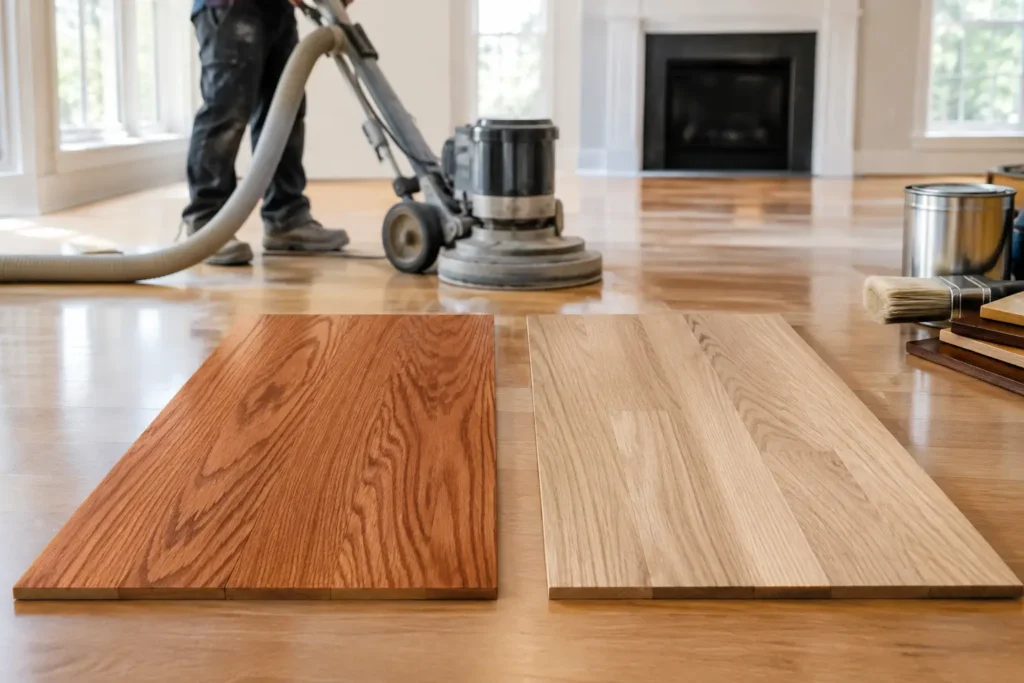
A floor can look completely different after refinishing, even when the boards themselves stay the same. That is why the red oak vs white oak flooring decision matters before you select a stain, plan a repair, or install new hardwood. The right choice comes down to the look you want, how your household lives, and whether you want warm traditional character or a cleaner, more contemporary foundation for the room.
For Connecticut homeowners restoring existing floors, the first question is often not which species is objectively better. It is whether the hardwood already in the home can be renewed to match the vision. Professional refinishing can bring worn red or white oak back to life with a smooth, durable finish – without replacing a floor that still has years of value left.
Red Oak vs White Oak Flooring: The Visual Difference
Red oak has a naturally warm undertone. It can show hints of pink, amber, or reddish brown, especially beneath clear finishes or warm stains. Its grain is open, active, and highly visible, giving it the familiar hardwood appearance found in many classic Connecticut homes.
White oak usually starts with a more neutral base color that ranges from light tan to medium brown, sometimes with subtle gray or olive undertones. Its grain is tighter and straighter than red oak, though it still has plenty of natural variation. This quieter grain helps white oak work especially well in homes that favor modern, transitional, coastal, or Scandinavian-inspired interiors.
Neither look is automatically more beautiful. Red oak brings warmth and movement, while white oak offers a calmer, more tailored appearance. The deciding factor is often the surrounding space. Honey-toned cabinetry, traditional trim, and warm paint colors can complement red oak beautifully. Cooler wall colors, black accents, light cabinets, and clean-lined furnishings often pair naturally with white oak.
Expect natural variation in both species
Hardwood is not manufactured vinyl or laminate. Board-to-board variation is part of its character. Mineral streaks, grain changes, and differences in how individual boards accept stain can all affect the final appearance. A professional stain sample on the actual floor is far more reliable than choosing a color from a small store display.
This matters particularly when blending a repair into an existing floor. A new white oak board may not perfectly match older white oak, and the same is true for red oak. A skilled contractor evaluates board width, grain direction, age, finish, and stain response before recommending a repair or full refinishing plan.
Which Oak Handles Daily Life Better?
White oak is slightly harder than red oak. On the Janka hardness scale, white oak measures about 1,360, while red oak measures about 1,290. That difference is real, but it should not be overstated. Both are durable domestic hardwoods that perform well in active homes when they are properly finished and cared for.
White oak also has a tighter cellular structure, which makes it somewhat more resistant to moisture penetration. It is a practical choice for entry areas, kitchens with hardwood nearby, and households that want added reassurance around everyday spills. Still, it is wood, not waterproof flooring. Wipe up water promptly and investigate leaks before they cause cupping, staining, or board movement.
Red oak remains an excellent floor for family rooms, bedrooms, hallways, dining rooms, and many other living spaces. Its slightly more open grain can help disguise small marks and give the floor a forgiving, lived-in character. For homes with children, pets, or frequent entertaining, the finish system and ongoing care often make a bigger difference than the modest hardness gap between the two species.
A high-quality finish protects either oak from the scuffs and wear of daily use. Furniture pads, entry mats, routine sweeping, and prompt spill cleanup will do more for long-term appearance than choosing one oak species solely for hardness.
Stain Color Changes the Decision
If you are selecting hardwood for a natural or light finish, the species itself will stay front and center. Red oak will continue to read warmer. White oak will usually look more neutral and can produce a refined natural finish with less visible red or pink.
For gray, greige, weathered, or cooler brown stains, white oak is often the easier starting point. Its neutral undertones generally accept those colors with less warmth coming through. White oak is also a popular choice for fumed or reactive treatments because of its natural tannin content.
Red oak can absolutely be stained darker or cooler, but it requires an experienced approach. Its open grain and warmer base may influence the final result, particularly with pale gray shades. A carefully selected stain and finish can create a dramatic transformation, but homeowners should expect the wood’s underlying personality to remain part of the result.
Do not choose a stain from a photo alone
Lighting changes everything. A stain that appears soft beige in an online image can look much warmer under afternoon sun in a Glastonbury living room or cooler under LED lighting in a West Hartford kitchen. Existing trim, cabinets, rugs, and wall colors also affect what your eye sees.
The best process is to test a few options directly on your sanded floor. This reveals how your actual oak, age, grain, lighting, and surrounding finishes work together. It also gives you a clear decision before the final finish is applied.
Refinishing Existing Red or White Oak Floors
Many homeowners assume scratched, faded, or uneven hardwood must be replaced. In many cases, it can be restored. Red oak and white oak are both strong candidates for professional sanding and refinishing when the boards have adequate wear layer remaining and damage is not structural.
Refinishing removes surface wear, levels minor imperfections, and prepares the wood for a fresh stain and protective finish. It can correct dullness, pet scratches, old finish failure, and color that no longer suits the home. Localized water damage, deep stains, loose boards, or missing sections may call for repairs before refinishing begins.
For a clean restoration experience, the sanding method is just as important as the stain color. Dustless Hardwood Floors LLC uses a proprietary dustless sanding system that leaves zero dust in the home. That means homeowners can restore the beauty of red or white oak without turning their living spaces into a cleanup project. It is an especially valuable option for families with children and pets, as well as allergy-sensitive households that want cleaner indoor air throughout the work.
The result is a smooth, prepared surface ready for a beautiful new finish, with minimal interruption to the comfort of your home. Licensed and insured Connecticut professionals can also help determine whether your floor needs a straightforward refinish, a board repair, or a more complete restoration plan.
Cost and Long-Term Value
Material costs vary by board width, grade, cut, availability, and installation details, but white oak often costs more than red oak. Wider white oak planks and rift- or quarter-sawn white oak can raise the investment further. Red oak is widely available and can be a cost-effective choice for homeowners who want genuine hardwood with classic appeal.
If you already have oak flooring, refinishing is frequently the better value than replacement. It preserves the original material, updates the color and protection, and can transform the room without the expense of removing a sound floor. It may also support resale appeal, since professionally restored hardwood remains a sought-after feature for Connecticut buyers.
Choose based on the finish you want to live with, not simply what is trending. A floor should work with your home’s architecture and your daily routine for years, not just look good in a single photograph.
The Right Choice for Your Home
Choose red oak when you appreciate a warm, expressive grain, want a timeless traditional hardwood look, or are restoring original flooring that suits the character of the home. Choose white oak when you prefer neutral undertones, a tighter grain pattern, lighter or cooler stain options, and slightly greater natural moisture resistance.
Both species can deliver exceptional results when the installation, repair, sanding, staining, and finishing are handled with care. Before committing to a color or replacement project, have the existing floor evaluated and ask to see stain samples on the wood itself. A clear plan, transparent pricing, and a dust-free restoration process make it easier to choose confidently and enjoy the floor long after the work is complete.