
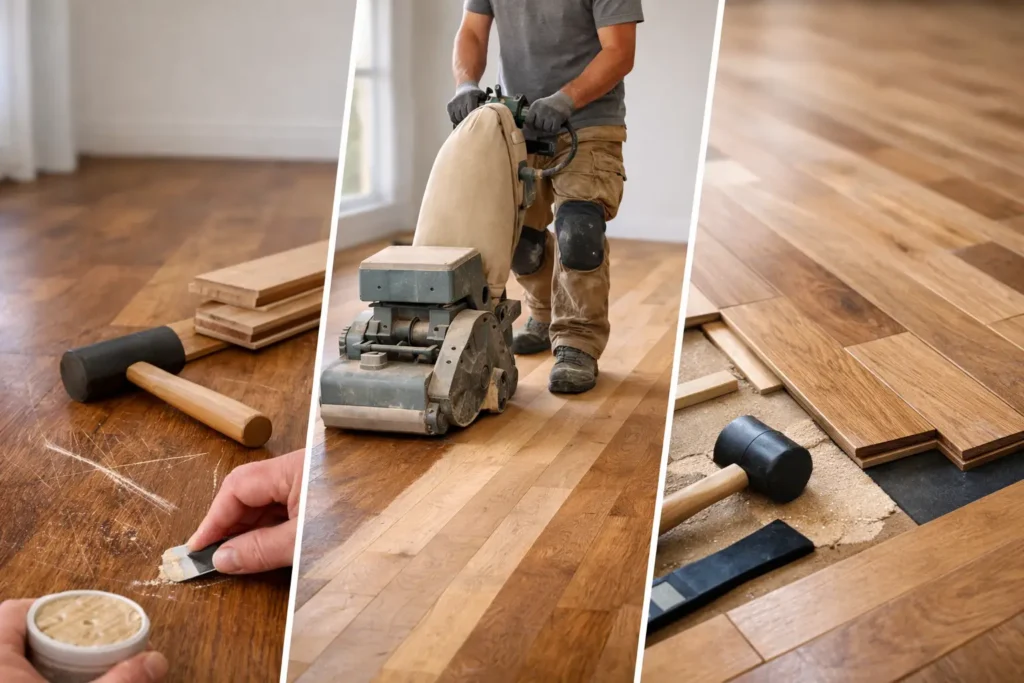
A few floor scratches near the entryway may be easy to ignore. Then sunlight catches the marks, the finish starts looking dull, and the floor that once anchored the room begins to feel worn. For Connecticut homeowners, the right solution is rarely a one-size-fits-all repair. It depends on whether the damage is limited to the surface finish or reaches the wood itself.
The good news is that most solid hardwood floors can be restored beautifully. The key is choosing a repair level that addresses the real condition of the floor, rather than applying a temporary fix that leaves deeper wear behind.
What Floor Scratches Are Telling You
Scratches are not all alike. A light mark may only affect the protective coating, while a deep groove can expose bare wood to moisture, dirt, and further damage. Looking closely at the scratch helps determine whether cleaning, touch-up work, refinishing, or board repair is the appropriate next step.
Surface-level scratches often appear white or hazy because they have disrupted the finish, not the wood. They are common in high-traffic areas, beneath dining chairs, and around pet pathways. If the scratch is dark, catches your fingernail, or shows raw wood, it is more likely to be deeper. Those marks deserve prompt attention, especially near exterior doors, kitchens, and areas where wet shoes or spills are common.
Scratches can also reveal a larger finish problem. When marks appear across several rooms, the floor may no longer have enough protective coating to withstand everyday use. In that case, treating one spot at a time can create uneven color and sheen without restoring the floor’s overall protection.
Common Causes of Scratches on Hardwood Floors
Daily life leaves marks, even on well-maintained hardwood. The most common causes are moving furniture without protective pads, grit carried in on shoes, pet nails, rolling office chairs, and dropped items. Connecticut winters can add another factor: sand, salt residue, and moisture tracked indoors can wear at a finish over time.
Sunlight matters, too. A floor may fade unevenly under rugs or near windows, making scratches more visible once furniture is moved. Older floors can be particularly vulnerable when the finish has thinned from years of cleaning, foot traffic, and seasonal humidity changes.
Prevention is worthwhile, but it should be realistic. Felt pads under furniture, mats at entrances, regular sweeping, and trimming pet nails can reduce new marks. They cannot reverse existing damage or restore a finish that has already worn through.
When a Simple Repair May Be Enough
Small, isolated scratches can sometimes be improved with a professional color-matched touch-up or a finish repair. This approach works best when the surrounding finish is in good condition and the affected area is limited. It can be a sensible option for a recent gouge from moving furniture or one damaged board in an otherwise healthy room.
Homeowners should be cautious with store-bought repair pens, wax sticks, and polish products. Some can temporarily hide a mark, but the color may not match once it dries. Others leave residue that interferes with future recoating or refinishing. A product that makes a scratch less noticeable today can add preparation work later.
Spot repair is also less effective when a floor has widespread scratches, gray traffic lanes, peeling finish, or uneven sheen. Those symptoms point to wear across the whole surface, not a single isolated incident.
When Floor Scratches Need Refinishing
Refinishing is often the best long-term answer when scratches are widespread, deep, or paired with dullness and fading. During a full refinishing process, the existing worn surface is removed, the wood is smoothed, and a new protective finish is applied. This restores a more consistent appearance while giving the hardwood a fresh layer of protection.
It is especially valuable before selling a home, after buying a property with neglected floors, or when a room no longer reflects the condition of the rest of the house. A properly refinished hardwood floor can make a living room feel brighter, improve the appearance of an entryway, and help a property present as well cared for.
For families in West Hartford, Glastonbury, Manchester, and throughout greater Hartford County, the method used matters as much as the finished look. Dustless Hardwood Floors LLC uses a proprietary dustless sanding system that leaves zero dust in the home. That means homeowners can restore deeply scratched floors without the residue and cleanup concerns associated with conventional sanding approaches.
This clean process is particularly valuable for homes with children, pets, and allergy-sensitive family members. State-of-the-art equipment contains material at the source, keeping the project clean and comfortable while the floor is transformed. Low-odor finishing options can further support a more pleasant in-home restoration experience.
Recoating Versus Full Sanding
A recoat can be a good middle-ground option when scratches are shallow and the existing finish remains intact. The floor is prepared and receives a new coat of finish, refreshing its sheen and protection without removing as much material from the wood.
However, recoating cannot correct deep scratches, significant discoloration, cupping, water stains, or areas where the finish has worn down to bare wood. Full dustless sanding and refinishing is the more complete solution in those cases. An experienced flooring professional can assess the thickness of the remaining wood, the depth of damage, and the compatibility of any past coatings before recommending either option.
When Damaged Boards Should Be Repaired or Replaced
A scratch that has turned into a split, a soft area, or a dark water stain may require more than refinishing. Individual board repair or replacement is often appropriate when damage is localized but structural. This is common around leaking appliances, pet accidents that reached the wood, or boards damaged by heavy impact.
The goal is not simply to install a new piece of wood. It is to select a compatible species, size, and grain pattern, then blend the repair with the surrounding floor as closely as possible. Once the repair is complete, refinishing the connected area may be recommended for the most uniform result.
Older hardwood can be especially rewarding to repair. Original oak, maple, and other solid wood floors often have years of service left, even when they look heavily worn. Replacing an entire floor is not always necessary, and preserving quality hardwood can be a smart investment in the home.
Protect Your Restored Floor Without Overdoing It
After repair or refinishing, simple habits help the new finish stay attractive longer. Keep entry mats clean so they trap grit instead of spreading it. Lift furniture when possible, use quality felt protectors under legs, and choose a hardwood-safe cleaner rather than soaking the floor with water.
Area rugs are useful in high-traffic zones, but avoid leaving the same rug in place for years if sunlight reaches the floor. Moving it occasionally can help reduce dramatic color differences. For desk chairs, use a protective mat designed for hard surfaces or replace standard hard casters with soft rubber alternatives.
Pets do not mean hardwood is off limits. Regular nail trims and quick cleanup after water bowl spills make a meaningful difference. The aim is not to make the home feel overly precious. It is to protect the finish from repeated friction and moisture so the wood beneath remains secure.
Get a Clear Answer Before Choosing a Fix
The right response to floor scratches begins with an honest evaluation of the floor’s condition. A qualified contractor should explain whether a touch-up, recoat, board repair, or complete refinishing will provide lasting value. Homeowners deserve transparent pricing, a clear scope of work, and no hidden fees before the project begins.
As a licensed and insured Connecticut hardwood flooring contractor, Dustless Hardwood Floors LLC helps homeowners make that decision with confidence. The focus is always on the outcome: restored beauty, durable protection, and a clean, dust-free home throughout the sanding process.
If your hardwood has moved beyond a few minor marks, a professional assessment can show just how much beauty is still waiting beneath the wear. Get Quote Now and give your floors the clean, durable restoration they deserve.