
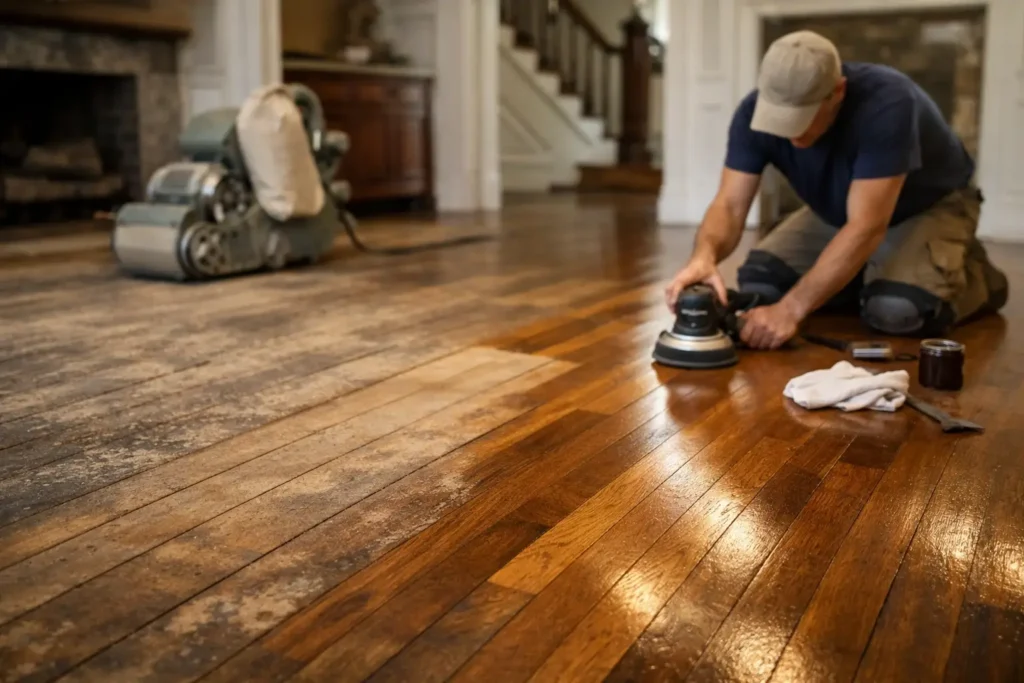
Sunlight across the living room can be brutal on hardwood. One day your floors look warm and rich, and the next they seem washed out, uneven, and older than the rest of the house. If you are wondering how to restore faded wood floors, the right fix depends on why the floor looks faded in the first place and how deep that damage goes.
Some floors only need a professional recoating to bring back color and sheen. Others need full sanding and refinishing because the finish has worn down and the wood itself has started to fade or stain. The good news is that faded wood floors can often be restored beautifully without turning your home into a construction zone. For Connecticut homeowners, that matters just as much as the final look.
Why wood floors fade in the first place
Fading is usually a mix of sun exposure, everyday wear, cleaning habits, and aging finish. UV light is often the biggest factor. Areas near sliders, large windows, and bright rooms in West Hartford, Glastonbury, Manchester, and other Connecticut homes tend to fade faster because direct sun gradually changes both the stain color and the protective topcoat.
Traffic patterns also play a role. Hallways, kitchens, and entry areas lose finish more quickly than low-use rooms. Once the finish dulls, the floor reflects less light evenly, which makes color loss look worse. In some homes, the floor is not truly faded as much as it is dry-looking, scratched, or coated with residue from the wrong cleaner.
Water exposure can add another layer to the problem. Pet accidents, damp mopping, plant leaks, and spills left too long can leave pale spots, gray marks, or finish failure that looks like fading from a distance. That is why a proper evaluation always comes before choosing a repair method.
How to tell if your floor needs cleaning, recoating, or refinishing
Before you decide how to restore faded wood floors, look closely at what is actually happening on the surface. If the color looks dull but remains fairly even, and there are only light surface scratches, the floor may only need a deep professional clean and a fresh coat of finish.
If the finish is worn through in high-traffic areas, if sun-faded sections are much lighter than covered areas under rugs, or if there are stains and gray patches in the wood, a simple recoat usually will not be enough. At that point, sanding and refinishing is the more reliable solution because it removes the damaged top layer and creates an even surface for a new stain and finish.
There is also a middle ground. Some floors can be screened and recoated if the existing finish is still intact and compatible with a new topcoat. This refreshes the appearance, but it does not remove deep discoloration. It is a good option when the goal is renewed shine and protection, not a full color correction.
The safest way to restore faded wood floors
The best restoration plan starts with restraint. Homeowners often make fading worse by trying multiple store-bought products one after another. Wax restorers, glossy polishes, and oil soaps can leave buildup that temporarily changes appearance but interferes with future refinishing. A floor that could have been recoated may end up requiring more corrective work.
A safer approach is to start with a professional assessment, especially if the floor is older or has uneven wear. A licensed hardwood flooring contractor can tell you whether the existing finish can be revived or whether the damage has gone too far for a surface-level fix.
For many Connecticut families, the next question is not just how the floor will look, but how the process will affect the home. That is where dustless sanding matters. When full restoration is needed, a true dustless hardwood floor sanding system allows the floor to be professionally refinished with zero dust in the home. That means cleaner indoor air, a more comfortable experience for children and pets, and a better fit for allergy-sensitive households.
When a recoat is enough
A recoat works well when the top layer has lost its shine but still protects the wood underneath. In this process, the existing finish is prepared and a new coat is applied to restore clarity and luster. It is a smart option for floors that look tired rather than deeply damaged.
The advantage is that it preserves more of the existing floor while improving appearance and extending life. The trade-off is that it cannot erase deep scratches, sun bleaching, pet stains, or boards that have already changed color beneath the finish. If your floor has obvious before-and-after areas where rugs once sat, that usually points to refinishing instead of recoating.
When full refinishing is the right call
If the wood has lost color unevenly, if scratches cut into the grain, or if water damage has changed the tone of the boards, full refinishing is the best way to reset the floor. Sanding removes the worn surface so the new stain and finish can go on evenly. This is also the right time to repair isolated damage, replace boards if needed, and correct old finish problems.
For homeowners who want the floor to look new again, refinishing gives the most dramatic result. You can often match the original tone, warm it up, go lighter, or choose a more current stain if the room needs a broader update. It is not just cosmetic. A new protective finish also helps the floor hold up better against daily wear.
This is where working with an experienced, licensed, and insured contractor matters. The quality of the sanding, stain application, and finish selection all affect the final color and durability. So does the cleanliness of the process. Dustless hardwood floor refinishing gives you the restoration benefits of a major floor upgrade without coating the home in airborne dust.
Choosing the right finish after restoration
Once the floor has been restored, the finish you choose affects both appearance and maintenance. Water-based finishes are popular for homeowners who want a clear look, strong durability, and lower odor. They are especially appealing in family homes where comfort matters during the project.
Oil-based finishes can add warmth and richness, but they change color more over time. That can be a benefit or a drawback depending on the look you want. Matte and satin finishes tend to hide everyday marks better than high gloss, which is worth considering if you have kids, pets, or strong natural light.
The right answer depends on the species of wood, the amount of sunlight in the room, and how the space is used. A formal dining room and a busy kitchen do not age the same way. Good restoration is not just about making the floor look better this week. It is about choosing a finish that still looks good after years of real use.
How to keep restored floors from fading again
After investing in restoration, prevention becomes simpler than repair. Window treatments help in the brightest rooms, especially where afternoon sun hits the same section of floor every day. Rearranging rugs and furniture occasionally can also reduce uneven color change over time.
Use a hardwood-safe cleaner, avoid wet mopping, and clean spills promptly. Felt pads under chairs and furniture protect the finish from abrasion. If your home includes pets, keep nails trimmed and place mats near doors to reduce grit and moisture coming in.
Most of all, do not wait too long to refresh a worn finish. Floors usually become far more expensive to restore once wear reaches the bare wood. A timely recoat can delay full refinishing and help preserve the color longer.
A practical answer for Connecticut homeowners
Homes across Hartford County and surrounding areas often deal with a mix of seasonal light, tracked-in grit, winter moisture, and busy family traffic. That combination can make hardwood fade faster than homeowners expect. The smartest fix is the one that matches the actual condition of the floor, not the one that promises a quick cosmetic cover-up.
At Dustless Hardwood Floors LLC, homeowners choose restoration because it delivers the result they want most: beautiful wood floors brought back to life with zero dust in the home. Whether a floor needs a simple recoat or complete dustless sanding and refinishing, the goal is the same – clean results, reliable craftsmanship, and a space that feels renewed without unnecessary stress.
If your floor has lost its color, the next step is not guessing. It is getting a clear professional assessment so you can restore the wood properly, protect your investment, and enjoy the room again every time the light hits the floor.