
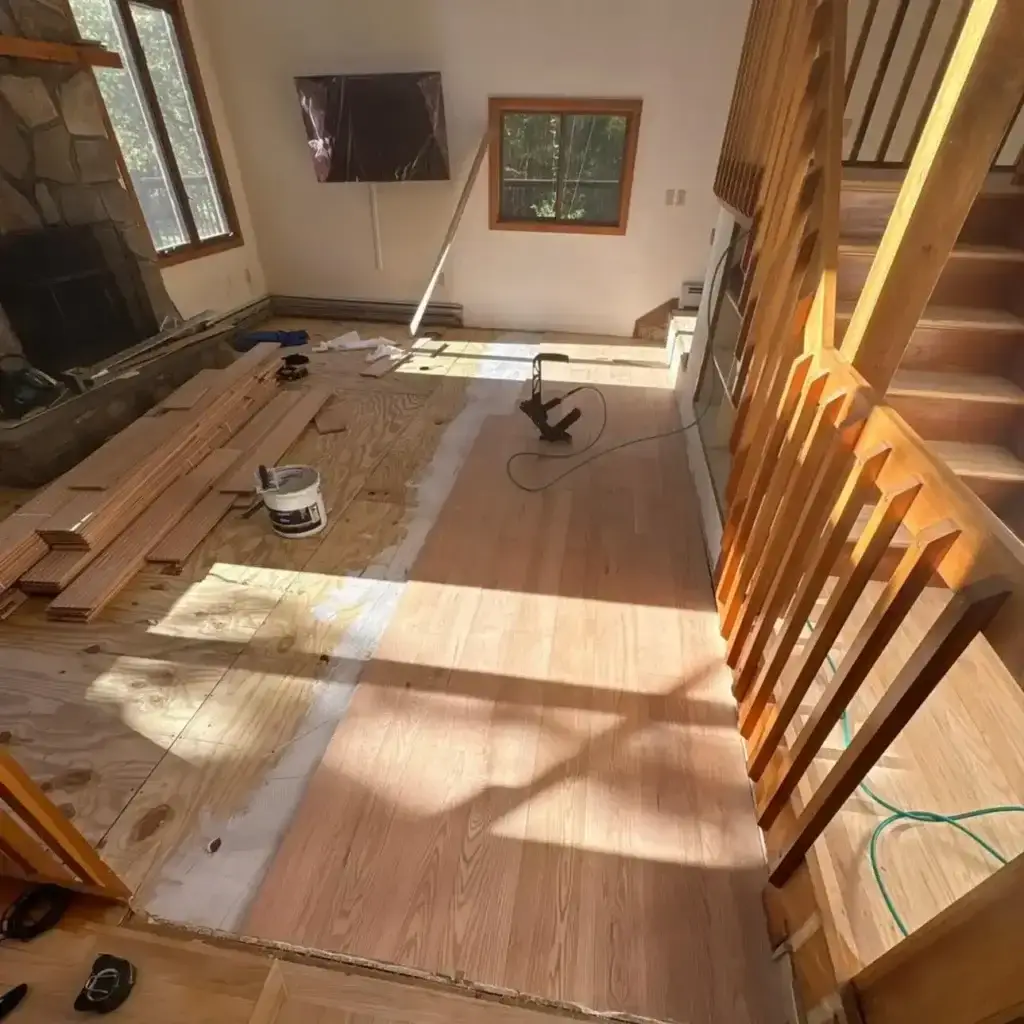
A new hardwood floor can change how an entire home feels – warmer, brighter, quieter underfoot, and far more finished than carpet or worn vinyl ever will. This Connecticut hardwood floor installation guide is for homeowners who want that upgrade done right the first time, with clear expectations about material choices, subfloor prep, timeline, and what to plan for after installation.
In Connecticut, hardwood flooring decisions are rarely just about color. Our long heating seasons, humidity swings, older housing stock, and mix of historic homes and newer builds all affect what performs well. A floor that looks perfect in a showroom still has to handle dry winter air, summer moisture, active households, pets, and the day-to-day wear of real life.
What matters most before hardwood installation
The best hardwood floor installations start well before the first board is laid. Homeowners often focus on species and stain color first, but the bigger success factors are the condition of the subfloor, the moisture levels in the home, and choosing a product that fits the space.
That matters especially in Connecticut homes, where you may have anything from a century-old plank subfloor to a concrete slab in a finished lower level or addition. Each one changes the installation approach. Solid hardwood may be an excellent fit for a main living level with stable wood subflooring, while engineered hardwood often makes more sense in spaces with moisture variation or where floor height matters.
If you skip this planning stage, the floor may still look good on day one, but small problems can show up later as movement, gaps, squeaks, or premature finish wear. A professional installation should account for those risks upfront, not after the fact.
Choosing the right hardwood for a Connecticut home
Solid vs. engineered hardwood
For many homeowners, this is the first real decision. Solid hardwood is a classic choice with long-term value and the ability to be refinished multiple times over its lifespan. It is often ideal for first and second floors in homes with stable indoor conditions.
Engineered hardwood is built in layers, which helps it handle environmental changes more effectively. That can make it a smart option for condos, basements with proper conditions, homes near the shoreline, or areas where solid hardwood is not recommended. It also helps when you need a lower-profile floor to meet adjacent rooms more cleanly.
Neither option is automatically better. It depends on the room, the subfloor, and your priorities. If long-term refinish potential is at the top of your list, solid hardwood has an edge. If stability across seasonal changes matters more, engineered may be the better fit.
Species, grain, and hardness
Oak remains one of the most practical choices for Connecticut homeowners because it balances durability, appearance, and value. White oak, in particular, has become popular for its grain pattern and versatility across traditional and modern homes.
Maple offers a cleaner, smoother look but can show wear differently depending on the finish. Hickory is harder and more character-rich, though its color variation is stronger and not right for every design style. Softer woods can create a beautiful result too, but they may show dents more quickly in busy homes with children or pets.
A good floor is not just one that photographs well. It should match how your household actually lives.
The Connecticut hardwood floor installation guide to room-by-room planning
Every room asks something different of hardwood flooring. Living rooms, dining rooms, hallways, and bedrooms are usually straightforward. Kitchens can work well with hardwood too, but they require realistic expectations about spills and maintenance. Powder rooms are sometimes possible, while full bathrooms are typically not the best choice for real hardwood.
Entryways deserve extra thought. In Connecticut, snow, salt, sand, and wet shoes all get tracked inside. That does not mean hardwood is off the table, but it does mean you need the right finish, proper mats, and a plan for routine care.
For open floor plans, board width and direction also matter more than many homeowners expect. Wider planks can make a space feel larger and more current, but they may also highlight movement if indoor humidity is not well managed. Narrower boards can suit older homes beautifully and sometimes offer a more stable look over time.
What the installation process should include
A professional hardwood installation is more than delivering material and fastening boards. The process should begin with measuring, evaluating the subfloor, checking moisture conditions, and planning transitions to nearby rooms, stairs, and trim.
Then comes acclimation, when needed. Not every product has the same acclimation requirements, and this is one area where shortcuts can cause future issues. The flooring needs time to adjust to site conditions based on the manufacturer’s specifications and the environment inside the home.
Subfloor preparation comes next. This step is easy to underestimate, but it is one of the biggest factors in how the finished floor feels and performs. The subfloor must be clean, level, secure, and dry enough for installation. If it is not, even premium hardwood can end up sounding hollow, shifting underfoot, or developing avoidable wear patterns.
Once installation begins, layout matters. A skilled installer does not simply start at one wall and work across the room without a plan. They consider board lengths, seam placement, natural variation, room shape, and visual flow. That is what separates a floor that looks professional from one that just fills the space.
Sanding and finishing for site-finished floors
Some homeowners choose prefinished flooring for speed. Others prefer site-finished hardwood for a more custom look, smoother transitions, and color flexibility. If you choose a site-finished floor, the sanding and finishing stage matters just as much as the installation itself.
This is where a dustless system makes a meaningful difference. Dustless Hardwood Floors LLC uses a proprietary dustless sanding system that leaves zero dust in the home, giving Connecticut homeowners a clean, comfortable experience while delivering the refined, high-end finish they want. For families with children, pets, or allergy concerns, that clean process is not just a convenience. It is a major benefit.
A dustless approach also helps keep the project feeling more controlled and homeowner-friendly. You get the beauty of custom-finished hardwood without the residue people often worry about, and the result is a cleaner path from installation to everyday living.
Cost expectations and where pricing changes
Hardwood flooring costs vary based on wood species, board width, jobsite conditions, removal of existing flooring, subfloor repairs, layout complexity, and whether the floor is prefinished or site-finished. Stairs, custom borders, floor vents, and transitions can also affect the final price.
The cheapest option up front is not always the best value. Lower-grade materials or rushed prep work can lead to problems that cost more later. On the other hand, not every home needs the most expensive species or widest plank to look exceptional. Often, the smartest investment is a well-matched product installed with care and finished properly.
Homeowners should also ask about exactly what is included. Transparent pricing matters. A clear proposal helps you compare scope, not just headline numbers.
How to prepare your home for installation
The process is smoother when homeowners know what to expect. Furniture usually needs to be moved out of the work areas. Existing floor coverings may need to be removed first. If you are replacing flooring throughout a large portion of the home, it is worth discussing sequencing room by room.
Indoor climate control is important as well. Hardwood performs best when temperature and humidity stay within a healthy, stable range. That is true before installation, during the work, and long after the project is complete. In Connecticut, winter dryness can be just as relevant as summer humidity, so your installer should talk with you about protecting the floor year-round.
Good communication helps here. Homeowners should know the schedule, when they can walk on the floor, when furniture can return, and what cleaning products are safe once the work is done.
Common mistakes homeowners can avoid
Many installation problems begin with a mismatch between product and room. Another common issue is choosing based only on color trends, without considering board width, wood hardness, or how the floor will wear in a high-traffic home.
The other mistake is treating installation as a simple commodity service. Hardwood flooring is a finish surface you will see and use every day for years. Details such as leveling, moisture control, board selection, and finishing quality directly affect the outcome.
A reliable contractor should be licensed and insured, explain the trade-offs clearly, and help you make decisions that fit your house rather than pushing a one-size-fits-all approach.
A cleaner path to long-lasting floors
The best Connecticut hardwood floor installation guide is not really about trends. It is about making sound decisions that fit your home, your family, and the way you use your space. When the wood is chosen carefully, the subfloor is prepared correctly, and the finishing process is handled with a true dustless sanding system that leaves zero dust in the home, the result is more than a new floor. It is a cleaner, more comfortable upgrade you can enjoy every day.