
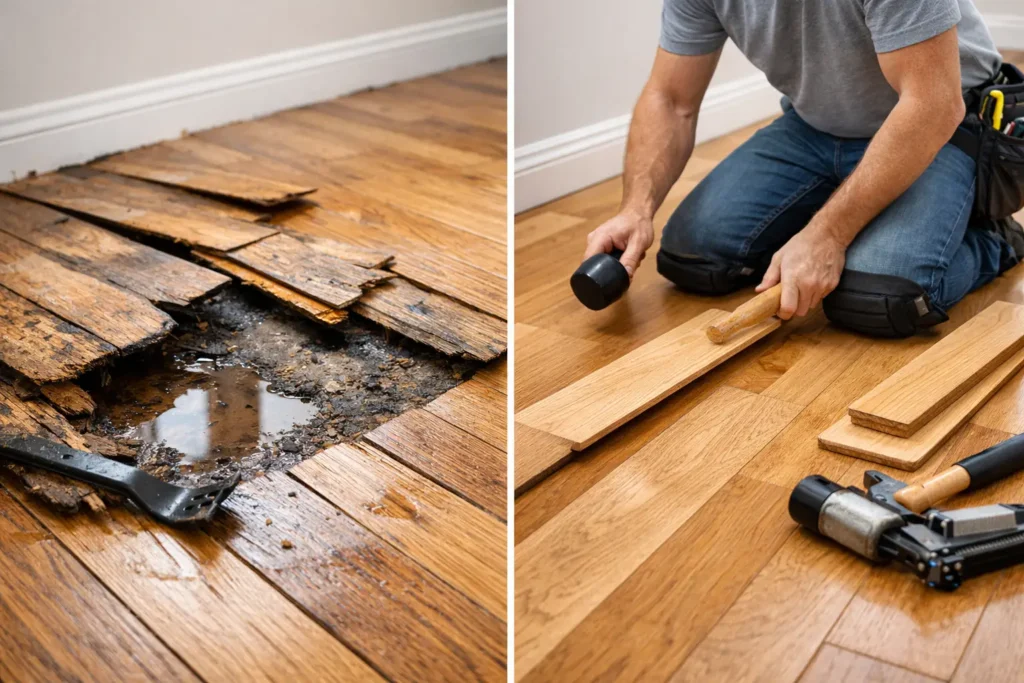
A cupped hardwood floor by the dishwasher tells a very different story than a blackened floor around a long-term leak. That is why a true water damaged floor repair example matters. Homeowners across Connecticut often ask the same question first: can this floor be saved, or does it need to be replaced? The answer depends on how long the water sat, how deeply it penetrated, and whether the boards have structurally changed.
The good news is that many water-damaged hardwood floors can be restored beautifully without turning your home into a renovation zone. When the damage is evaluated correctly and repaired with a professional dustless sanding system, the result can be clean, safe, and family-friendly – especially important for homes with children, pets, or allergy concerns.
A real water damaged floor repair example
Imagine a common Connecticut scenario: a small refrigerator line leak in a kitchen that slowly wets a section of oak flooring. The homeowner notices slight cupping first. A few boards near the appliance begin to darken, the finish looks cloudy, and the floor feels rougher than the surrounding area. At this stage, many people assume the whole room is ruined. Often, it is not.
In a repairable case, the leak is stopped quickly enough that the subfloor has not failed and the moisture has not spread through the entire floor system. The damaged boards may still need to be removed in the most affected area, but the surrounding hardwood can often be preserved. After moisture levels return to acceptable range, new matching boards are installed where needed, then the floor is blended and refinished.
This is where craftsmanship matters. A patch should not look like a patch. Grain direction, board width, species match, stain tone, and finish sheen all have to line up. When done properly, the repaired area disappears into the rest of the floor instead of standing out every time you walk into the room.
What this water damaged floor repair example shows
The first lesson is simple: water damage is not one-size-fits-all. Surface spotting and minor cupping are very different from severe buckling or rot. Homeowners often wait because they hope the floor will flatten on its own. Sometimes mild cupping does improve after drying, but not always. If boards stay raised or the finish has failed, the floor usually needs professional repair and refinishing.
The second lesson is that timing changes everything. A clean water event caught early may allow for a smaller repair footprint. A slow leak that sits for weeks can stain wood fibers, weaken tongues and grooves, and damage the subfloor underneath. At that point, replacing only the visible boards may not be enough.
The third lesson is about the finish. Even when only part of the floor is replaced, the surrounding boards often need sanding and refinishing to create a uniform look. This step should be done with a dustless sanding system that leaves zero dust in the home. For Connecticut families who want restored floors without coating the house in airborne debris, that difference is not minor – it is the standard they should expect.
When a hardwood floor can be repaired
A hardwood floor is often a good candidate for repair when the damage is localized, the wood is still structurally sound, and the moisture issue has been fully corrected. In many homes, that means replacing a section near a sink, exterior door, dishwasher, radiator, or pet water area while keeping the rest of the floor intact.
Solid hardwood offers more repair flexibility than many homeowners realize. Individual boards can be removed and woven into the existing floor. If the remaining floor has enough wear layer, it can then be professionally refinished. The result is a restored surface with renewed color, protection, and consistency.
Engineered hardwood is more case-specific. Some engineered products can handle limited repair. Others have a wear layer too thin for meaningful sanding or blending. In those cases, replacement may be more practical, especially if the damage crosses multiple boards or the product is discontinued.
Signs the damage may require replacement instead
There are times when replacement is the smarter investment. If boards are buckled high off the subfloor, if mold or rot is present, or if staining runs deep through a large area, trying to save every board may lead to a worse result. The same is true when the subfloor has been compromised.
This is also where honest guidance matters. Homeowners do not need guesswork. They need a licensed and insured flooring contractor who can explain what is cosmetic, what is structural, and what will hold up long term. A lower-cost patch that fails in a year is not a savings.
In some homes, a partial replacement plus full-room refinishing is the ideal middle ground. It controls costs, preserves original material where possible, and still delivers a cohesive final appearance.
How the repair process usually works
Every successful repair starts with moisture control. Before any boards are removed or any refinishing begins, the source of water has to be fixed and the flooring system has to dry to appropriate levels. Repairing too early can trap moisture and create recurring problems.
Once the area is stable, damaged boards are carefully removed. Replacement boards are selected to match species, size, and grade as closely as possible. After installation, the repaired section is blended into the surrounding floor through sanding, stain adjustment if needed, and finish application.
For homeowners, the sanding stage is often where anxiety starts. They picture a major cleanup and dust drifting through the house. That is exactly why our proprietary dustless sanding system matters. It leaves zero dust in the home, helping protect indoor air quality while keeping the project cleaner, easier, and more comfortable for families, children, pets, and allergy-sensitive households.
That clean process is not just a convenience. It changes the experience of floor repair. Instead of bracing for a chaotic project, homeowners get a more controlled restoration with professional results and less stress.
Why matching the repair is the hardest part
Anyone can remove damaged boards. Making the repaired area look natural is the real test.
Older hardwood floors have aged in color, absorbed light differently, and developed a finish profile that newer wood does not share. Red oak, white oak, maple, and prefinished products all react differently to stain and topcoat. Even within the same species, boards vary.
A good repair plan accounts for that. Sometimes a spot repair can blend beautifully. Other times, the most reliable path is refinishing the entire room so the new section does not stand out. That recommendation is not about doing more work than necessary. It is about protecting the final look.
Water damage in high-traffic Connecticut homes
In busy households, water-damaged floors often show up in kitchens, mudrooms, entryways, and around patio doors where seasonal moisture is common. Connecticut winters, wet boots, snow melt, and humid summers all put stress on hardwood. Add kids, pets, and daily traffic, and a minor moisture issue can become visible fast.
That is why many homeowners are not just looking for repair. They want a finish that restores beauty and gives the floor a fresh layer of protection. They also want the process to feel manageable while life continues around it.
For that reason, dustless sanding and refinishing is especially valuable in occupied homes. It supports a cleaner, more comfortable project experience while still delivering the dramatic transformation people want from hardwood restoration.
What homeowners should do first
If you notice discoloration, cupping, soft spots, or boards lifting, act quickly. Stop the water source, avoid soaking the area with more cleaning products, and get the floor evaluated before the damage spreads. Waiting rarely improves the outcome.
It also helps to avoid assuming that visible damage tells the whole story. Some floors look worse than they are. Others appear minor on the surface but have hidden moisture below. A professional assessment gives you a realistic scope, a repair path that makes sense, and a clear idea of whether refinishing, board replacement, or a larger rebuild is needed.
For homeowners in Manchester, West Hartford, Glastonbury, and surrounding Hartford County communities, this is the kind of project where local experience pays off. Homes vary, floor ages vary, and repair decisions should be based on what will look right and last.
A water-damaged hardwood floor can feel like a major setback when you first see it. In many cases, it is the beginning of a restoration that leaves the room looking better, cleaner, and more finished than it has in years.