
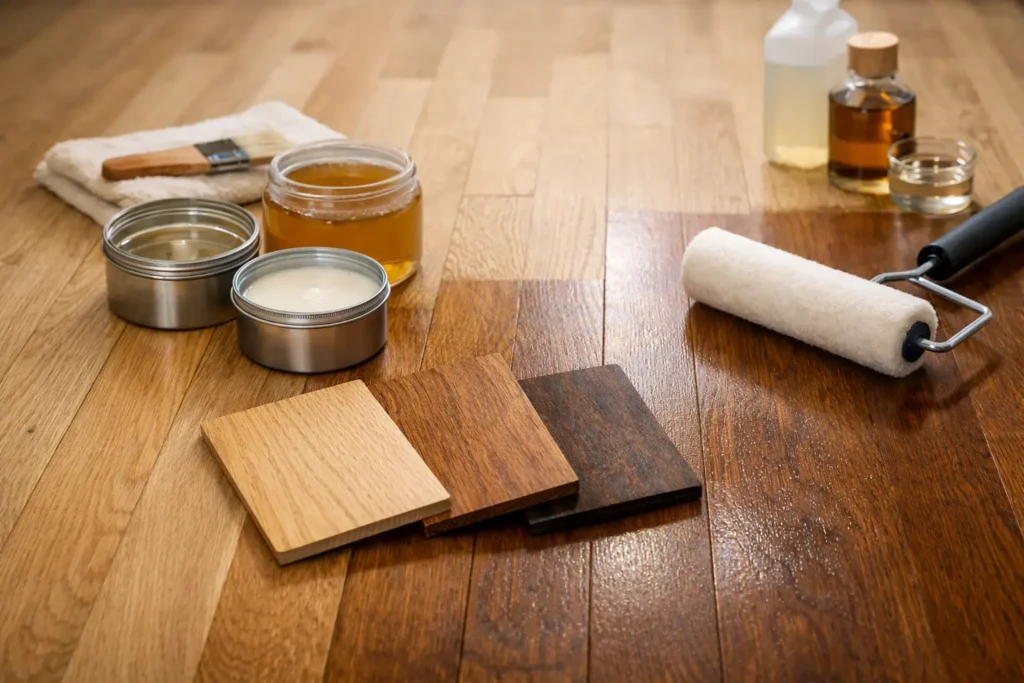
A floor can look completely different depending on the finish you put on it. The stain gets most of the attention, but the real day-to-day performance comes from the topcoat.
It handles scratches, sunlight, pet traffic, spills, and the pace of your household. If you are comparing finishes, the right choice comes down to how you live, not just how you want the floor to look on day one.
There are many options available. For instance, some finishes provide a glossy shine that elevates the aesthetic appeal of your home, while others offer a matte finish that can hide minor imperfections and scratches better.
Each type of finish has its unique properties, and understanding these can greatly impact your satisfaction with the floor over time. You might also consider factors such as the color of the wood, the overall design of your home, and how much foot traffic the area will receive.
This thoughtful approach ensures that your choice is not only visually pleasing but also practical for your lifestyle.
When exploring the best hardwood floor finish options, it’s important to understand the impact of each choice.
Evaluating the best hardwood floor finish options can assure you select the right finish for your needs.
Among the best hardwood floor finish options, consider what will best suit your lifestyle.
Choosing from the best hardwood floor finish options also involves thinking about maintenance.
In high-traffic areas, the best hardwood floor finish options offer the durability you need.
Many people find that the best hardwood floor finish options reflect their aesthetic preferences.
For durability and looks, many view the best hardwood floor finish options as crucial.
When considering the best hardwood floor finish options, think about the longevity of each choice.
Additionally, the best hardwood floor finish options cater to a variety of styles.
Stay informed about the best hardwood floor finish options to stay on trend.
Understanding the best hardwood floor finish options can ease your cleaning efforts significantly.
The best hardwood floor finish options will enhance your home’s beauty.
So, remember to consider the best hardwood floor finish options when making your choice.
A good understanding of the best hardwood floor finish options can make a difference.
Finding the best hardwood floor finish options can transform your living environment.
Ultimately, the best hardwood floor finish options should reflect your style.
Choosing the best hardwood floor finish options will protect your investment.
Consulting professionals about the best hardwood floor finish options can provide unique insights.
Comparing the best hardwood floor finish options can simplify your decision-making.
Finding the best hardwood floor finish options is essential for aesthetics and durability.
Evaluate the best hardwood floor finish options that cater to your household needs.
Choosing the best hardwood floor finish options will protect your investment.
It’s essential to evaluate popular finishes like oil-based polyurethane, water-based polyurethane, and natural oil finishes. Each option has its pros and cons.
For example, oil-based polyurethane is known for its durability and amber tint, which enhances the beauty of the wood grain. Conversely, water-based finishes dry quickly and have less odor, making them ideal for indoor use.
Natural oil finishes provide a more eco-friendly option and can be easily repaired, but they may require more maintenance over time.
Focus on the best hardwood floor finish options to maintain beauty and functionality.
Careful consideration of the best hardwood floor finish options can lead to lasting satisfaction.
Considering the best hardwood floor finish options can help guide your final decision.
There are several popular finishes to explore, including oil-based polyurethane, water-based polyurethane, and natural oil finishes. Each option has its pros and cons. For example, oil-based polyurethane is known for its durability and amber tint, which enhances the beauty of the wood grain. On the other hand, water-based finishes dry quickly and have less odor, making them ideal for indoor use. Natural oil finishes provide a more eco-friendly option and can be easily repaired, but they may require more maintenance over time. Evaluating these factors based on your specific circumstances will lead you to the best choice.
Moreover, it’s essential to consider the long-term maintenance required for each finish. Some finishes may need to be reapplied every few years, while others can last much longer with minimal upkeep.
The climate in your region may also affect how well certain finishes perform. For example, areas with high humidity can impact finishes differently than drier climates.
Additionally, you might want to think about how your floors will look over time. Some finishes will age gracefully, while others may show wear and tear more quickly.
When it comes to high-traffic areas in your home, specific finishes may provide the durability you need. For example, commercial-grade finishes are perfect for family homes with pets and children, as they can withstand a lot of wear and tear.
Ultimately, the best hardwood floor finish options should reflect your style.
Understanding the intended use of each space will be key in choosing the right finish. You should also consider the slip resistance of the finish, especially in areas like kitchens and bathrooms where spills are common.
Ensuring safety while maintaining beauty is crucial.
Furthermore, many homeowners find success with finishes that suit their lifestyles. For instance, those who appreciate a rustic look might opt for a hand-scraped finish that highlights the natural textures of the wood. Conversely, if you prefer a sleek, modern aesthetic, a glossy finish may be more appropriate. It can be beneficial to test samples in your space before making a final decision, as the lighting in your home can dramatically change the appearance of the finish.
In addition to aesthetics, you should also weigh the options against your unique household dynamics. If you have pets that may scratch the surface or children prone to spills, selecting a more durable finish will serve you well in the long run. Many finishes are designed to resist scratches and stains, making them ideal for busy households. Researching the specific attributes of different options can help you make an informed choice that meets both your style and functional needs.
In summary, the finishes should cater to both beauty and practicality. Each finish will have its own application process, drying time, and maintenance schedule, so make sure to factor these considerations into your decision-making process.
Consulting with professionals who have expertise in hardwood flooring can also provide valuable insights tailored to your specific needs.
They may offer recommendations based on the latest trends, which can significantly enhance the overall value of your home.
Moreover, diligent research can lead to long-lasting satisfaction. Consider visiting showrooms to see the finishes in person and feel how they respond to touch. Reading customer reviews and testimonials can also provide clarity on how different finishes have performed in real-world settings. By gathering comprehensive information, you can approach your flooring project with confidence.
It’s also important to remember that trends in flooring finishes can change over time. Staying informed about the latest innovations and design aesthetics can help you choose a finish that remains timeless yet contemporary. For example, the trend of using lighter stains has gained popularity, as it can create an airy and spacious feel in a home. Keeping these trends in mind will ensure that your choice is not only practical but also stylish.
Additionally, many families opt for finishes that offer both visual appeal and longevity. For instance, finishes designed to repel water and stains can significantly ease cleaning efforts, allowing your floors to maintain their beauty with less frequent upkeep. Understanding the maintenance requirements of various finishes will help you choose one that fits seamlessly into your lifestyle.
Exploring the Best Hardwood Floor Finish Options
In conclusion, remember the options to enhance your home’s value.
Thus, when considering refinishing, think of the options available for your home.
Ultimately, finding the right finishes can transform your living spaces.
In summary, the finishes should cater to both beauty and practicality.
When considering options, it helps to consult professionals who understand the nuances of flooring finishes. Their insights can guide you toward products that align with your preferences and practical considerations. They may also provide samples to help you visualize how a particular finish will look in your home’s lighting and decor. This proactive approach can save you time and effort while ensuring you make the best decision.
Understanding the various finishes can simplify your decision-making process. By comparing features like drying time, odor, and durability, you can create a shortlist of the best options for your home. Additionally, many manufacturers provide detailed specifications about their products, which can help you gauge whether a particular finish meets your expectations and requirements.
For homeowners, finding finishes that provide the perfect combination of aesthetics and durability is essential. Therefore, take the time to consider how different finishes may react over time, especially if your household experiences varying levels of foot traffic. A finish that can withstand daily wear while still looking beautiful will ultimately enhance the enjoyment and longevity of your hardwood floors.
With so many options, it’s crucial to evaluate your lifestyle and preferences. Do you often entertain guests, or do you have children and pets running around? Understanding the specific needs of your household will help you determine which finish will best serve you in the long run. Take the time to weigh all these factors, as it will lead to a more satisfying final choice.
Choosing from finishes can help you achieve the results you desire. The right finish will not only enhance the beauty of your floors but also protect your investment in your home. By making an informed choice, you can enjoy your hardwood floors for years to come, confident in the knowledge that they’ve been treated with the best possible care.
Ultimately, understanding the options is essential for maintaining your home’s beauty and functionality.
By focusing on the best hardwood floor finish options, you can ensure that your choice aligns with both your aesthetic desires and practical needs.
Ultimately, understanding the options is essential for maintaining your home’s beauty and functionality. By focusing on the best hardwood floor finish options, you can ensure that your choice aligns with both your aesthetic desires and practical needs. This thoughtful approach will make a significant difference in how your floors look and perform over time, enhancing your living environment.
Careful consideration of the options can lead to long-lasting satisfaction.
Many homeowners have had success with finishes that suit their lifestyles.
It’s important to weigh the options against your unique household dynamics.
By exploring finishes, you can enhance your home’s value.
Ultimately, the finishes should reflect your personal style and practical requirements.
The finishes may include innovative solutions for high-traffic areas.
Evaluating options can guide you toward a solution that meets your needs.
Many families opt for finishes that offer both visual appeal and longevity.
When considering options, it helps to consult professionals who understand the nuances.
Understanding the various finishes can simplify your decision-making process.
With so many options, it’s crucial to evaluate your lifestyle and preferences.
With so many options, it’s crucial to evaluate your lifestyle and preferences.
Choosing from finishes can help you achieve the results you desire.
Understanding the options is essential for maintaining your home’s beauty and functionality.