
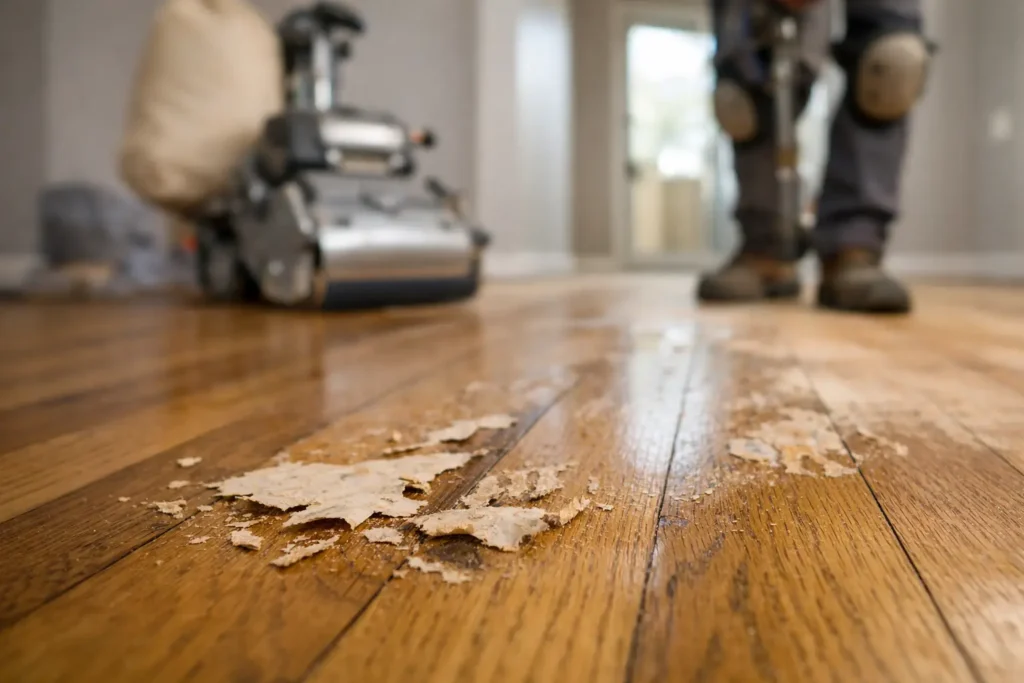
A hardwood floor can look perfectly solid one week, then develop cloudy edges, lifted flakes, or peeling patches near a doorway the next. If you are asking what causes hardwood finish peeling, the answer is usually not simply age. Peeling happens when the protective finish loses its bond with the wood or with the layer beneath it. Finding the reason matters because applying another coat over a failing surface may only postpone the problem.
For Connecticut homeowners, the most dependable solution starts with an honest assessment of the floor’s condition, moisture exposure, and prior finish history. When restoration is needed, a professional dustless sanding and refinishing process can remove failed coatings and restore a clean, durable finish – with zero dust left in the home.
What Causes Hardwood Finish Peeling?
Hardwood finish is designed to form a protective film over the wood. That film protects against everyday foot traffic, spills, scratches, and cleaning. When it starts to peel, the failure commonly comes down to poor adhesion, water exposure, contamination, or movement in the wood itself.
Peeling is different from ordinary wear. A worn finish may look dull or thin, especially in hallways and kitchens, but it remains attached to the floor. Peeling finish actually separates, curls at the edges, flakes away, or lifts in sheets. That distinction helps determine whether a maintenance coat could help or whether the floor needs professional sanding and refinishing.
Poor adhesion between finish layers
One of the most common causes is a finish coat that never bonded properly to the surface below. This can happen when a previous coating was applied over wax, oil soap residue, silicone-based polish, household cleaners, or an incompatible finish.
Even a floor that appears clean can carry invisible residue. If the surface was not properly prepared before recoating, the new layer may initially look attractive but gradually detach under normal use. Peeling can also occur when a coating is applied before the previous coat has cured as required, or when the manufacturer-recommended preparation steps are skipped.
This is why identifying the existing finish is so valuable. Some floors can be refreshed with a compatible maintenance coat. Others need the old coating fully removed so the new finish can bond directly and evenly to properly prepared wood.
Water and moisture exposure
Water is a leading source of finish failure, particularly around exterior doors, kitchens, bathrooms, pet water bowls, windows, and appliances. A single spill that sits too long can leave a white mark. Repeated moisture exposure can weaken the finish bond and allow the coating to lift.
Moisture does not always come from an obvious spill. Wet footwear, frequent mopping, leaking plumbing, high indoor humidity, and moisture rising from below can all affect hardwood. In more serious cases, the boards may cup, darken, separate, or show black staining. Those are signs the issue may extend beyond the finish and should be addressed before refinishing begins.
Connecticut’s changing seasons add another variable. Humid summers and dry heated winters cause wood to expand and contract. A quality finish is built to accommodate normal seasonal movement, but excessive moisture swings can stress a weak or improperly applied coating.
Natural wood movement and floor conditions
Hardwood is a natural material, not a static surface. It responds to changes in temperature and humidity. Small gaps between boards in winter or slight expansion in summer can be normal. However, major movement, loose boards, subfloor moisture, or inadequate installation conditions can contribute to cracks and peeling along board edges.
The finish may be where the problem becomes visible, but the underlying floor condition is what needs attention. Repairing loose boards, correcting active leaks, and stabilizing indoor humidity can protect the investment in refinishing.
Cleaning Habits That Can Damage a Finish
Many homeowners try to protect their floors with frequent cleaning, only to use products that leave a film behind. Oil soaps, waxes, furniture polishes, harsh degreasers, and some all-purpose cleaners can interfere with finish adhesion and create a cloudy buildup over time.
Too much water is equally risky. Hardwood should never be saturated or cleaned with a dripping mop. Use a cleaner made specifically for sealed hardwood floors, applied lightly with a well-wrung microfiber pad. Clean spills promptly, especially near seams where moisture can travel into the wood.
Abrasive pads and steam cleaners also deserve caution. Steam introduces heat and moisture into a material that can react poorly to both. Abrasive tools may scratch or weaken the finish, making it more vulnerable to future peeling. The right maintenance routine is simple, but it must match the type of finish already on the floor.
When Peeling Is a Sign of a Bigger Problem
Small peeling areas may be isolated, such as near a doorway where snow, rain, and salt are tracked in. But widespread peeling often signals a finish system failure rather than a single damaged spot. Spot repairs can sometimes blend acceptably in a closet or low-visibility area, yet they are less predictable across a main living room or open floor plan.
Look closely for discoloration, raised grain, cupping, board gaps that have changed dramatically, soft areas, or repeated peeling after a prior repair. These conditions can point to ongoing moisture or structural concerns. Refinishing before the cause is resolved may lead to another failed finish.
A professional inspection helps separate cosmetic damage from a moisture-related issue. It also prevents a common mistake: applying a fresh coat to conceal peeling without verifying that the existing surface can accept it.
Can You Recoat a Peeling Hardwood Floor?
It depends on why the finish is failing. A recoat is appropriate only when the existing finish remains securely bonded, the floor has no wax or contaminating residue, and the damage is limited to surface wear. Recoating a peeling floor without correcting adhesion issues can trap the same failure beneath a new layer.
When peeling is extensive, full sanding and refinishing is usually the more reliable route. The process removes the failed finish, addresses minor surface damage, and gives the new finish a properly prepared surface to bond with. It also creates the opportunity to repair damaged boards and update the color if desired.
The trade-off is straightforward: a maintenance coat may cost less upfront when the floor is a good candidate, while a full refinishing delivers a more complete reset when the finish has already broken down. The right choice should be based on the floor, not a one-size-fits-all recommendation.
Restore Peeling Floors Without the Household Cleanup
For homeowners in West Hartford, Manchester, Glastonbury, and throughout greater Hartford County, floor restoration should improve the home without creating an unnecessary burden. Dustless Hardwood Floors LLC uses a proprietary, state-of-the-art dustless sanding system that leaves zero dust in the home. That means a cleaner process for families, children, pets, and allergy-sensitive households.
After the floor is properly prepared, the finish system can be selected for durability, appearance, and the needs of the space. Low-odor finishing options help keep the experience comfortable while delivering the rich color and lasting protection hardwood floors deserve. As a licensed and insured Connecticut contractor, the team provides clear recommendations, transparent pricing, and no hidden fees.
If a peeling finish is limited to a small area, acting early may keep the repair simpler. If it is spreading, flaking, or paired with water marks, let the floor be evaluated before another coating is applied. The right repair restores more than the surface – it gives your home a clean, strong foundation for everyday life.