If someone in your home starts sneezing the minute a renovation project begins, the finish you choose for your hardwood floors matters just as much as the color. Allergy friendly hardwood floor finishing is not just about appearance. It is about cleaner indoor air, lower odor, and a process that protects the comfort of your family while still giving your floors a beautiful, durable result.
For many Connecticut homeowners, the concern is simple. They want their floors restored, but they do not want that project to interfere with children, pets, or anyone who is sensitive to airborne particles and strong smells. That is where product choice and process both matter. A healthier floor finishing project starts with zero-dust sanding in the home, followed by the right low-odor finish for the way you live.
What makes hardwood floor finishing more allergy friendly?
An allergy-conscious floor finishing job is usually built around three priorities. First, the sanding process should keep the home clean. Second, the coating itself should release fewer irritating fumes. Third, the finished floor should be easy to maintain without trapping allergens the way carpet can.
That first part gets overlooked too often. Homeowners may spend time researching finish types, then forget that surface preparation sets the tone for the entire project. A true dustless sanding system makes a major difference because it leaves zero dust in the home. That means you are not dealing with fine particles settling on furniture, vents, or other living areas while the floors are being restored.
For families in Manchester, West Hartford, Glastonbury, and surrounding Connecticut communities, that clean process is often the deciding factor. When a home already has allergy concerns, the last thing anyone wants is extra airborne debris introduced during refinishing.
Allergy friendly hardwood floor finishing starts with zero-dust sanding
If the goal is a healthier refinishing experience, sanding cannot be treated as a side note. It is the foundation. Dustless Hardwood Floors LLC uses a proprietary dustless sanding system that leaves zero dust in the home, which is especially valuable for allergy-sensitive households.
That clean approach changes the whole experience. Instead of worrying about particles moving through the house, homeowners can focus on the results – smoother boards, renewed color, and a protective finish that gives the floor new life. It also makes the project more comfortable for busy households that do not want their daily routine turned upside down.
This matters in older Connecticut homes where floors may have years of wear, scratches, fading, pet marks, or water spots. Restoring those boards should improve the home, not create added concerns for indoor comfort. Zero-dust sanding supports that goal from the start.
Choosing the right finish for an allergy-sensitive home
Not every finish is the same, and there is no single best option for every household. The right choice depends on who lives in the home, how the rooms are used, how quickly the space needs to be back in service, and how sensitive family members are to odor.
Water-based finishes
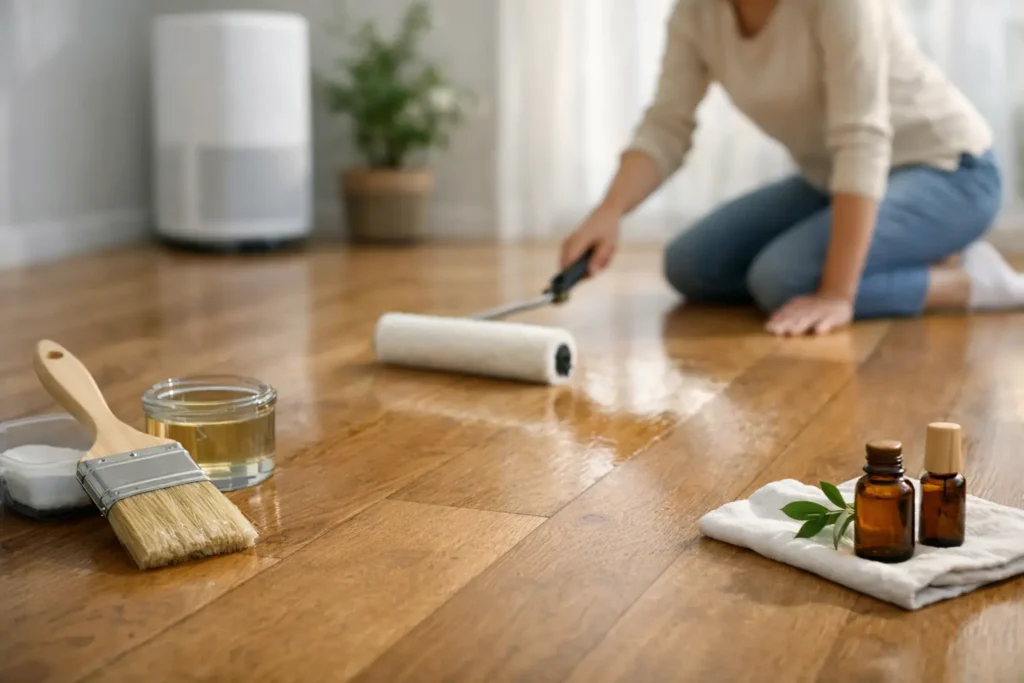
Water-based polyurethane is often a strong fit for allergy-conscious homes because it typically has a lower odor than many traditional alternatives and dries clear. It also tends to dry faster, which many homeowners appreciate when they want the job completed efficiently.
The trade-off is that not every water-based product performs the same way. Higher-quality systems usually offer better durability and appearance than entry-level products. For high-traffic homes with kids and pets, product quality matters just as much as the finish category.
Oil-based finishes
Oil-based finishes can create a rich, warm look that some homeowners prefer, especially on classic oak floors. They are known for strong build and traditional character. But they also tend to have a stronger smell and longer cure time.
For households focused on minimizing odor, this option may not be the best fit. That does not make it wrong. It just means the decision should be based on your priorities, not only on appearance.
Hardwax oils and specialty coatings
Some specialty finishes are chosen for their natural look or repairability. In certain settings, they can be a good option. But they are more dependent on the specific product and the maintenance expectations of the homeowner.
This is where professional guidance matters. A finish that sounds healthier on paper is not always the best real-world choice if it requires more frequent upkeep or performs poorly in a busy household.
Why finish selection should match the way you live
A formal dining room and a family room do not need to be treated like the same space. If you have pets, children, or constant foot traffic, durability becomes part of the health conversation too. When a finish wears down quickly, the floor may need touch-ups or recoating sooner, which means more interruption over time.
That is why allergy friendly hardwood floor finishing should not be reduced to one feature. Lower odor matters. Clean application matters. Long-term durability matters. Easy maintenance matters. The best outcome usually comes from balancing all four.
For example, a homeowner with mild sensitivities may prioritize toughness and choose a premium water-based finish with excellent wear resistance. Another family may be more concerned with odor above all else and choose the lowest-odor system that still holds up well for daily living. Both decisions can be right.
A cleaner floor can support a cleaner home
Finished hardwood already offers an advantage for many allergy-sensitive households because it does not hold on to dust, dander, and pollen the way carpet often does. But the condition of that floor still matters.
When hardwood is worn, scratched, or unevenly coated, it can be harder to clean thoroughly. Dirt and fine particles settle into damaged areas more easily. Refinishing restores a smooth, sealed surface that is simpler to maintain with regular cleaning.
That benefit continues long after the project is done. Homeowners are not just improving the look of the room. They are making the floor easier to live with every day.
When refinishing is a better choice than replacement
Some homeowners assume replacement is the healthier route because everything is new. In reality, that depends on the condition of the existing floor and the products being brought into the home. If your current hardwood is structurally sound, refinishing may be the smarter option.
It preserves the material you already have, avoids unnecessary demolition, and renews the wood with a fresh protective coat. With zero-dust sanding and the right finish, the process can be clean, efficient, and family-friendly.
There are limits, of course. If boards are severely warped, deeply water-damaged, or have already been sanded too many times, repair or selective replacement may be needed first. A trustworthy contractor should tell you when refinishing is the right fit and when it is not.
What Connecticut homeowners should ask before booking
The most useful question is not just, “What finish do you use?” It is, “How do you keep the home clean, and which finish do you recommend for my family and traffic level?”
That opens the door to a real conversation about your home instead of a one-size-fits-all answer. If anyone in the household is especially sensitive, say so upfront. Mention pets, children, asthma concerns, or a need for a lower-odor product. A professional floor contractor should be able to explain the options clearly and recommend a system that fits your goals.
It is also worth asking about licensing, insurance, and whether pricing is straightforward. Homeowners deserve beautiful results without hidden fees or guesswork. In a service like hardwood refinishing, peace of mind is part of the value.
The best result is beauty without the stress
A refinishing project should leave your floors looking renewed and your home feeling just as comfortable as before. That is the real promise behind allergy friendly hardwood floor finishing – not only a better-looking surface, but a cleaner, healthier experience from start to finish.
For Connecticut homeowners who want restored hardwood without compromising indoor comfort, the right combination is clear: zero-dust sanding in the home, a carefully selected low-odor finish, and a licensed professional who knows how to match the system to your space. When those pieces come together, your floors do more than look better. They support a home that feels better to live in every day.