
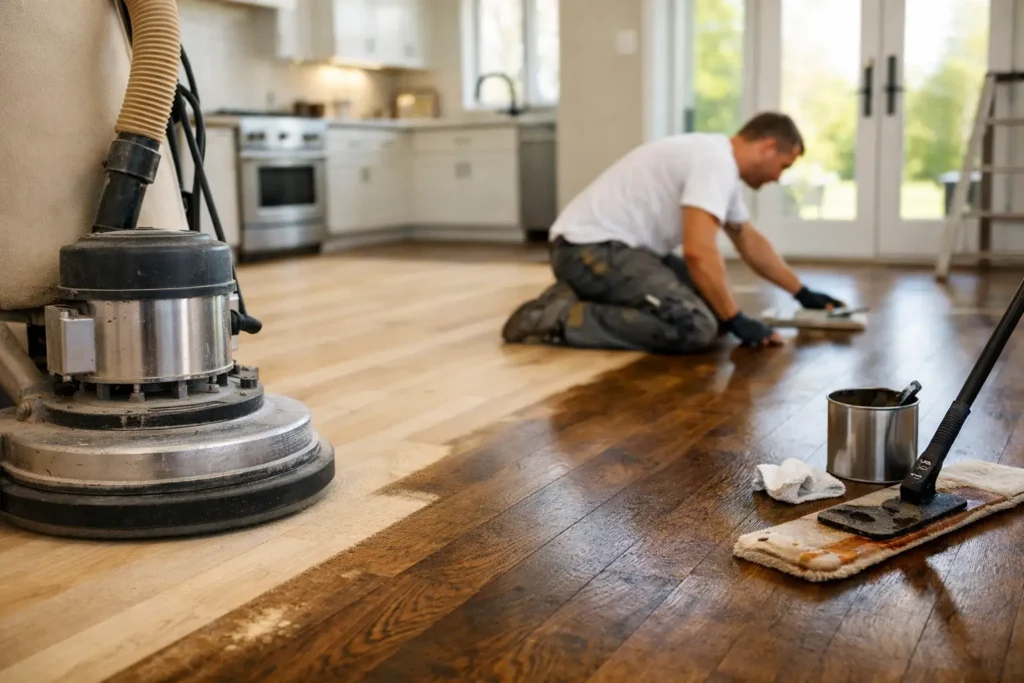
A worn hardwood floor can make an otherwise well-kept West Hartford home feel dated. Scratches around the kitchen, gray traffic paths in the hallway, faded areas near sunny windows, and a finish that no longer reflects light are all signs that restoration may be the better investment. This West Hartford floor refinishing guide explains how to assess your floors, make smart finish decisions, and get beautiful results without turning your home into a construction zone.
For families, pet owners, and allergy-sensitive households, the method matters as much as the final color. A professional dustless sanding system captures sanding particles at the source and leaves zero dust in the home. That means a cleaner project, a more comfortable indoor environment, and a refreshed floor you can enjoy without the usual cleanup concerns.
Know When Hardwood Needs Refinishing
Hardwood does not need to look completely ruined before it deserves attention. Refinishing removes the damaged surface layer, smooths out normal wear, and protects the wood with a new finish. Done at the right time, it can preserve floors for many more years.
Look closely at the areas that receive the most foot traffic. Dullness, shallow scratches, uneven sheen, fading, and worn finish near entryways often point to a refinishing need. If water no longer beads on the surface, the protective coating may be wearing thin. Small dents and minor surface marks can often be addressed during sanding as well.
Water damage requires a more careful evaluation. Dark stains, cupping boards, buckling, or soft spots may mean the floor needs repair before refinishing begins. Refinishing can improve many cosmetic issues, but it cannot correct active moisture problems or structurally compromised boards. A qualified contractor should identify the cause first, then recommend the right repair and restoration plan.
Refinishing, recoating, or replacement?
These services solve different problems. A maintenance recoat adds a fresh protective layer when the existing finish is still intact and free from deep scratches. It is a good option for floors that have lost luster but do not need significant correction.
Full sanding and refinishing is the right choice when scratches have reached the wood, the finish is worn through, the color is uneven, or you want to change the stain. Sanding reveals clean wood so the floor can be repaired, stained if desired, and protected with a durable new finish.
Replacement is usually reserved for boards with severe water damage, extensive movement, major gaps, or damage that cannot be sanded out. In many homes, only the affected boards need replacement before the remaining floor is refinished, which can be more practical than replacing an entire room.
What to Expect From a West Hartford Floor Refinishing Project
A successful project starts before any equipment enters the home. Your contractor should inspect the species and condition of the wood, measure the areas involved, discuss previous coatings, and identify repairs or transition details. This is also the time to talk honestly about your goals: Do you want to preserve the existing warmth of the floor, remove an outdated orange tone, or choose a richer, more modern color?
Dustless Hardwood Floors LLC uses state-of-the-art dustless sanding equipment that collects particles directly during the sanding process. The result is zero dust in the home, rather than residue settling on furniture, vents, and surrounding rooms. It is a meaningful advantage for homes with young children, pets, and residents who are sensitive to airborne particles.
Once the floor is properly prepared, the surface is sanded evenly to remove worn finish and surface imperfections. Repairs can be blended into the surrounding floor, and gaps or minor imperfections may be addressed where appropriate. Stain is applied only after the wood has been evaluated for consistent absorption, followed by a premium protective finish selected for the room’s use and desired appearance.
The exact timeline depends on square footage, floor condition, repairs, stain color, and the finish system selected. Clear scheduling matters, especially when refinishing a main living area, rental property, or home being prepared for sale. Ask for a written scope of work and a straightforward price before the project begins so there are no hidden fees or last-minute surprises.
Choose a Color That Works With Your Home
Stain choice can completely change the feeling of a room, but the best color is not always the trendiest one. West Hartford homes range from historic properties with traditional millwork to newer spaces with open layouts, and the floor should support the home’s architecture rather than fight it.
Natural and lighter tones keep rooms feeling open and allow the wood grain to remain visible. They are often a strong choice for red oak and white oak when homeowners want a clean, current look without making a permanent dramatic shift. Medium brown tones bring warmth and can be forgiving in active family spaces.
Dark stains create contrast and can look striking with light walls, but they tend to reveal dust, pet hair, and surface marks more readily than lighter colors. Gray or heavily blended stains can be beautiful, yet results vary by wood species, existing color, and age of the boards. A test area is the safest way to see how a stain will look under your home’s natural and artificial lighting.
If the floor has uneven sun fading, old pet stains, or a mix of original and repaired boards, a lighter or medium tone may blend more naturally than an extremely dark stain. An experienced refinisher will set realistic expectations before color is chosen rather than promise a uniform result the wood cannot deliver.
Select a Finish for Real Life, Not Just Appearance
The finish protects your investment, so it should reflect how the room is used. A busy kitchen, entryway, or family room needs durability and easy maintenance. A formal dining room may allow more flexibility if it receives less daily traffic.
Water-based finishes are popular with homeowners who want a clear appearance, faster drying time, and low odor. They help preserve lighter wood tones and are well suited to households that want a comfortable, family-friendly refinishing experience. Oil-based finishes can provide a warmer amber tone, particularly on traditional hardwood, but the appearance and timing differ. The best choice depends on your color goal, existing flooring, and how quickly the area needs to return to normal use.
Sheen is another important decision. Satin is a common choice because it offers a soft, refined look while helping minimize the visibility of everyday marks. Matte finishes create an even more understated appearance. Gloss offers noticeable shine but can highlight scratches and small imperfections, making it less practical for many active homes.
Prepare Your Home Without Overcomplicating It
Good preparation keeps the project efficient and protects the finished result. Move furniture, area rugs, and fragile items from the work area as directed. Remove items from low shelves or nearby surfaces so the crew can access the floor safely and work without unnecessary delays.
Plan around pets and children so they remain comfortable and away from active work areas. Your refinishing professional can explain when each room can be walked on, when furniture can be returned, and how long to wait before replacing rugs. Following those guidelines protects the new finish during its early curing period.
Dustless sanding makes preparation far simpler than homeowners often expect. Because the system is designed to leave zero dust in the home, you can focus on clearing the work area and planning your household routine instead of preparing for extensive dust cleanup.
Protect Your Newly Refinished Floors
Refinished floors are durable, but daily habits determine how long they retain their beauty. Use felt pads under chairs and furniture, place quality mats at exterior doors, and lift furniture rather than dragging it. Clean spills promptly, especially around pet bowls, sinks, and entryways where moisture can reach seams.
Avoid soaking the floor or using harsh cleaners that leave residue or damage the finish. A soft microfiber mop and a hardwood-safe cleaner are usually enough for routine care. If the floor begins to lose sheen after years of use but the protective layer remains intact, a maintenance recoat may restore its appearance before full sanding is needed again.
A local professional makes the decisions easier
Floor refinishing is not simply a color update. It is a restoration project that should strengthen the wood’s protection, improve the room’s appearance, and fit comfortably into your household routine. For West Hartford homeowners, working with a licensed and insured Connecticut hardwood flooring contractor brings needed confidence when repairs, stain testing, and finish selection all affect the final result.
Ask for clear recommendations based on the actual condition of your floor, not a one-size-fits-all package. The right plan will respect the character of the wood, provide transparent pricing, and deliver a clean, dust-free transformation that makes your home feel cared for again.