
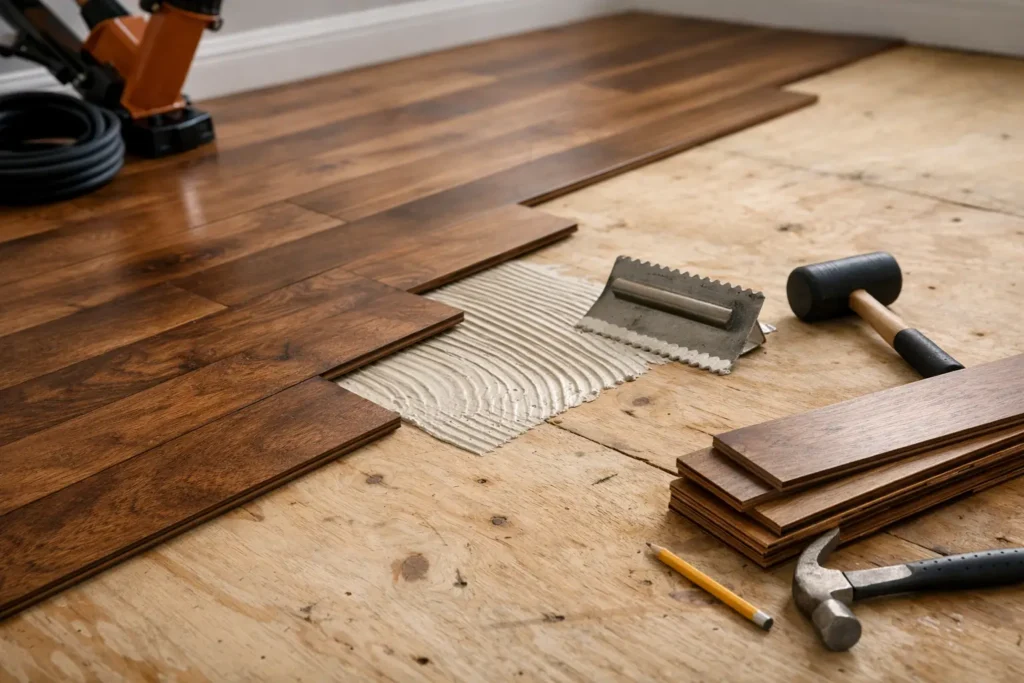
A hardwood floor only looks as good as what sits beneath it. If you plan to install hardwood over existing subfloor, the real success of the project comes down to flatness, moisture control, and choosing the right installation method for the home you live in now – not the one you wish you had on paper.
For Connecticut homeowners, that matters more than most people expect. Seasonal humidity swings, older housing stock, and years of settling can turn a straightforward flooring project into a problem if the subfloor is ignored. Done properly, new hardwood adds warmth, value, and long-term durability. Done too quickly, it can lead to squeaks, gaps, cupping, or boards that never sit quite right.
Can you install hardwood over existing subfloor?
Yes, in many cases you can install hardwood over existing subfloor, but only if the subfloor is structurally sound, dry, clean, and flat enough for the flooring product you choose. That applies whether the subfloor is plywood, OSB, or in some older homes, plank boards.
The key point is that existing does not automatically mean ready. A subfloor may look acceptable at a glance and still have moisture issues, loose fasteners, uneven spots, or damaged sections that should be corrected before any hardwood goes down. Hardwood is not forgiving. It tends to reveal what is underneath rather than hide it.
What the existing subfloor needs before hardwood goes in
Before installation starts, the subfloor should be evaluated for three things – stability, flatness, and moisture.
Stability comes first. If the subfloor flexes too much, has soft spots, or squeaks when walked on, those issues should be fixed before installation. Loose panels may need to be re-secured. Damaged areas may need replacement. If the structure underneath has movement, new hardwood will not solve it.
Flatness matters because hardwood boards need consistent support. Minor variation is common, especially in older Connecticut homes, but significant dips or high spots can cause poor board fit, hollow sounds, edge pressure, or visible irregularity across the floor. Depending on the subfloor type, flattening may involve sanding high areas, filling low spots with approved leveling materials, or replacing problem sections.
Moisture is the part many homeowners underestimate. Wood flooring and wood subfloors both respond to humidity. If the subfloor moisture content is too high, or if there is an unresolved moisture source from below, the new floor can expand, cup, or fail prematurely. Basements, crawl spaces, and slab-adjacent areas deserve extra attention.
Installing hardwood over plywood, OSB, or plank subfloor
Plywood subfloors
Plywood is often the most straightforward surface for nail-down or staple-down hardwood, assuming it meets thickness and condition requirements. It holds fasteners well and provides solid support when properly secured.
OSB subfloors
OSB can also work under hardwood, but product compatibility matters. Some hardwood manufacturers allow installation over OSB of a certain thickness, while others have more specific requirements. Fastener performance and moisture behavior should both be reviewed before the job begins.
Older plank subfloors
Plank subfloors are common in older homes and often require more preparation. Because the boards run with gaps and may not provide the best fastening surface for modern hardwood, an additional layer of plywood underlayment is sometimes recommended. That adds stability and gives the hardwood a better base.
Choosing the right hardwood installation method
Best ways to install hardwood over existing subfloor
There is no single method that fits every project. The right approach depends on the flooring product, the subfloor material, and the room conditions.
Solid hardwood is commonly nailed or stapled over wood subfloors. This is a traditional choice and works well when the subfloor is in good condition and the board width is appropriate for the space. Engineered hardwood offers more flexibility and may be nailed, glued, or floated depending on the product design and manufacturer guidance.
That flexibility can be useful in homes where subfloor conditions vary by room or where moisture stability is a concern. Engineered hardwood is still real wood on the surface, but its layered construction often handles seasonal change more predictably than solid planks.
This is one of those it-depends decisions. If a homeowner wants wide-plank flooring in a Connecticut home with humidity swings, engineered material may be the smarter option. If the goal is a classic solid oak floor over a well-prepared plywood subfloor, nail-down installation may be ideal.
Subfloor prep is where the floor is won or lost
A quality hardwood installation starts well before the first board is placed. The existing floor covering must be removed if present, and the exposed subfloor needs to be cleaned thoroughly and checked for damage, protruding fasteners, and level issues.
Any squeaks should be addressed at this stage. That may mean securing loose subfloor panels to the joists, tightening movement in high-traffic paths, or replacing sections weakened by age or moisture. Skipping this step is one of the most common reasons homeowners hear noise after a new floor is installed.
A moisture barrier or underlayment may also be part of the system, depending on the subfloor and flooring product. This is not a detail to guess on. Manufacturer requirements matter because they affect both performance and warranty coverage.
Acclimation matters too. Hardwood should be allowed to adjust to interior conditions before installation, based on the product type and site readings. Rushing that timeline can create avoidable expansion and contraction problems later.
What homeowners often miss about room conditions
Hardwood installation is not just about the subfloor itself. Interior conditions across the house matter. If one area is consistently damp, if indoor humidity swings sharply, or if the HVAC system is not maintaining stable conditions, the floor will feel it.
That is especially relevant in mudrooms, kitchens, lower levels, and homes near the Connecticut shoreline where moisture loads can behave differently. Hardwood can absolutely be a strong choice in these homes, but product selection and prep should reflect real conditions rather than assumptions.
It is also worth thinking about transitions to adjoining rooms. Floor height, door clearance, trim details, and stair alignment can all be affected when new hardwood is installed over an existing subfloor. These are not deal-breakers, but they should be planned before installation day.
When repair or refinishing may make more sense
Some homeowners searching for ways to install hardwood over existing subfloor already have hardwood in place – it is just worn, scratched, faded, or uneven in color. In that case, full replacement may not be the best value.
If the existing hardwood is structurally sound, professional refinishing can restore the look of the floor without removing and replacing it. For many households, that means keeping the character of the original wood while dramatically improving appearance.
This is where a clean process matters. Dustless Hardwood Floors LLC uses a proprietary dustless sanding system that leaves zero dust in the home, which is a major advantage for families, children, pets, and allergy-sensitive households. If your existing hardwood can be saved, dustless sanding and refinishing often delivers the transformation homeowners want without the cost of a full tear-out and reinstall.
When professional installation is the safer choice
Hardwood flooring is one of the most visible finish surfaces in a home. Small prep mistakes can turn into expensive callbacks later, especially when moisture readings, fastening schedules, layout planning, and subfloor corrections are involved.
Professional installation is usually the better path when the home is older, the subfloor has uneven areas, multiple rooms need to align cleanly, or the project includes repairs and refinishing in nearby spaces. It also matters when homeowners want clear expectations about timing, product suitability, and finish quality.
For property owners in Manchester, West Hartford, Glastonbury, and surrounding Hartford County communities, local experience adds value because older New England homes often bring their own quirks. A contractor who understands how regional climate and construction styles affect hardwood performance can prevent issues that are easy to miss during a quick estimate.
A better result starts below the surface
Installing hardwood over an existing subfloor can be an excellent investment, but the floor you admire at the end depends on the work no one sees. When the base is flat, dry, and secure, hardwood performs the way it should – quiet underfoot, stable through the seasons, and beautiful for years.
If you are weighing installation against repair or refinishing, start with an honest evaluation of what is already in place. The right answer is not always replacement, and the best outcome is the one that gives your home a clean, lasting result without unnecessary disruption.