
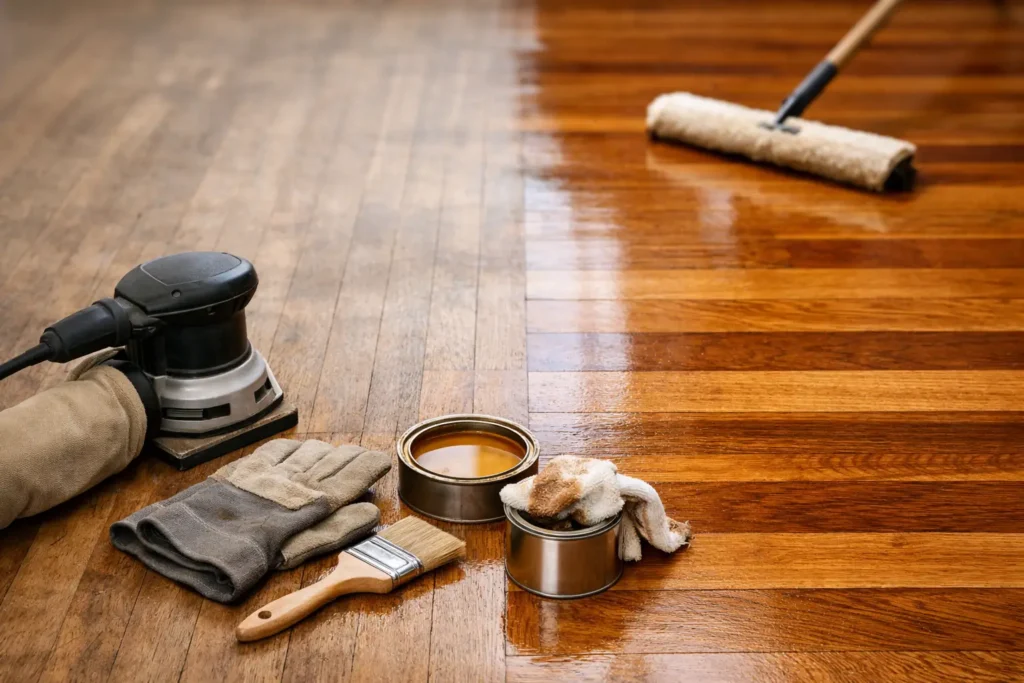
When sunlight hits the same stretch of floor every afternoon, fading does not sneak up on you – one day the wood simply looks tired. The color feels uneven, the finish has lost its richness, and the room no longer has that clean, polished look. If you are wondering how to fix faded hardwood finish, the right answer depends on one thing first: whether the problem is only in the topcoat or has reached the wood itself.
That distinction matters because some floors can be revived with a new protective coat, while others need a full refinishing to bring back consistent color and clarity. For Connecticut homeowners, especially busy families and allergy-sensitive households, the goal is not just better-looking floors. It is getting them restored cleanly, safely, and without turning your home upside down.
What causes a hardwood finish to fade?
A faded hardwood floor rarely has a single cause. More often, it is a combination of sun exposure, foot traffic, aging finish, cleaning products, and moisture over time. In rooms with large windows, UV light can bleach stain color and weaken the look of the topcoat. In entryways, halls, and kitchens, repeated wear slowly dulls the surface until the floor starts looking flat instead of finished.
Sometimes homeowners think the wood itself is failing when the finish is really the issue. Other times, they try store-bought shine products that briefly add gloss but leave buildup behind. That can make the floor look cloudy, streaky, or patchy rather than truly restored.
The good news is that faded floors are often repairable. The key is choosing the right level of correction instead of using a quick fix that only hides the problem.
How to tell if you need a recoat or full refinishing
Before deciding how to fix faded hardwood finish, look closely at what has actually changed. If the floor still has an even wood color underneath but the surface looks dull, lightly scratched, or worn in traffic paths, a recoat may be enough. A recoat refreshes the protective finish layer and can restore depth and sheen without removing deep material from the wood.
If the fading is uneven, the stain color looks bleached by sunlight, gray areas are showing, or bare wood is visible in worn spots, a simple recoat usually will not solve it. In that case, the floor often needs sanding and refinishing so the old finish can be removed, the color corrected, and the surface sealed again.
Water marks, pet stains, black discoloration, and deep gouges also tend to push the project beyond a recoat. Those issues often sit below the finish line. Covering them with another layer on top usually leaves the floor looking better in some places and unchanged in others.
Signs a recoat may work
A recoat is often the right option when the floor is structurally sound and the problem is mostly surface-level. You may be a good candidate if the finish looks dull, there are light scratches, and the color is still reasonably consistent across the room.
This can be a smart maintenance move for homeowners who want to restore shine before the finish wears through completely. It is less invasive than full refinishing and helps extend the life of the floor.
Signs you need full refinishing
If furniture outlines are visible, window-side boards are much lighter than protected areas, or the finish has worn away in traffic lanes, full refinishing is usually the better investment. It gives you a true reset rather than a temporary cosmetic improvement.
For many older homes in Manchester, West Hartford, Glastonbury, and surrounding Connecticut communities, this is the step that brings floors back to a consistent, high-end appearance.
The wrong fixes can make fading look worse
Many homeowners start with polish, restorer products, or spot treatments from a hardware store. That is understandable, but it is where a lot of frustration begins. Products marketed as floor revival solutions often add temporary shine without fixing worn finish, UV fading, or uneven stain loss.
In some cases, these coatings interfere with future refinishing or recoating because they leave residue that must be removed first. Spot repairs can also create obvious differences in sheen, especially in natural light. Hardwood floors read as one large surface, so even small mismatches stand out.
That is why isolated DIY patches rarely blend the way people hope. The floor may need a full-room approach to look truly restored.
How professionals fix faded hardwood finish
The professional approach starts with evaluating the finish condition, wear pattern, board condition, and color variation. Once that is clear, the repair path becomes much more straightforward.
If the floor only needs a recoat, the surface is prepared carefully and a new coat of finish is applied to restore protection and appearance. This works best when the existing finish is still intact and compatible with a new coat.
If the damage goes deeper, sanding and refinishing is the more complete solution. The old, faded finish is removed, the surface is brought back to a clean uniform state, and the floor can then be stained again or finished in its natural tone. This is the stage where homeowners can correct sun fading, update color, and get rid of years of wear in one project.
At Dustless Hardwood Floors LLC, that work is completed with a proprietary dustless sanding system that leaves zero dust in the home. That matters for everyone, but especially for families with children, pets, or allergy concerns who want restored floors without compromising indoor comfort.
Why dustless refinishing matters when your floors are faded
When a floor has reached the point of full refinishing, homeowners often worry about the experience as much as the result. They want the beauty back, but they do not want their house to feel like a jobsite.
That is where dustless sanding changes the experience. A true dustless system keeps the process clean and controlled, which is a major advantage in occupied homes and light commercial spaces. You get the benefit of a fully renewed hardwood surface without the lingering airborne debris that people often fear from older refinishing methods.
For Connecticut property owners balancing work, school schedules, pets, and day-to-day life, that cleaner approach is more than a convenience. It is part of making the project practical.
Can faded hardwood floors be fixed without sanding?
Sometimes, yes. If the finish is dull but not worn through, and if the color loss is not severe, a screen-and-recoat style service may restore the look well enough. This is best for floors that have lost sheen rather than stain.
But if you can see major color differences from rugs, sunlight, or traffic patterns, skipping sanding usually means accepting a partial result. The floor may be shinier, but it will still look faded. That trade-off is fine for some homeowners and disappointing for others. It depends on your expectations, the age of the floor, and whether you want maintenance or a true visual reset.
What to expect after the repair
A properly restored hardwood floor should look richer, clearer, and more even across the room. The grain becomes more visible again. The color stops looking washed out. The space feels brighter and better cared for almost immediately.
There is also a protective benefit. Once the finish is renewed, the floor is better equipped to handle everyday wear from shoes, pets, chairs, and seasonal foot traffic. That matters in Connecticut, where flooring often sees everything from wet boots in winter to heavy summer sunlight.
To protect the new finish, use floor-safe cleaners, felt pads under furniture, and window treatments in rooms with intense direct sun. Small changes like that can slow future fading significantly.
When it makes sense to call a professional
If your floor looks generally dull, a quick conversation can tell you whether it needs maintenance or a full restoration. If it has uneven color, exposed wood, deep scratches, or visible traffic wear, it is worth having it evaluated before trying another off-the-shelf product.
A licensed and insured hardwood flooring contractor can tell you what is salvageable, what will blend well, and what level of repair will actually solve the problem. That clarity helps you avoid spending money twice.
For homeowners who want clean results, reliable communication, and no hidden fees, professional dustless refinishing is often the most efficient path forward. The floor gets fixed the right way, and your home stays comfortable throughout the process.
Faded hardwood does not mean your floors are finished. In many cases, it means they are ready for the right kind of restoration – one that brings back the color, protection, and character you loved in the first place.
Understanding how to fix faded hardwood finish is essential for maintaining the beauty of your flooring.
Many homeowners often seek guidance on how to fix faded hardwood finish effectively.
When determining how to fix faded hardwood finish, consider the type of wood you have.
Researching how to fix faded hardwood finish can save time and money in the long run.
One popular method on how to fix faded hardwood finish involves using a recoat.
People always ask how to fix faded hardwood finish without sanding.
Learning how to fix faded hardwood finish can lead to beautiful, restored floors.
To know how to fix faded hardwood finish, it’s crucial to assess its condition first.
For optimal results on how to fix faded hardwood finish, follow the recommended steps.
Homeowners should inquire about how to fix faded hardwood finish before proceeding with repairs.
Effective strategies on how to fix faded hardwood finish can enhance your home’s appeal.
Many factors influence how to fix faded hardwood finish correctly.
Understanding the best methods for how to fix faded hardwood finish is crucial for longevity.
Consulting experts on how to fix faded hardwood finish can provide valuable insights.
Consider the environment when deciding on how to fix faded hardwood finish effectively.
Before starting, prepare a plan for how to fix faded hardwood finish efficiently.
Many people wonder how to fix faded hardwood finish with minimal disruption.
Knowing how to fix faded hardwood finish can lead to a remarkable transformation.
Finally, understanding how to fix faded hardwood finish will empower you as a homeowner.
Once you master how to fix faded hardwood finish, maintaining your floors will be easier.