
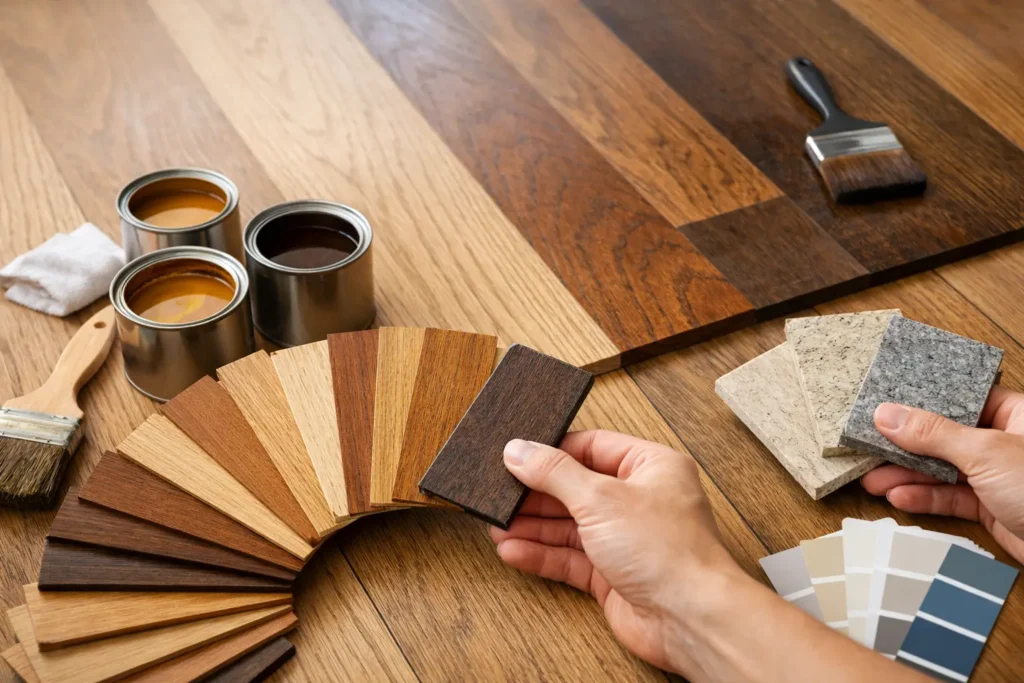
The wrong stain color can make a freshly refinished floor feel too orange, too dark, or strangely out of place with the rest of your home. The right one makes the whole room look more finished, more valuable, and easier to live with. If you are wondering how to choose floor stain colors, the answer is not just picking a shade you like on a sample board. It is about matching wood species, natural light, room size, wall color, and everyday wear.
For Connecticut homeowners, this decision matters even more because many homes have classic oak floors, changing seasonal light, and a mix of traditional and updated design details. A stain that looks perfect in a showroom can read very differently in a Manchester colonial, a West Hartford center hall, or a Glastonbury open-concept renovation. Choosing well means thinking beyond trend and focusing on how the color will actually live in your home.
How to choose floor stain colors without regret
Start with the wood you already have. Stain does not cover hardwood the way paint covers a wall. The natural undertone of the wood still comes through, and that changes the final result. Red oak often pulls warmer and pinker than homeowners expect. White oak tends to look calmer and more neutral. Maple can be harder to stain evenly. If you choose a stain color without accounting for the wood species, the finished floor may look different from the sample in your hand.
That is why professional testing matters. A small stain swatch applied directly to your own sanded floor tells the truth much better than a brochure or online photo. It shows the real tone, depth, and variation under your home’s lighting conditions. This step is especially helpful when you are choosing between two close neutrals that could lean either warm or cool once they are on the floor.
Light is the next major factor. Rooms with strong natural sunlight can handle deeper tones better because the space still feels open. Smaller rooms or areas with limited daylight often benefit from lighter or medium stains that keep the floor feeling airy. Dark stains can look rich and elegant, but they also absorb more light and make dust, pet hair, and fine surface scratches easier to notice. That does not mean dark floors are a bad choice. It just means they are a style decision with maintenance trade-offs.
Match the stain to the way you live
Many homeowners choose stain colors based only on what looks best on day one. A better approach is to think about what will still work six months and six years from now. If you have children, pets, heavy foot traffic, or an active household, medium brown tones are often the safest range. They hide daily wear better than very dark or very light finishes and tend to age gracefully.
This is one reason medium, natural-looking stains remain popular in Connecticut homes. They complement both older architectural details and newer updates, and they do not feel locked into one short-lived trend. If your goal is timeless rather than dramatic, a balanced mid-tone usually gives you the most flexibility.
If you prefer a lighter look, be careful about going too pale unless it suits the style of the house. Light stains can feel fresh and modern, especially in homes with soft wall colors and open layouts, but they also show the natural grain and variation of the wood more clearly. That can be beautiful, though it is not always the polished, uniform look some homeowners expect.
If you are drawn to deep brown or espresso tones, consider the room size, the amount of sunlight, and your tolerance for visible maintenance. Dark stains can make a dining room or formal living room feel grounded and upscale. In a narrow hallway or a low-light family room, they can feel heavier. It depends on the space.
Warm vs cool stain tones
One of the easiest ways to narrow your options is to decide whether your home leans warm or cool overall. Warm stain colors have hints of gold, honey, red, or chestnut. Cool stain colors lean taupe, gray-brown, or muted neutral. Neither is universally better. The right one depends on your cabinets, trim, wall color, and furniture.
If your home has creamy trim, warm paint, and traditional wood details, a warm stain usually feels more natural. If you have white walls, matte black accents, cooler countertops, or a more updated style, a neutral-to-cool brown may feel more current. The mistake is forcing a gray-toned stain into a home full of warm undertones, or vice versa. Floors cover a huge amount of visual space, so any clash will be noticeable.
Think about adjoining rooms
Floor stain should not be chosen in isolation. If the hardwood runs through multiple rooms, the stain needs to create flow. This does not mean every room has to look identical in mood, but the floor should support a consistent feel across the main living areas.
Look at nearby cabinetry, stair parts, built-ins, and transitions into tile or carpeted spaces. You do not need to match wood tones exactly. In fact, exact matching can look forced. What you want is harmony. If your kitchen cabinets are medium brown, your floor can be lighter or darker as long as the undertones work together.
Popular stain directions and what they really do
Natural and clear-looking finishes have grown in popularity because they let the wood grain lead. These are a strong choice if you want a brighter, more understated look. They also tend to feel less trend-driven than strong red or very dark stains.
Classic medium browns are still one of the most practical options. They add warmth, hide daily wear well, and fit a wide range of home styles. For many homeowners, this is the sweet spot between design appeal and real-life function.
Dark brown stains create contrast and formality. They can look beautiful in larger rooms and homes with good natural light, but they are less forgiving when it comes to visible debris and fine scratching. That trade-off matters if you want your floors to look polished every day, not just right after cleaning.
Gray stains and heavily weathered tones can work in the right setting, but they are the easiest to get wrong. On some woods, especially red oak, they can pull strange undertones unless the floor is prepared and tested carefully. If you like a cooler look, a soft neutral brown is often a safer choice than a strong gray.
Why sample testing matters more than online inspiration
Photos are useful for ideas, not final decisions. Camera settings, sunlight, wall color, and finish sheen can all change how a stain appears. The same stain can look warm in one home and cooler in another.
The most reliable way to choose is to test a few options on your own floor after sanding. View them in morning light, afternoon light, and evening lamp light. Look at them next to your trim, furniture, and cabinets. A color that seems plain at first can become the clear winner once you see how calm and balanced it looks in the full space.
This is also where working with an experienced refinishing contractor makes a real difference. A professional can tell you when a stain is likely to pull too red, go too dark, or fight the natural character of your floor. Good guidance saves homeowners from expensive second-guessing.
Clean refinishing makes the decision easier
Choosing a stain color should feel exciting, not stressful. That is one reason many Connecticut homeowners prefer dustless hardwood floor refinishing. When your floors are professionally sanded with a proprietary dustless sanding system that leaves zero dust in the home, the process stays cleaner, more comfortable, and far better for families, children, pets, and allergy-sensitive households.
That clean environment also helps you focus on the finish itself. You can review stain samples, think clearly about the look you want, and move through the project without the usual worry about residue spreading through the house. For homeowners who want beautiful results without the hassle, dustless sanding and refinishing is the better way to approach a color change.
At Dustless Hardwood Floors LLC, that clean, zero-dust approach is central to the work. It gives homeowners the chance to transform worn floors with professional staining and refinishing while keeping the home clean, safe, and livable throughout the project.
A better question than what color is best
Instead of asking which stain color is best, ask which color will still feel right in your home after the furniture is back in place and everyday life starts again. The best floor stain color is the one that fits your wood, your light, your style, and your tolerance for upkeep.
A rich dark floor can be beautiful. So can a soft natural oak. So can a classic medium brown that simply makes the whole house look better. The smart choice is the one that works on your actual floor, under your actual lighting, for the way you actually live. If you start there, the final result will feel less like a trend and more like your home finally looks the way it should.