
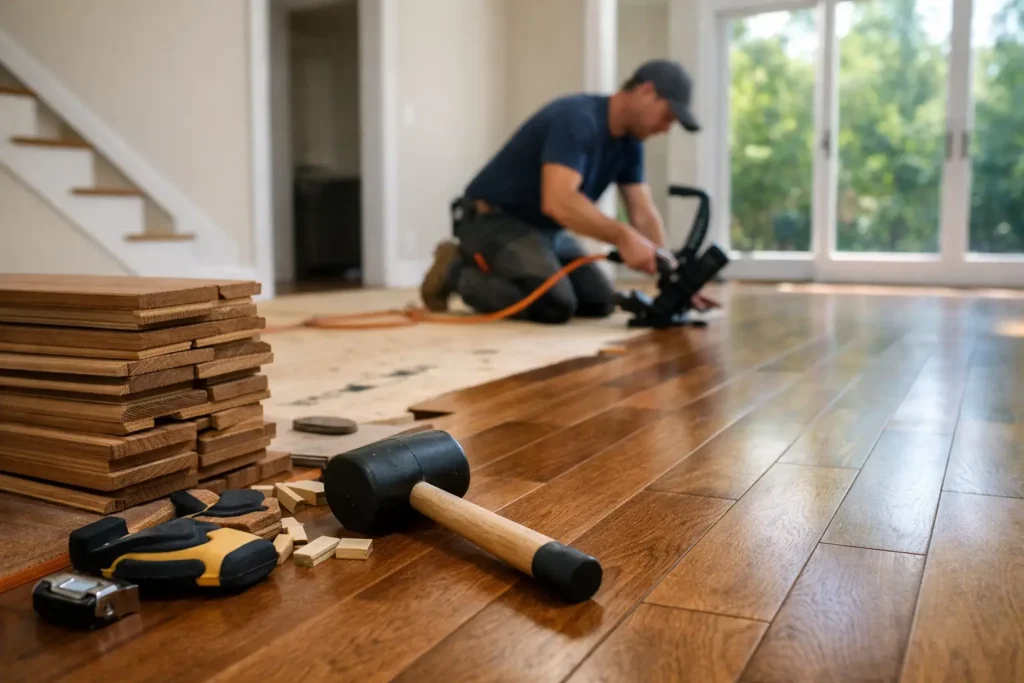
A new hardwood floor changes the feel of a home fast. In Glastonbury, where many homes blend classic New England character with updated interiors, the right floor needs to do more than look good on day one. Glastonbury CT hardwood floor installation should give you lasting value, a clean finished look, and a process that fits real family life – not a drawn-out project that takes over the house.
That is where good planning matters. The species, board width, finish, subfloor condition, and installation method all affect how your floor performs over time. Just as important, if you are matching existing hardwood or updating older floors in the same home, installation should be handled by a contractor who also understands dustless sanding and refinishing. That combination helps the final result look consistent, polished, and comfortable for households with children, pets, or allergy concerns.
What homeowners in Glastonbury usually want from new hardwood
Most homeowners are not just shopping for wood. They are trying to solve a bigger problem. Maybe the current flooring is worn out, damaged beyond repair, or a mix of materials that makes the home feel disconnected from room to room. Maybe they want to replace carpet with something cleaner and more durable. Sometimes the goal is resale. Other times, it is simply wanting the house to feel finished.
In Glastonbury homes, hardwood is popular because it works with both traditional and modern design. It adds warmth, holds up well with the right finish, and gives owners more flexibility than many other flooring options. It can also be renewed over time, which matters if you plan to stay in the home for years.
Still, not every installation is the same. A small bedroom, a full first-floor renovation, and an addition that needs to blend into original hardwood all require different decisions. The best outcome comes from treating installation as part of the home as a whole, not just as a material purchase.
Choosing the right hardwood for your home
Species is usually the first big decision. Oak remains a favorite because it is durable, versatile, and fits almost any style. Red oak offers warmer undertones and a more pronounced grain, while white oak tends to feel a little cleaner and more contemporary. Maple can be a good choice for a smoother, subtler look, though it behaves differently with stain. Wider planks are popular, but they can change the visual scale of a room and may require more attention to site conditions.
Solid hardwood and engineered hardwood each have their place. Solid hardwood is a strong choice in many above-grade spaces and gives you the traditional feel many homeowners want. Engineered wood can be the better fit when moisture conditions or installation constraints make stability especially important. If you are installing over certain subfloors or in parts of the home where seasonal movement is a concern, engineered boards may offer an advantage.
Color matters too, but not only for style. Very dark floors can show more lint and surface marks. Very light floors can help spaces feel larger and brighter, but they may not be the right match if the rest of your home has warmer trim tones. This is why samples and room-by-room planning matter before work starts.
Glastonbury CT hardwood floor installation and subfloor prep
Homeowners often focus on the visible surface, but the real success of Glastonbury CT hardwood floor installation starts underneath. If the subfloor is uneven, noisy, or holding moisture, even premium hardwood will not perform as it should. Boards can shift, gaps can appear, and the floor may not feel solid underfoot.
Proper prep includes checking moisture levels, evaluating flatness, and identifying any weak spots that need repair before installation begins. In older homes, this step is especially important. Floors may have settled over time, and transitions between rooms may need careful attention. Skipping prep can save time at the start and cost far more later.
This is also the stage where an experienced contractor can spot whether existing hardwood should be repaired, extended, or replaced. Sometimes a homeowner thinks they need all-new flooring when selective repair and refinishing would produce a better result. Other times, the old floor is too compromised, and a fresh installation is the smarter investment.
Matching new floors to existing hardwood
One of the most common requests in Glastonbury is making a new section of flooring blend with what is already in the home. That can mean tying an addition into the original first floor, replacing damaged areas, or extending hardwood into rooms that previously had another material.
This kind of project takes more than finding a similar stain. Board width, wood species, grade, and grain pattern all affect the final appearance. Then the finishing process needs to bring everything together so the transition feels natural rather than obvious.
That is why installation and refinishing knowledge should go hand in hand. If parts of the home need to be sanded and finished for a uniform look, a dustless sanding system makes a major difference. Dustless Hardwood Floors LLC uses a proprietary dustless sanding system that leaves zero dust in the home, which means homeowners can update or blend floors without coating living spaces in fine particles. For families, pet owners, and allergy-sensitive households, that clean approach is not a luxury – it is part of doing the job right.
Why dustless sanding matters even during installation projects
Not every installation project involves sanding existing floors, but many do. You may be weaving in new boards, finishing unfinished hardwood, or restoring adjacent rooms so the house feels cohesive. In those cases, the sanding process affects the overall experience just as much as the final appearance.
A true dustless system keeps the home cleaner and more comfortable throughout the project. It supports better indoor air quality and makes the work far easier on people who do not want their routine interrupted more than necessary. It is also a better fit for households with kids and pets, where a cleaner environment is always a priority.
That benefit is easy to overlook until you live through a flooring project. Homeowners remember the finished floor, but they also remember whether the process felt organized, professional, and respectful of their home.
Installation timelines and what affects them
Homeowners naturally want to know how long the project will take. The honest answer is that it depends on the size of the area, whether old flooring must be removed, the condition of the subfloor, and whether the new hardwood will be site-finished or prefinished.
A straightforward installation in a clean, prepared space moves faster than a project that includes leveling, repairs, custom transitions, or blending with existing wood. Site-finished hardwood can offer a more unified look, especially when matching nearby floors, but it adds steps. Prefinished boards can speed up parts of the process, though they are not always the best visual match for every home.
The key is setting expectations clearly before work begins. A licensed and insured contractor should walk you through the schedule, explain any variables, and give you a plan that feels realistic rather than rushed.
When installation is better than refinishing
Some floors can be brought back beautifully with sanding and refinishing alone. Deep wear, dull color, scratches, and many surface issues are often repairable. If the existing hardwood is structurally sound, refinishing may be the best value.
But there are times when installation makes more sense. Severe water damage, repeated patchwork, major movement, or an outdated mix of flooring materials can make replacement the stronger long-term option. In some homes, the best answer is a combination – install where needed, repair what can be saved, then use dustless sanding and refinishing to create one clean finished look.
That kind of recommendation should come from what serves the home best, not from a one-size-fits-all sales pitch.
What to look for in a hardwood flooring contractor
A flooring project happens inside your home, so trust matters. Connecticut homeowners should look for a contractor who is licensed, insured, clear about pricing, and able to explain both the design side and the technical side of the work. If your project may involve tying into existing hardwood, ask whether they handle installation, repair, sanding, staining, and refinishing as part of one coordinated plan.
It also helps to work with a local company that understands the housing stock in and around Glastonbury. Older homes, newer builds, additions, and investment properties all come with different flooring challenges. Experience in those settings usually shows up in the details – cleaner transitions, better matches, and fewer surprises.
Most of all, choose a team that respects the fact that you still have to live in your home while the work is happening. Professional communication, reliable scheduling, and truly dustless sanding are part of the value.
Hardwood floors should make your home feel better every time you walk in the door. If you are planning new flooring in Glastonbury, the smartest path is to choose installation that looks right now, wears well over time, and comes with clean, dust-free finishing options when your project calls for them.