
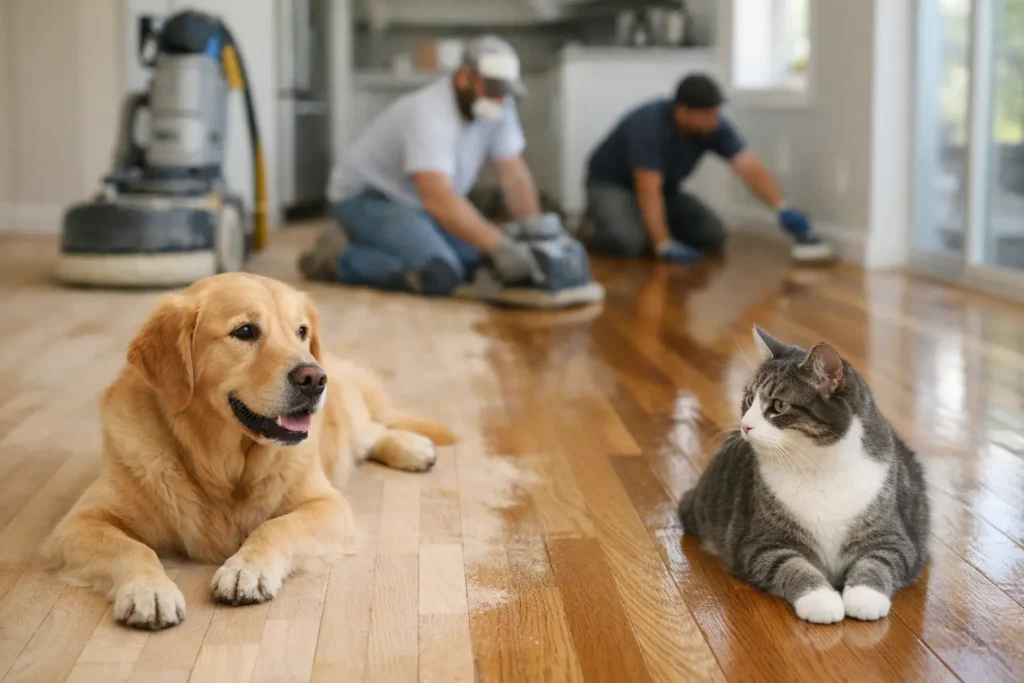
If you have a dog that sprawls across the living room floor or a cat that treats every sunny patch of hardwood like a personal bed, this question gets very real very fast: is hardwood refinishing safe for pets? The short answer is yes, but only when the process, products, and timing are handled correctly. For Connecticut homeowners, the safest refinishing experience comes down to low-odor finishes, proper cure time, and a truly dustless sanding system that leaves zero dust in the home.
Pets are closer to the floor than anyone else in your house. They breathe near the surface, walk through residue, and sometimes lick their paws after crossing a freshly finished room. That is why pet safety during refinishing is not just about the final look of the floor. It is about indoor air quality, surface dryness, and choosing a professional process that keeps your home clean and comfortable from start to finish.
Is hardwood refinishing safe for pets when done professionally?
Yes, hardwood refinishing can be safe for pets when it is done by an experienced contractor using the right equipment and finish system. The biggest factors are dust control, product selection, ventilation, and giving the floor enough time to dry and cure before your pet is allowed back on it.
This is where homeowners need to be careful. Not every refinishing method offers the same level of protection for families and animals. Traditional sanding approaches can leave fine particles circulating through the house, which is especially concerning for pets with allergies, respiratory sensitivity, or skin irritation. A dustless sanding system changes that equation. When the sanding process leaves zero dust in the home, there is far less residue for pets to inhale or track into other rooms.
For many households in Manchester, West Hartford, Glastonbury, and surrounding Connecticut communities, that clean process is not a luxury. It is a practical safety concern. Families want the beauty of restored hardwood without compromising their pet’s comfort.
What actually affects pet safety during refinishing?
Pet safety is shaped by three things more than anything else: what gets into the air, what remains on the floor, and how soon your pet returns to the space.
Air quality matters because pets are often more sensitive to odors and airborne particles than people realize. Dogs and cats spend hours lying on the floor and moving through the refinished area at nose level. If there are lingering fumes or particles in the environment, they are exposed more directly.
The floor surface matters because paws are in constant contact with it. A floor may look dry before it is ready for pet traffic. If a pet walks on a surface too early, that can affect both the finish and the animal. Wet or partially cured finish can transfer to paws, and even a small amount is something you do not want a pet ingesting while grooming.
Timing matters because refinishing has stages. Sanding, staining if selected, sealing, and curing all happen on different timelines. A professional contractor should give you clear guidance based on the specific finish used, rather than a vague answer.
Why dustless sanding is better for pets
The biggest difference between a pet-friendly refinishing project and a stressful one is containment and cleanliness. A proprietary dustless sanding system that leaves zero dust in the home helps protect indoor air and keeps fine wood particles from settling where pets eat, sleep, and play.
That matters for all pets, but especially for households with older dogs, short-nosed breeds, cats with asthma, and allergy-sensitive animals. Even healthy pets benefit from a cleaner environment during a floor project. It reduces irritation, cuts down on cleanup concerns, and helps homeowners feel more confident about bringing pets back into the space once the finish is ready.
For homeowners who have been putting off refinishing because they do not want a major indoor disruption, this is often the turning point. You can restore worn, scratched hardwood and still maintain a clean home environment. That is one reason dustless refinishing is such a strong fit for busy Connecticut families.
Are floor finish fumes dangerous to pets?
They can be, depending on the product and the level of exposure. Some finishes have stronger odors and higher chemical content than others. That does not mean hardwood refinishing is automatically unsafe, but it does mean product choice should never be treated as an afterthought.
A professional refinishing contractor should explain what type of finish is being used, what the expected odor level will be, how long the drying window lasts, and when pets can safely return. Water-based finishes are often preferred in family homes because they typically have lower odor and faster dry times than many older finishing systems. That can make the overall experience more comfortable for both people and pets.
Still, lower odor does not mean immediate access. Even with better products, pets should stay off the floors until the contractor confirms it is safe. A dog running across a surface too soon can leave marks in the finish, and a cat stepping onto tacky floors can spread material into other areas of the house.
How long should pets stay off refinished hardwood floors?
This depends on the finish system, room conditions, and whether stain was applied. In general, pets should remain out of the refinished area until the floor is fully dry for light traffic and then longer until it is cured enough for paw traffic, claws, and regular use.
Dry to the touch is not the same as fully cured. That distinction matters. A floor may appear ready before it can safely handle an energetic dog, a pet bed, food bowls, or the repeated pressure of claws. Humidity, temperature, and airflow also affect the timeline, which is why one-size-fits-all advice is not reliable.
The best approach is simple: follow the contractor’s exact instructions and err on the side of caution. If you need to plan around a pet’s routine, ask about timing before the project starts. A good refinishing team will help you prepare so there are no surprises.
How to prepare your home and pets before refinishing
Pet safety starts before the first piece of equipment arrives. If your dog is anxious around unfamiliar activity or your cat is sensitive to changes in routine, it helps to set up a quiet area away from the work zone. Some homeowners choose to keep pets with a friend or family member during the active refinishing window. Others keep them in a separate level or section of the home until the floor is ready.
What matters most is keeping pets away from the work area and off the floors until clearance is given. You will also want to move pet bowls, beds, litter boxes, and toys out of the affected rooms. Once the project is complete and the cure time has passed, clean items can be returned to the space.
This is another reason professional, dustless refinishing is so helpful. When the sanding system leaves zero dust in the home, there is far less concern about residue settling on pet items or drifting into nearby living areas.
Is hardwood refinishing safe for pets in allergy-sensitive homes?
In many cases, yes, especially when the process is designed for cleaner indoor air and lower exposure. Homes with pets often overlap with homes that already have allergy concerns. Dander, seasonal allergens, and ordinary household particles can already affect comfort. Refinishing should not add another layer of worry.
A dustless sanding system supports a healthier indoor environment by keeping the process clean. Pair that with a low-odor finish and proper cure guidance, and refinishing becomes much more manageable for sensitive households. This is particularly important in homes with young children and pets sharing the same living spaces every day.
For Connecticut homeowners looking to refresh scratched or faded hardwood, the goal is not just a beautiful floor. It is a clean, safe result that fits real family life.
When to ask more questions before booking
If a contractor cannot clearly explain pet reentry times, finish options, or how the home will stay clean during sanding, keep asking. You should know exactly what to expect. A professional should be able to walk you through the process in plain language and help you plan around your household’s needs.
That includes discussing your pet’s age, health, and habits. A senior dog with breathing issues may need a more cautious timeline than a healthy young pet. A cat that scratches at doors may need to be kept farther from the refinished area. These details are not minor. They help shape a safer, smoother project.
At Dustless Hardwood Floors LLC, we use a proprietary dustless sanding system that leaves zero dust in the home, which makes refinishing a cleaner option for families, children, pets, and allergy-sensitive households across Connecticut. When paired with professional finish selection and clear drying guidance, that gives homeowners a much safer path to restoring their hardwood.
Beautiful floors should feel like an upgrade, not a risk. When your refinishing team respects your home environment as much as the floor itself, your pets can come back to a cleaner, more comfortable space that looks as good as it feels.