
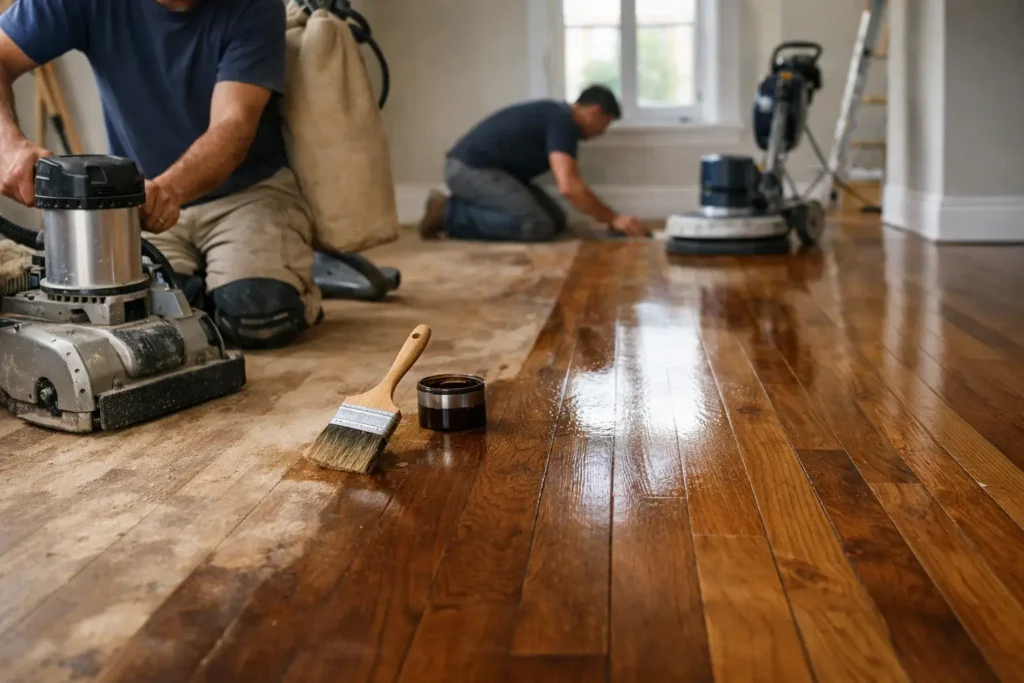
If your hardwood floors look tired every time the light hits them, the problem is usually not the wood itself. It is the finish, the wear pattern, the scratches, the dull traffic lanes, or isolated damage that has built up over time. A professional wood floor restoration service can bring those floors back to life without turning your home upside down, and for many Connecticut homeowners, that matters just as much as the final look.
In busy households, floors take the hit first. Pets leave surface scratches. Kids drag chairs. Winter grit gets tracked in. Sunlight fades stain color near windows while high-traffic areas lose their sheen. The good news is that solid hardwood often has years of life left in it. The right restoration approach can reveal that beauty again, strengthen the surface, and give the room a cleaner, more finished feel.
What a wood floor restoration service actually includes
Restoration is not one fixed job. Sometimes a floor needs a full sanding and refinishing to remove deeper wear and rebuild the surface from the wood up. In other cases, targeted repairs, board replacement, stain correction, or finish renewal may be the smarter choice. The best service starts with the condition of the floor, not a one-size-fits-all recommendation.
A full restoration usually addresses scratches, fading, dullness, worn finish, minor dents, pet wear, and uneven color. If there is water damage, gaps, cupping, or isolated broken boards, repairs may need to happen before refinishing begins. That is where experience matters. A floor can look simple from across the room and tell a very different story up close.
For homeowners, the biggest question is often practical: what will this feel like inside my home? With a true dustless sanding system, the answer is refreshingly straightforward. You get the transformative results of sanding and refinishing while keeping the home clean and comfortable. That is especially important for families with children, pets, and allergy-sensitive households that do not want fine particles circulating through living spaces.
Why dustless sanding changes the experience
The difference between a standard refinishing job and a dustless one is not just a technical detail. It changes the entire project experience. When sanding is done with a proprietary dustless system that captures debris at the source, homeowners can move forward with floor restoration without worrying about a layer of residue settling throughout the house.
That cleaner process matters in real life. It means less stress before the job starts, a more comfortable environment during the work, and better peace of mind afterward. If you have young children playing on the floor, pets moving from room to room, or anyone in the home who is sensitive to airborne particles, dustless sanding is not a luxury. It is the standard that makes sense.
For Connecticut homeowners, where homes range from older colonials with original hardwood to newer properties with heavy-use family rooms, this matters even more. A beautiful result should not come with unnecessary hassle. It should feel like an upgrade from start to finish.
Signs your hardwood floors are ready for restoration
Some floors clearly need help. Others send smaller signals that homeowners tend to ignore for too long. If the finish looks cloudy, patchy, or permanently dull after cleaning, restoration may be the next step. If scratches are catching light from every angle or worn traffic paths make the room feel dated, the floor is likely overdue.
Water marks and black staining are another sign to act sooner rather than later. Some damage is surface-level and can be corrected during restoration. Some has penetrated deeper into the wood and may require board repair or replacement. The longer that kind of issue sits, the fewer options you may have.
Color is another common reason homeowners call. Sometimes the floor is structurally fine but the stain feels too orange, too dark, too red, or simply out of step with the rest of the home. A restoration project can update the color and finish so the floor fits the room again. That is one of the fastest ways to make an older space feel current without replacing the flooring.
Repair, refinish, or replace? It depends on the floor
Not every worn floor needs replacement. In fact, replacement is often the most expensive option and not always the best one. If the wood is solid and the damage is mostly in the finish or isolated to a few areas, restoration is usually the better investment. You keep the original material, avoid a full tear-out, and still get a dramatic visual improvement.
There are trade-offs, though. Deep structural movement, severe moisture damage, or repeated past sanding can limit what restoration can achieve. Engineered hardwood also requires careful evaluation because wear layer thickness affects whether full sanding is appropriate. A trustworthy contractor explains those limits clearly instead of overselling the job.
That honest assessment is especially important for homeowners preparing a property for sale or landlords updating a rental between tenants. You want a result that looks strong, lasts, and makes financial sense. Sometimes that means restoring the existing floor. Sometimes it means combining repairs with refinishing for the most efficient outcome.
What to expect from the process
A professional restoration project should feel organized from the start. First comes the evaluation, where the contractor looks at species, finish condition, damage, previous coatings, and any repair needs. Then comes a recommendation based on what the floor can realistically support.
If sanding and refinishing are the right path, the floor is prepared, restored with a dustless sanding system, and finished to match the homeowner’s goals for color, sheen, and durability. Some homeowners want a natural, lighter look that shows the grain. Others want a richer stain that brings warmth back into the space. Neither is universally better. It depends on lighting, home style, maintenance preferences, and how much wear the room sees.
Finish choice matters too. A lower-sheen finish can help disguise everyday marks in active homes, while a glossier finish creates more reflection and drama but can show wear sooner. The best result is not the one that looks best for one day. It is the one that still looks right for your household months and years later.
Why local homeowners look for more than appearance
A restored floor should look beautiful, but that is not the only goal. Homeowners want a service that feels safe, clear, and dependable. They want to know the contractor is licensed and insured. They want transparent pricing with no hidden fees. They want realistic timelines and communication that does not leave them guessing.
That is especially true in owner-occupied homes across Manchester, West Hartford, Glastonbury, Windsor, and surrounding Connecticut communities, where families are balancing work, school, pets, and everyday routines. A floor project has to fit real life. Clean, dust-free results make that much easier.
This is one reason Dustless Hardwood Floors LLC stands out for homeowners who want professional restoration without the usual stress. Their specialty is dustless hardwood floor sanding and refinishing, with zero dust left in the home. That approach supports cleaner indoor air and a more comfortable experience for families, children, pets, and anyone sensitive to airborne particles.
Choosing the right wood floor restoration service
The right company should talk with you about outcomes first. Not just sandpaper grits or product names, but what you want the room to feel like when the job is done. Brighter. Cleaner. More current. More valuable. More durable for a busy family.
Ask whether the sanding system is truly dustless, whether repairs are handled in-house, and whether the quote accounts for the actual floor condition. Ask how stain selection and finish sheen are guided. Ask what is recommended for homes with pets, high traffic, or allergy concerns. Good answers are specific, calm, and easy to understand.
It also helps to work with a contractor who has experience across both residential and light commercial settings. That usually shows up in better planning, cleaner execution, and more reliable scheduling. And if the company is licensed and insured in Connecticut, that adds another layer of confidence for property owners making an in-home investment.
A great floor changes how the whole house feels. It reflects light better. Rooms look cleaner and more finished. The space feels cared for again. If your hardwood has good bones but no longer has the look or protection it once did, restoration may be the smartest next step – especially when it can be done with zero dust in the home and results built to last.
The best time to restore a hardwood floor is usually before the wear becomes damage that costs more to fix. When you catch it at the right stage, you are not just improving the floor. You are giving the entire room a fresh start.