
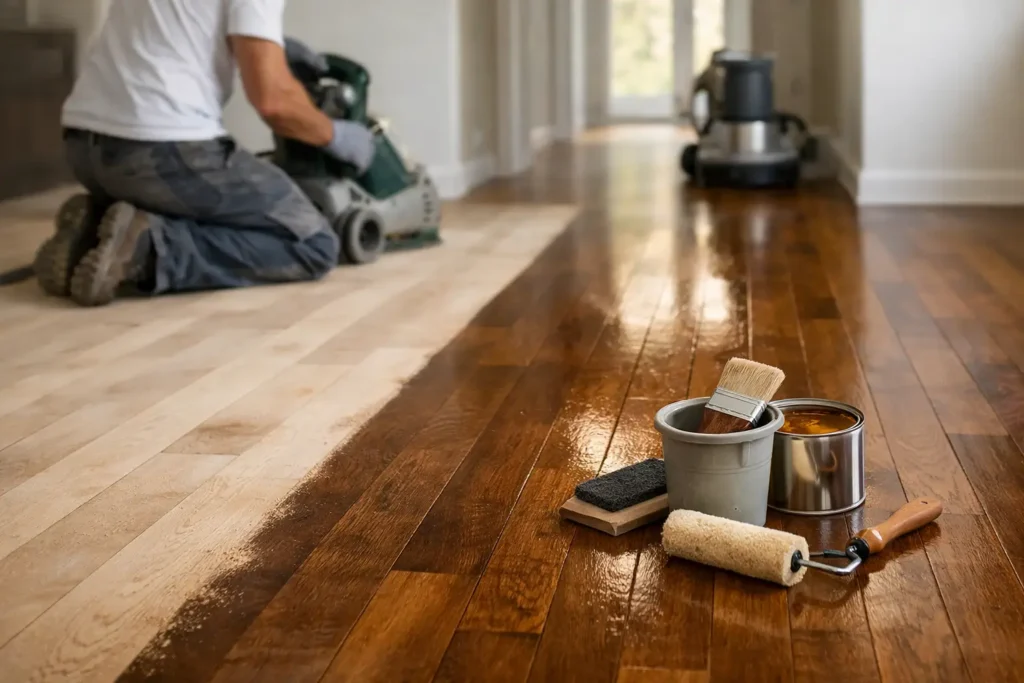
A worn hardwood floor changes the feel of the whole room. Scratches catch the light, faded areas make the finish look tired, and water marks can turn a beautiful floor into something homeowners start covering with rugs. A professional hardwood floor restoration service gives those floors a second life – and the right process should do it without filling your home with airborne dust. For Connecticut families, that matters just as much as the final shine.
Restoration is not one-size-fits-all. Some floors need a full sand and refinish to remove years of wear. Others may need targeted repairs, stain correction, or finish renewal after pet traffic, furniture movement, or sun fading. The key is knowing what your floor can be saved from, what it needs now, and how to get a lasting result without turning the project into a headache.
What a hardwood floor restoration service should actually do
At its best, a hardwood floor restoration service is about more than making old wood look better for a few months. It should restore appearance, improve surface protection, and extend the life of the floor you already own. That means evaluating the condition of the boards, checking for damage, identifying past coatings or stains, and choosing the right restoration method for the space.
For homeowners, the biggest benefit is practical. Restoration can eliminate surface scratches, reduce the visibility of dents, correct dull traffic lanes, and bring back depth and color that have been hidden under years of wear. In many cases, it is far more cost-effective than tearing out and replacing a hardwood floor that still has solid structure.
Just as important is how the work is performed. Traditional sanding methods can create a stressful environment inside the home. A dustless system changes that experience completely. Dustless Hardwood Floors LLC uses a proprietary dustless sanding system that leaves zero dust in the home, which means cleaner indoor air and a more comfortable process for families, children, pets, and allergy-sensitive households.
When hardwood floor restoration makes sense
Some signs are obvious. If your floors look dull no matter how often they are cleaned, if scratches are spreading across main walkways, or if old finish has worn away near entry points, restoration is usually the next step. Water marks, discoloration from sunlight, and uneven sheen are also common signs that the floor needs professional attention.
Other situations are less obvious. A home prep project before listing, a newly purchased house with dated stain color, or a rental turnover can all be ideal times to restore hardwood. Property owners often wait until damage looks severe, but earlier restoration can preserve more of the wood and improve the final appearance.
It also depends on the age and history of the floor. Older hardwood can often be restored beautifully, but the number of prior sandings, the thickness of the wear layer, and the type of wood all matter. Engineered hardwood may be restorable in some cases and not in others. That is why a professional assessment matters – not every floor needs the same treatment.
Dustless hardwood floor restoration service for Connecticut homes
For busy households, the process matters almost as much as the outcome. A dustless hardwood floor restoration service gives homeowners the visual transformation they want without compromising comfort inside the home. That is especially valuable in homes with kids playing on the floor, pets moving from room to room, or family members who are sensitive to airborne particles.
The difference is simple but meaningful. Dustless sanding keeps the environment cleaner throughout the project, which supports a better experience from start to finish. Instead of worrying about dust settling into vents, furniture, or adjacent rooms, homeowners can focus on the result – restored wood, richer color, and a finish that makes the entire space feel new again.
For Connecticut homes, this is not a minor upgrade. Seasonal moisture changes, tracked-in grit, winter wear, and everyday family traffic all take a toll on hardwood. A clean, controlled restoration process is a smart fit for homeowners who want professional results without unnecessary stress.
What can be restored and what may need repair first
Many floors that look beyond saving are not. Surface scratches, dull finishes, light staining, and moderate wear are common restoration projects. Boards with minor gaps or isolated damage can often be repaired before refinishing so the floor looks more uniform when complete.
Still, there are limits. Deep pet stains that have penetrated into the wood, severe water damage, warped boards, or structural movement may require board replacement in specific areas before restoration begins. That is not a drawback – it is part of doing the job correctly. Honest recommendations protect the homeowner and lead to a better long-term result.
A reliable contractor should explain those trade-offs clearly. If a repair is needed, you should know why. If a stain color may highlight grain variation or patched areas, that should be discussed up front. Clear expectations are part of quality workmanship.
Choosing the right finish and color
Restoration is the right time to decide whether you want to keep the natural look of the wood or update the color entirely. Some homeowners want a classic satin finish that hides everyday wear well. Others want a darker stain for contrast or a lighter tone to brighten the room.
There is no universal best choice. Darker colors can look dramatic and elegant, but they may show dust and fine scratches more readily. Lighter natural finishes often feel timeless and can make rooms appear larger, though they may not hide every variation in older boards. The right answer depends on your home, your lighting, and how the floor is used day to day.
Finish selection matters too. Families often want durable, lower-odor options that support a more comfortable indoor environment. That is a smart priority, especially in homes with children and pets. A good restoration plan balances appearance, durability, and how you actually live in the space.
What Connecticut homeowners should expect from the service experience
A professional restoration project should feel organized from the beginning. That starts with a clear inspection and a straightforward quote. Homeowners should understand the scope of work, whether any repairs are needed, what finish options are available, and how the timeline will unfold. No vague pricing. No surprise add-ons later.
Licensed and insured service also matters. When someone is working inside your home on a major surface like hardwood flooring, professionalism is not optional. It reduces risk, builds trust, and usually shows up in the small details – cleaner prep, better communication, and more consistent craftsmanship.
For homeowners in areas like Manchester, West Hartford, Glastonbury, Windsor, Tolland, and surrounding Hartford County communities, local experience adds another advantage. A contractor familiar with Connecticut homes understands common floor types, seasonal conditions, and the expectations of homeowners who want premium results with minimal interruption.
Why restoration is often better than replacement
Replacement has its place, but many homeowners consider it too early. If the existing floor still has solid structure, restoration usually preserves character, reduces project scope, and costs less than a full tear-out and installation. It also avoids the challenge of matching new flooring to trim, adjoining rooms, or older wood elsewhere in the home.
There is also a design benefit. Original hardwood often has a grain pattern and warmth that homeowners do not want to lose. Restoring it allows you to keep what gives the home its personality while still updating the look.
That said, replacement may be the better path if the floor has extensive water damage, major movement, or too many past repairs. A trustworthy contractor should be willing to say so when needed. Good advice is not about pushing one service every time. It is about recommending the option that makes sense for the floor and the homeowner.
How to choose a hardwood floor restoration service
Look for a company that explains the process in plain language, offers repair and refinishing expertise, and stands behind clean results. If the home includes children, pets, or allergy-sensitive family members, ask specifically about the sanding system and what kind of indoor environment you can expect during the project.
You should also pay attention to consistency. Reviews, project photos, communication style, and quote clarity all tell you what kind of experience you are likely to have. A polished floor matters, but so does the confidence that the job will be handled professionally from the first call to the final coat.
If you are considering restoring worn hardwood in your home, the goal is not just to make the floor look newer. It is to bring back the beauty of the space in a way that feels clean, controlled, and worth the investment. The right service does exactly that – and lets you enjoy the transformation without sacrificing comfort at home.