
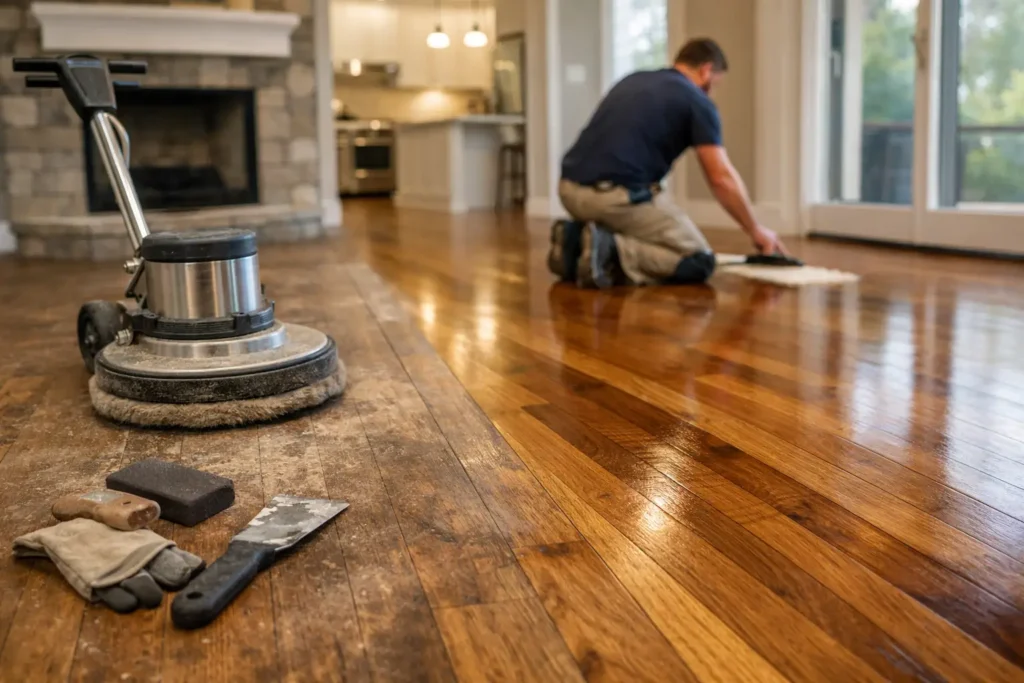
A floor can make a whole room feel tired before you notice anything else. In this west hartford floor restoration example, the biggest change was not just the color or shine – it was how worn, scratched hardwood became a clean, refreshed surface without filling the home with airborne dust.
For many Connecticut homeowners, that is the real hesitation with refinishing. They want the character of their original hardwood back, but they do not want a project that affects furniture, indoor air, or the comfort of children, pets, and allergy-sensitive family members. That is exactly why a true dustless sanding system matters.
What this West Hartford floor restoration example shows
This type of project usually starts with floors that still have solid structure but look far older than the home itself. In West Hartford, that often means oak floors with surface scratches, faded finish near windows, dull traffic lanes between the kitchen and living room, and minor staining near entry points. The boards may not need replacement, but they do need professional attention.
In a typical restoration, the goal is not to make an older floor look artificial or overly glossy. The goal is to bring back clean color, smoothness, and protection while preserving the natural character that makes hardwood worth saving in the first place. When done correctly, the room feels brighter, cleaner, and more finished even before any furniture goes back.
This is also where homeowners benefit from working with a licensed and insured Connecticut contractor. A good restoration plan is based on the floor’s species, age, wear pattern, prior coatings, and any localized damage. Some floors only need sanding and refinishing. Others need repairs, board replacement, stain blending, or extra attention around thresholds and vents.
The condition of the floor before restoration
In many West Hartford homes, hardwood has excellent bones but years of visible use. One of the most common scenarios is a first floor with heavy traffic wear and a second floor that has lighter fading but inconsistent sheen. Another common issue is old finish buildup that no longer protects the wood evenly.
Homeowners usually notice the same warning signs. The floor looks dull no matter how often it is cleaned. Fine scratches catch the light. Pet wear is visible in walkways. Small gaps or isolated damaged boards stand out more after seasonal humidity changes. In some homes, an older orange or yellow tone no longer fits the updated paint, trim, or cabinetry.
These are all good candidates for restoration. The key question is whether the floor has enough life left for sanding and refinishing. In many cases, the answer is yes, and that can be far more cost-effective than full replacement while still delivering a dramatic visual upgrade.
Why dustless sanding changes the homeowner experience
The biggest difference in a project like this is not only the final appearance. It is the process. Dustless hardwood floor sanding allows homeowners to restore their floors without the dust spreading through the home. That matters for busy families, pet owners, and anyone who simply wants a cleaner, more comfortable project from start to finish.
At Dustless Hardwood Floors LLC, the focus is on zero dust in the home through a proprietary dustless sanding system. That means the restoration process supports cleaner indoor conditions while protecting the overall comfort of the space. For households with children or allergy sensitivities, this benefit is not a luxury. It is often the reason they decide to move forward.
It also changes how people feel about the job itself. Homeowners are far more likely to restore hardwood when they know the process is designed to be clean, controlled, and professional rather than something that overtakes the entire house. The result is a practical upgrade with less stress.
How a floor restoration project typically unfolds
A West Hartford floor restoration example usually begins with an in-person evaluation. This is where the contractor checks the wear layer, identifies repairs, discusses color goals, and helps the homeowner decide whether to keep the natural tone or update the stain. Some homeowners want a lighter, more modern look. Others want to deepen the color and add contrast against white trim or neutral walls. Neither is automatically right – it depends on the room, lighting, and style of the home.
Next comes floor preparation and any needed repairs. This may include replacing isolated damaged boards, securing loose areas, and addressing transitions so the finished result looks consistent rather than patched together. Repair quality matters because even a beautiful finish cannot hide poor prep work.
Then the floor is sanded using a dustless system that keeps the home clean. After sanding, stain can be applied if the homeowner wants a color change. Some West Hartford homeowners prefer clear finishes that show off natural oak grain. Others choose medium brown or neutral brown tones that better match updated interiors and help disguise everyday wear over time.
Finally, the floor is sealed and finished for protection. The right finish depends on how the room is used. A family room with pets has different demands than a formal dining room or a light commercial office. This is where experience matters. The best recommendation is rarely about what looks good on day one alone. It is about what will still perform well years later.
Real trade-offs homeowners should consider
Not every restoration decision is purely aesthetic. There are trade-offs, and a good contractor explains them clearly.
A darker stain can look rich and elegant, but it may show more dust, footprints, and pet hair between cleanings. A lighter natural finish often feels more current and can make scratches less noticeable, but it will not hide every variation in older boards. A high-sheen finish reflects more light and creates a dramatic polished look, while a satin or matte finish is often more forgiving in active households.
Repair strategy also depends on the floor. If damage is limited to a few boards, spot replacement usually makes sense. If the floor has widespread water damage or significant structural issues, a broader repair plan may be needed before refinishing begins. The right answer depends on the existing material, the budget, and the homeowner’s long-term plans for the property.
Why restoration often beats replacement
Many homeowners assume tired hardwood means they need brand-new flooring. Often, they do not. If the wood is structurally sound, restoration can deliver the visual impact people want at a lower overall cost than tearing out and replacing the floor.
That is especially true in older West Hartford homes, where the existing hardwood may be better quality than many newer materials. Restoring original wood keeps the character of the home intact while improving the appearance, protection, and resale appeal of the space.
For property owners preparing to sell or rent, floor restoration also offers strong value. Buyers and tenants notice clean, well-finished hardwood immediately. It makes a home feel maintained. It photographs better. It supports stronger first impressions without changing the architecture that gives the property its personality.
What homeowners should expect from a professional result
A successful restoration should feel like the room was reset. The floor should look even, smooth, and intentionally finished. Repairs should blend naturally. Color should make sense with the rest of the home. Most of all, the process should feel organized and predictable.
That includes straightforward communication, realistic timelines, and transparent pricing with no hidden fees. Homeowners should know what is being repaired, what finish is being used, and what kind of result to expect based on the condition of their current floor. Professional work builds trust before the final coat is even applied.
For Connecticut homeowners, there is also peace of mind in hiring a licensed and insured local company that understands regional housing stock, seasonal wood movement, and the needs of families living in the home during the project. Those details may not show in a photo gallery, but they shape the quality of the experience.
Is your floor a good candidate for restoration?
If your hardwood looks dull, scratched, faded, or uneven, restoration may be the right next step. Floors with minor board damage, worn finish, older stain colors, or everyday traffic wear are often excellent candidates. The smartest move is to have the floor evaluated before assuming replacement is necessary.
A clean, dust-free refinishing process makes that decision easier for many homeowners. You can restore the beauty of your hardwood, protect your investment, and improve the feel of your home without sacrificing cleanliness or comfort during the project.
The best floors in a home are often the ones already under your feet – they just need the right restoration plan to show it again.