
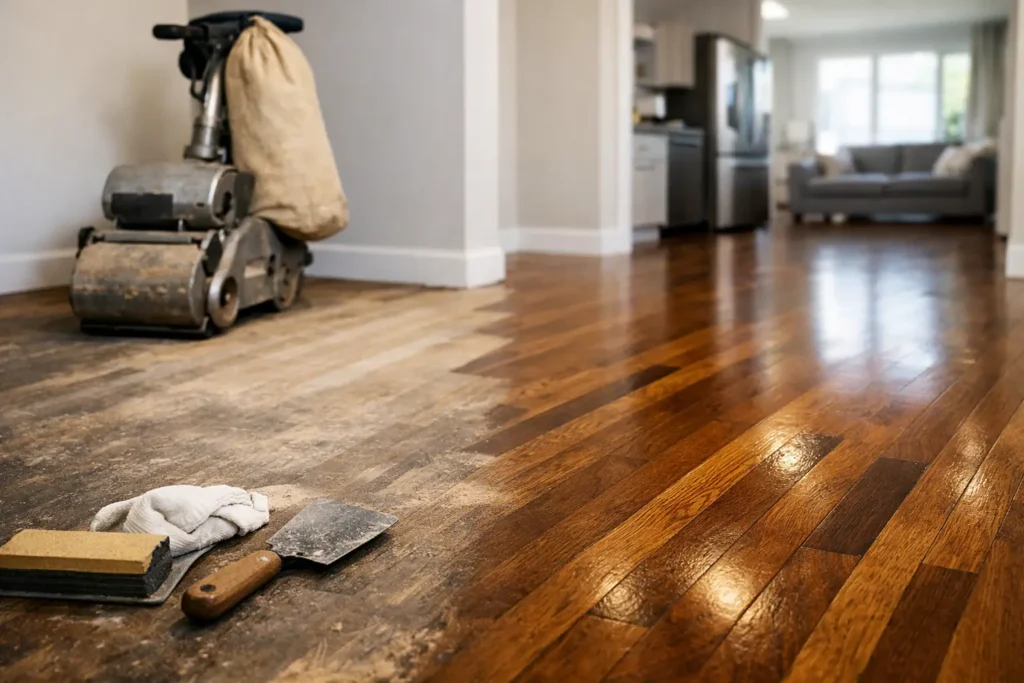
A scratched, dull hardwood floor can make an otherwise solid rental unit feel tired the moment a prospective tenant walks in. A strong rental property floor refinishing example shows how quickly that changes when the floor is restored properly, especially with a dustless sanding system that leaves zero dust in the home. For Connecticut landlords and property owners, that matters because faster turnover, cleaner conditions, and better presentation all affect rent, reviews, and long-term maintenance costs.
A realistic rental property floor refinishing example
Picture a two-bedroom rental in Manchester, CT. The previous tenant lived there for six years. The oak floors near the entry were worn down, the hallway had pet scratches, and the living room had dull traffic lanes where the finish had broken down. There was no major structural failure in the wood, but the floor looked old enough to drag down the entire unit.
This is the kind of project many landlords hesitate on. The common question is whether refinishing is worth it for a rental, or whether a quick cosmetic fix is enough. In many cases, refinishing wins because it improves the look of the property, protects the wood underneath, and avoids the higher cost of replacing hardwood that still has good life left in it.
In this example, the owner chose a full dustless sanding and refinishing service instead of covering the wear with rugs, trying spot touch-ups, or replacing sections unnecessarily. The goal was simple: make the unit look clean, bright, and well-maintained before listing it again.
What the floor looked like before refinishing
Rental floors usually show a specific kind of wear. It is not always dramatic, but it is noticeable. You often see fading near windows, shallow scratches from furniture movement, darkened traffic paths, and isolated stains near kitchen entries or exterior doors.
That matters because renters notice floors fast. They may not know the species of wood or the exact finish type, but they absolutely register whether a place feels fresh. Floors take up a huge amount of visual space. If they look neglected, the rest of the property can feel neglected too.
In this unit, the floorboards were still stable. There were no widespread loose boards and no severe water buckling. That made the property a strong candidate for refinishing rather than replacement. A professional inspection is the key step here, because some floors only need a screen and recoat while others need a full sanding to remove deeper wear.
Why refinishing often makes more sense than replacement
For rental owners, this is usually a return-on-investment decision. Full replacement can be the right call when floors are badly damaged, but many rental properties have hardwood that is worn, not ruined. Refinishing restores the existing floor at a lower cost than tearing it out and installing new material.
There is also the issue of turnover speed. Replacing flooring means demolition, disposal, material ordering, and installation coordination. Refinishing an existing hardwood floor is often more efficient when the wood is in serviceable condition. With the right crew and schedule, owners can move from worn floor to listing-ready space without unnecessary delay.
The process matters just as much as the result. Dustless sanding is a major advantage for occupied buildings, multi-unit properties, and homes where owners want the work completed cleanly. A proprietary dustless sanding system leaves zero dust in the home, which helps protect indoor cleanliness and makes the project far more comfortable for families, children, pets, and allergy-sensitive households.
The refinishing plan for this rental unit
The owner wanted a finish that looked updated but not trendy. That is the right instinct for most rental properties. A rental floor should appeal to the widest range of future tenants and hold up under regular traffic.
In this example, the refinishing plan included sanding the existing oak floors, repairing a few isolated problem areas, and applying a durable, low-sheen finish. Satin is often the practical middle ground for rentals because it looks clean and modern without highlighting every small scuff the way higher-gloss finishes can.
Color choice matters too. Very dark stain can look striking, but it tends to show more dust, footprints, and surface scratches. Very light natural looks are popular, but they may not fit every property style. For many Connecticut rentals, a medium natural tone gives the best mix of warmth, durability, and broad appeal.
Timeline and turnover expectations
One of the biggest concerns property owners have is scheduling. They want to know how long the unit will be tied up and when they can start showings.
The answer depends on square footage, floor condition, repairs, and finish choice. A straightforward apartment or smaller rental home can often move through the refinishing process on a practical timeline, especially when there are no major subfloor issues or extensive board replacement needs. Larger homes or floors with water damage will naturally take longer.
This is where experience matters. A licensed and insured Connecticut hardwood flooring contractor can give a clear assessment, explain what the floor needs, and avoid promising an unrealistic turnaround. The best results come from balancing speed with proper preparation and finish curing, not rushing the work and creating callbacks later.
Cost factors in a rental property floor refinishing example
Owners usually want a number right away, but pricing depends on condition and scope. For a rental property, the main cost drivers are square footage, whether repairs are needed, whether stain is being added, and the type of finish selected.
A floor with only surface wear is simpler than a floor with pet stains, board gaps, edge damage, or previous patchwork. Older properties can also bring surprises once the finish is removed. That is why an on-site quote is more useful than a generic online estimate.
Still, the value case is often strong. If refinishing helps secure a higher-quality tenant, reduces days on market, and extends the life of the hardwood for years, the project can pay for itself in ways that go beyond appearance alone. For landlords with multiple units, standardizing floor finish choices can also make future maintenance more predictable.
What landlords should think about before refinishing
A good rental property floor refinishing example is not just about the finished photo. It is about making smart decisions before work starts. Owners should think about tenant turnover timing, whether the current wear pattern points to needed repairs, and what finish level will hold up best over time.
They should also think about the type of renter the property attracts. A luxury rental may justify a different stain and finish strategy than a high-traffic multifamily unit. There is no single answer for every building. The best plan depends on the rent level, neighborhood, age of the property, and long-term ownership goals.
Another practical point is whether the refinishing should happen only in one room or throughout connected areas. Spot refinishing is sometimes possible, but hardwood usually looks best when open areas are handled together so the color and sheen stay consistent.
Why clean, dust-free refinishing matters more in rentals
Rental work often happens on a tight schedule. Owners may be coordinating painters, cleaners, appliance deliveries, and listing photos in the same window. A dustless sanding system helps keep that process cleaner and more manageable.
For property owners who still live on-site, for families updating an inherited rental, or for multifamily buildings with nearby occupants, zero dust in the home is not a small detail. It is a meaningful quality and comfort advantage. It also reflects professionalism. When the floor restoration process is clean and controlled, the entire project feels easier to manage.
That is one reason Connecticut property owners often choose a specialist rather than treating refinishing as a basic maintenance item. The floor is too visible, too valuable, and too expensive to redo if the job is handled poorly.
The result this example points to
Once refinished, the same Manchester rental felt brighter, cleaner, and far more current. The oak grain was visible again. The dull gray wear paths were gone. The apartment photographed better, showed better, and gave the owner a stronger product to bring to market.
That is the real lesson in this rental property floor refinishing example. Refinishing is not only about fixing damage. It is about positioning the property well. A clean, professionally restored hardwood floor tells tenants and buyers that the home has been cared for.
For Connecticut owners preparing a unit in West Hartford, Glastonbury, Enfield, or the greater Hartford area, the smartest floor decisions are usually the ones that balance appearance, durability, and turnover efficiency. When the hardwood is still structurally sound, dustless refinishing is often the move that protects the asset and improves the rental experience at the same time.
If your rental floors look worn but still have life left in them, start with a professional evaluation rather than assuming replacement is your only option. The right refinishing plan can restore the space beautifully, keep the process clean with zero dust in the home, and help your next listing make a much stronger first impression.