
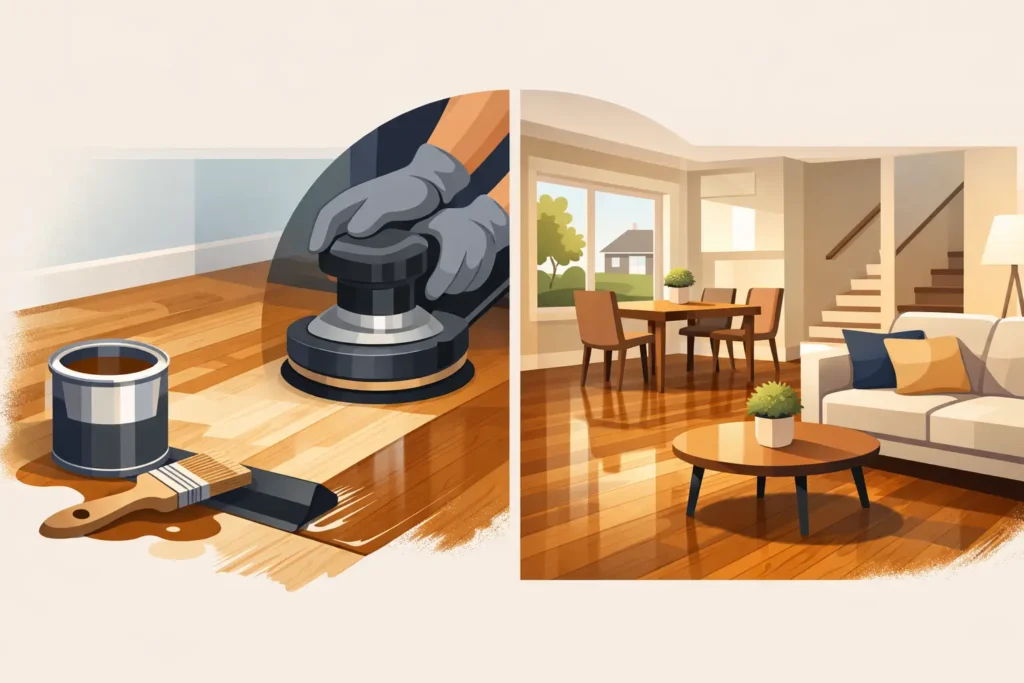
A hardwood floor can make an otherwise well-kept room feel tired when its finish turns dull, scratches collect near doorways, or the color no longer suits the space. So, is hardwood refinishing worth it? For many Connecticut homeowners, the answer is yes – especially when the wood beneath the worn surface is still sound and the work can be completed with zero dust in the home.
Refinishing does more than improve appearance. It renews the protective finish that helps hardwood stand up to daily life, restores the warmth and character that made you choose wood floors in the first place, and can prevent a manageable wear issue from becoming a more expensive repair. The key is knowing when refinishing is the right investment and when your floors need a different solution.
When Hardwood Refinishing Is Worth It
Hardwood refinishing is most valuable when you are preserving a floor with good structural bones. Solid hardwood floors are built to be renewed, often more than once over their lifespan. Instead of removing a quality floor and paying for new material, installation, and disposal, refinishing gives the existing wood a fresh start.
It is generally a smart choice if your floors have surface-level wear, faded areas from sun exposure, light dents, everyday scratches, or a finish that has lost its protective sheen. It can also be worthwhile when you are updating a home before listing it for sale. Freshly refinished floors help rooms look cleaner, brighter, and better maintained – a meaningful advantage for homeowners, landlords, and property investors preparing a property for the market.
Look closely at the floor rather than judging it only by color. These signs often point toward a floor that can benefit from professional refinishing:
- Scratches, scuffs, and dull traffic paths that are concentrated in high-use areas
- A worn finish that no longer repels small spills as it should
- Fading, uneven color, or an outdated stain tone
- Minor dents and surface imperfections that do not compromise the boards
- A floor that still feels stable and level underfoot
A professional assessment matters because not every mark requires the same approach. Some floors need a full sanding and refinishing service, while others may benefit from targeted repair before the finish is renewed.
When Refinishing May Not Be the Best First Step
Refinishing is not a cure-all, and an honest recommendation should account for the condition of the wood. Deep pet damage, severe water staining, loose boards, extensive gaps, or sections that have warped may require repairs before refinishing can deliver the result you want. In some cases, damaged boards should be replaced and blended into the existing floor.
Engineered hardwood also deserves a closer look. Some engineered floors have a wear layer thick enough to refinish, while others do not. The answer depends on the product, its age, and how much usable wood remains above the core. A qualified contractor can evaluate this safely rather than making assumptions that put the floor at risk.
If the floor has already been refinished several times, the remaining wood thickness is another deciding factor. This is why a professional inspection is more valuable than a quick online estimate. The goal is not simply to make the floor look better for a few months. It is to choose a restoration plan that protects its long-term strength.
The Value Goes Beyond a New Look
The return on refinishing is partly financial, but it is also practical. Replacing hardwood means choosing new materials, coordinating installation, and accepting the appearance of a completely different floor. Refinishing preserves the original wood that belongs in your home, including its grain pattern, character, and continuity from room to room.
A renewed finish also gives the floor a durable layer of protection. That makes routine cleaning easier and helps the wood handle the demands of children, pets, moving furniture, and everyday foot traffic. If you have been covering worn areas with rugs or avoiding certain rooms because the floor looks tired, refinishing can change how you use and enjoy the space.
For Connecticut homes with older hardwood, this benefit can be especially significant. Many homes in West Hartford, Manchester, Glastonbury, and surrounding communities have wood floors that were installed to last. Replacing them can be unnecessary when careful restoration can reveal the beauty already underfoot.
Is Hardwood Refinishing Worth It Compared With Replacement?
In most situations where the boards are stable and repairable, refinishing costs less than full replacement. Replacement includes demolition or removal, new flooring materials, labor, transitions, possible subfloor work, and finishing details. Refinishing works with what you already own.
That does not mean refinishing is always the lower-cost choice in every scenario. If a floor has widespread structural damage, persistent moisture issues, or too little remaining material to restore safely, replacement may be the wiser long-term investment. The right comparison is not just today’s price. It is the cost of achieving a floor that looks right, performs well, and holds up over time.
The final investment depends on the floor’s square footage, layout, condition, necessary repairs, stain choice, and the finish system selected. Straightforward rooms with sound floors typically require less preparation than homes with major damage, intricate edges, or multiple repairs. A detailed, transparent quote should explain the work involved so there are no hidden fees or last-minute surprises.
Why the Refinishing Process Matters as Much as the Result
Homeowners often delay refinishing because they worry about what a flooring project will be like inside a lived-in home. That concern is reasonable. The process you choose affects not only the floor’s final appearance but also your comfort while the work is underway.
Dustless Hardwood Floors LLC uses a proprietary, state-of-the-art dustless sanding system that leaves zero dust in the home. This is not a minor convenience. It means homeowners can restore their floors without coating nearby surfaces, furnishings, or living areas with fine particles. It also makes the service an especially strong fit for families with children, pets, and allergy-sensitive household members.
The goal is a clean, controlled experience from sanding through finishing. With dustless equipment and low-odor finishing options, the focus stays where it belongs: a smooth, even floor and a more comfortable home environment. You get the transformation of professional floor restoration without the inconvenience people often associate with this type of project.
What a Professional Refinish Can Change
A skilled refinishing project can correct more than dullness. Sanding levels the worn surface, helps minimize scratches and light imperfections, and prepares the wood to accept a new stain and finish evenly. You may choose to keep the natural color that suits the home’s original character or update the tone for a lighter, richer, or more contemporary look.
The finish is where the restored floor gains its daily protection. Sheen level changes the visual effect: matte and satin finishes offer a softer, more understated appearance, while higher-sheen options reflect more light. The best choice depends on your design preferences, the amount of natural light, and how much day-to-day activity the room receives.
A quality result also depends on preparation, edge work, repairs, and attention to transitions. These details are easy to overlook until they are done poorly. Licensed and insured Connecticut professionals bring the experience needed to evaluate the whole floor, not just the most visible scratch.
How to Decide Before Requesting a Quote
Start by thinking about your goals. Are you trying to protect a beloved original floor, refresh a newly purchased home, change the color, repair visible damage, or improve a property’s appeal before sale? Your goal helps determine whether a full refinish, repair and refinish, or another option makes sense.
Then consider timing. Refinishing before move-in, before a major furnishing change, or before listing a home can make planning easier. But you do not need to wait for a perfect moment if the finish is wearing through. Addressing wear early can help preserve the wood and reduce the chance that minor problems become deeper repairs.
When you request an evaluation, ask about the condition of the boards, the recommended repair work, finish options, expected schedule, and what is included in the price. A reliable contractor should answer clearly, explain the trade-offs, and make the process feel manageable.
Your hardwood floors do not have to stay faded, scratched, or hidden beneath rugs. When the wood is still in good condition, refinishing is an investment in beauty, protection, and the lasting value of your home – and a zero-dust process lets you enjoy that change with confidence.