
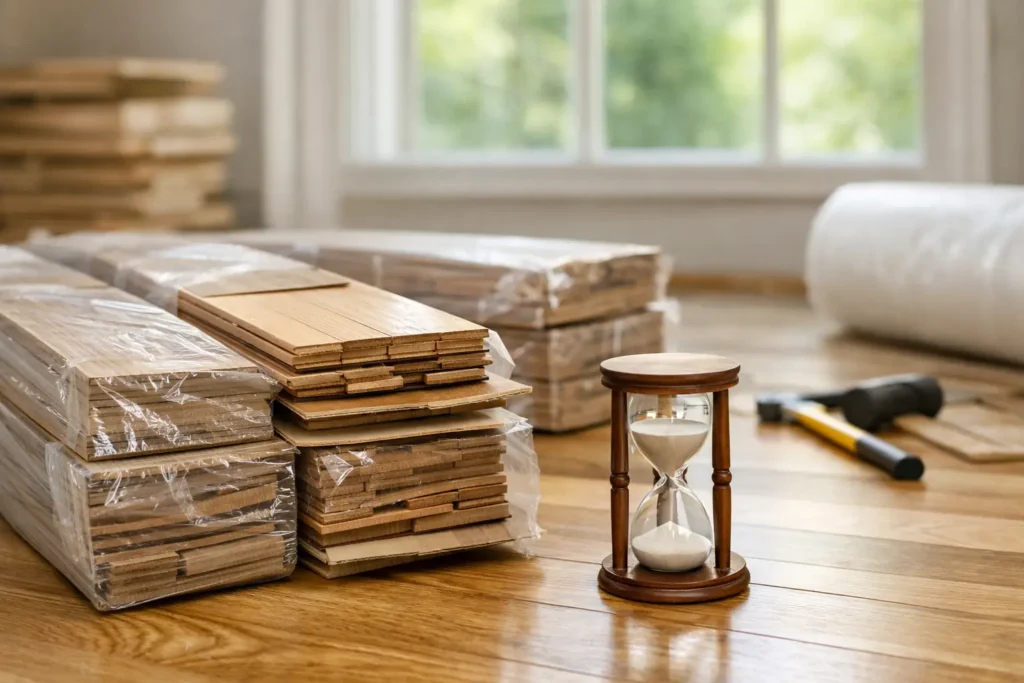
If hardwood shows up on Monday and goes in on Tuesday, that schedule may look efficient. It is also one of the fastest ways to create avoidable problems. Hardwood floor acclimation time before install matters because wood reacts to the conditions inside your home, not the conditions inside a warehouse or delivery truck.
For Connecticut homeowners, that detail matters even more. Seasonal humidity swings, heating systems, air conditioning, and older homes with variable indoor conditions can all affect how boards behave after installation. A floor that is installed too soon may shrink, swell, gap, or cup once it settles into the real environment of the house.
Why hardwood needs time to acclimate
Hardwood is a natural material. Even after it has been milled, dried, and packaged, it still gains or loses moisture based on the surrounding air. When flooring moves from one environment to another, it needs time to stabilize.
That is the real purpose of acclimation. It is not a box to check or a fixed waiting period that applies to every project. It is the process of letting the flooring reach a moisture level that fits the living conditions of the home where it will be installed.
If installers skip or rush this step, the floor may look fine at first and still develop issues later. Gaps between boards during winter, boards pressing tightly together in summer, raised edges, or uneven movement across the room are all common signs that the wood was not properly prepared for the space.
What is the normal hardwood floor acclimation time before install?
The honest answer is that hardwood floor acclimation time before install depends on the product, the jobsite conditions, and the manufacturer requirements. In many cases, solid hardwood may need several days, while some engineered hardwood products may require less time. Others may still need just as much attention depending on how they were manufactured and where they are being installed.
That is why experienced installers do not rely on a one-size-fits-all timeline. They look at species, board width, how the wood was stored before delivery, the temperature and humidity inside the home, and the moisture content of both the flooring and the subfloor.
A fixed number like 3 days or 7 days can be misleading. Some floors need longer. Some can be installed sooner if readings confirm the material is ready. The right approach is based on measurement, not guesswork.
The biggest mistake homeowners make
Many homeowners assume acclimation starts when the material is ordered or when it arrives in town. It does not. Acclimation starts when the flooring is delivered into the finished interior conditions of the home and allowed to adjust there.
If the HVAC system is not running, windows are open, or interior humidity is still fluctuating because painting, plaster, or other work was just completed, the flooring is not truly acclimating to normal living conditions. It is simply sitting in a changing environment.
Conditions that affect acclimation time
A few variables have the biggest impact on timing.
Indoor temperature and humidity
The home should be at normal occupied conditions before flooring arrives. That usually means steady heating or cooling and controlled indoor humidity. If the house is too damp or too dry, the wood may absorb or release moisture too quickly.
Connecticut homes often see this issue during shoulder seasons when outdoor weather changes fast. A rainy week in spring or a dry stretch in winter can shift indoor conditions more than homeowners realize.
Type of hardwood
Solid hardwood tends to be more sensitive to moisture movement because it is a single piece of wood. Engineered hardwood is generally more dimensionally stable, but that does not mean it can be installed straight from the carton without evaluation.
Species matters too. Some woods move more than others. Board width also matters because wider planks have a greater chance of noticeable expansion and contraction.
Subfloor moisture
Acclimation is not only about the flooring itself. The subfloor has to be checked as well. If the wood flooring is ready but the subfloor still contains excess moisture, the installation is still at risk.
This is especially important in homes with basements, crawl spaces, concrete slabs, or recent construction work. Moisture can move upward and affect the new floor long after installation day.
How professionals know when the floor is ready
The best installers use moisture meters, not assumptions. They check the moisture content of the flooring and compare it to the subfloor and expected interior living conditions. They also follow the flooring manufacturer’s specifications because warranty requirements often depend on those readings.
That measured approach protects the homeowner. It helps prevent expensive callbacks, premature movement, and frustration after what should be a major upgrade to the home.
It also helps with planning. When you know the actual jobsite conditions, you can make better decisions about delivery, installation timing, and whether other interior work should happen first.
How to prepare your home before hardwood delivery
The easiest way to keep your project on schedule is to make sure the home is truly ready before the wood arrives. Interior wet work should be complete. The HVAC system should be operating normally. The home should be enclosed, and temperature and humidity should be stable.
If you are replacing old flooring, the subfloor should be clean, dry, and inspected for any issues that could affect the new installation. This is where an experienced contractor adds real value. A good installation is not just about laying boards straight. It is about managing the entire environment around the floor.
For homeowners updating existing hardwood, this same level of preparation matters during refinishing and repair work as well. Dustless Hardwood Floors LLC is known in Connecticut for a proprietary dustless sanding system that leaves zero dust in the home, giving families, pet owners, and allergy-sensitive households a cleaner, more comfortable way to restore wood floors without turning the house upside down.
What happens if hardwood is installed too soon?
Sometimes the problems show up quickly. Sometimes they take a full season. Either way, rushed installation tends to become obvious.
You may see gaps between boards when the floor dries out after installation. You may notice cupping if excess moisture enters from below or if the boards were not stabilized before they were installed. In other cases, boards can press too tightly together and create stress across the floor, especially during humid summer months.
None of these outcomes improve with wishful thinking. Some can settle slightly over time, but others require repair work, board replacement, or more extensive correction.
Why Connecticut homeowners should pay close attention
In many parts of Connecticut, homes deal with dry heated air in winter and humid conditions in summer. That swing alone can challenge wood flooring. Add in older construction, additions, finished basements, or inconsistent insulation, and acclimation becomes even more important.
This does not mean hardwood is a risky choice. It means proper installation matters. When the floor is allowed to adjust to the home and moisture readings are confirmed before installation, hardwood performs far better over the long term.
That is the difference between a floor that simply looks good on day one and a floor that continues to look good after real life happens in the home.
Should acclimation ever be shorter or longer?
Yes. That is one of the biggest reasons generic advice can create problems. A tightly climate-controlled home with stable readings may allow for a shorter acclimation period on certain products. A home with recent construction moisture, unusual humidity, or flooring that came from a very different storage environment may need longer.
This is where homeowners benefit from straightforward communication. If your installer tells you the timeline depends on moisture readings and site conditions, that is usually a good sign. It means the decision is being made based on the floor, not just the calendar.
The smarter question to ask your installer
Instead of asking only, “How many days does acclimation take?” ask, “How will you verify the flooring and subfloor are ready?” That question gets to the heart of the issue.
A professional answer should include jobsite conditions, moisture testing, manufacturer guidance, and a clear explanation of what could delay installation if conditions are not right. That kind of process protects your investment and gives you a more stable finished floor.
Hardwood rewards patience when that patience is informed by experience. If you are planning new hardwood installation in Connecticut, the best results come from a home that is ready, materials that are properly measured, and a contractor who treats the prep work with the same care as the finished floor.