
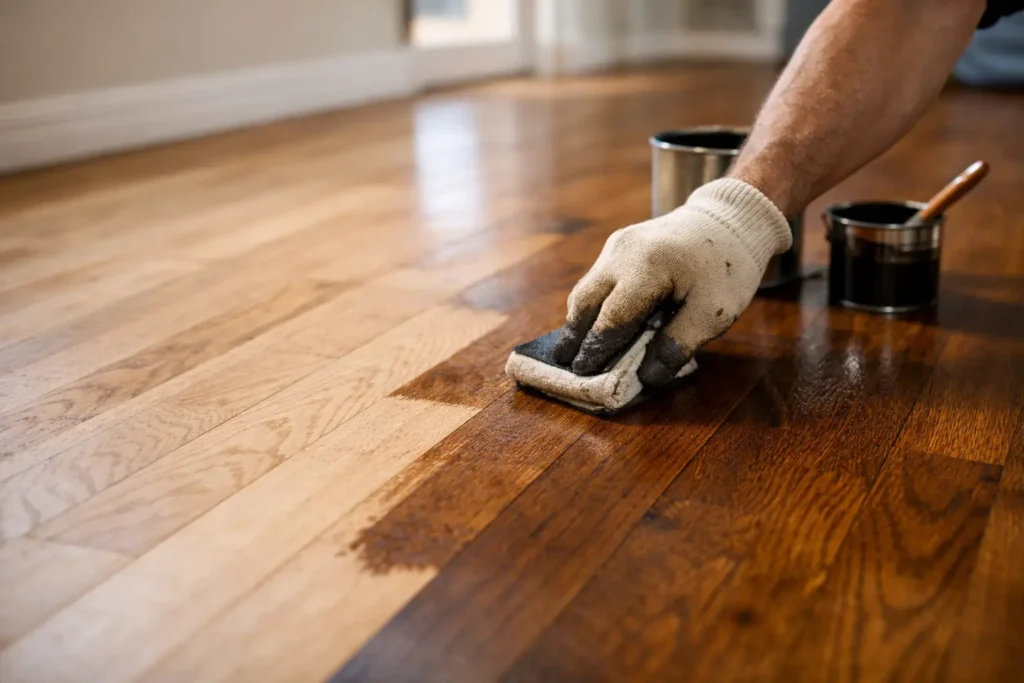
A floor that looked warm and rich when you moved in can start to feel flat after years of foot traffic, sunlight, pets, and furniture wear. If you are asking, can hardwood floors be restained, the short answer is yes – many hardwood floors can be restained successfully. The better answer is that it depends on the type of floor, its current condition, and whether there is enough real wood to refinish.
For Connecticut homeowners, restaining is often the smart middle ground between living with worn floors and replacing them entirely. It gives you the chance to change the color, remove years of surface wear, and bring the room back to life without giving up the hardwood you already have.
Can hardwood floors be restained more than once?
In many cases, yes. Solid hardwood floors can usually be restained multiple times over their lifespan because the wood is thick enough to be sanded and refinished again. Engineered hardwood is more case-by-case. Some engineered floors have a thick enough top layer to allow refinishing, while others do not.
That is why the first step is never choosing a stain color from a chart. The first step is identifying what kind of floor you have and how much usable wood remains. A professional evaluation matters here because an attractive finish is only possible if the floor can safely be sanded to a clean, even surface first.
When restaining makes sense
Restaining is ideal when the floor still has good structural life but the appearance no longer works for the home. Maybe the orange tone feels dated. Maybe the stain has faded unevenly in sunny areas. Maybe scratches and dull traffic paths stand out every time the light hits the room.
If the boards are stable and the damage is mostly on the surface, restaining can dramatically change the look. Many homeowners choose it when they want to go darker, lighten up a room, or create a more current, natural finish that fits new cabinetry, trim, or furniture.
This is also a practical choice before listing a home for sale or updating a rental property. Freshly refinished and restained hardwood floors tend to make the entire space look cleaner, brighter, and better maintained.
When hardwood floors may not be good candidates
Not every floor should be restained. Some floors are too thin to sand again. Others have deep pet stains, severe water damage, extensive movement, or prior repairs that will still show after refinishing. In older homes, you may also find boards with heavy staining that has soaked deep into the grain, which can limit how evenly a new color takes.
Engineered wood deserves special attention. People often assume all wood floors can be sanded the same way, but engineered products vary widely. If the real wood veneer is too thin, aggressive sanding can do more harm than good.
There are also cases where homeowners want a dramatic color shift that the species does not accept well. Red oak, white oak, maple, and birch all respond differently to stain. Maple, for example, can be beautiful, but it can also be harder to stain evenly than oak. That does not mean it cannot be done. It means the process and expectations need to be handled carefully.
The biggest factors that affect restaining results
Wood species matters because grain pattern and density affect how color absorbs. The current finish matters because it has to be fully removed before a new stain can penetrate correctly. Past refinishing history matters because every sanding removes some material.
Repairs matter too. If sections of the floor were patched years ago, those replacement boards may accept stain differently than the original wood. Sun exposure can create natural color variation as well, especially in rooms with large windows. These are not reasons to avoid the project, but they are reasons to work with an experienced hardwood flooring contractor who understands how to create a balanced final look.
What the restaining process actually involves
Restaining is not just painting color over an old finish. The floor has to be brought back to bare wood so the new stain can bond evenly and look natural. That means sanding away the old finish, smoothing the surface, preparing the grain, applying the new stain, and sealing it with the appropriate finish system.
This is where process quality makes a real difference for homeowners. Traditional sanding methods can leave fine airborne residue throughout the home, which is exactly what many families want to avoid. Dustless Hardwood Floors LLC uses a proprietary dustless sanding system that leaves zero dust in the home, so Connecticut homeowners can restore and restain their floors without coating their living space in fine wood particles. For families with children, pets, or allergy concerns, that clean approach is not a luxury – it is a major part of the value.
The finish selection matters just as much as the stain. Some homeowners want a matte, natural look that hides everyday wear better. Others prefer a richer satin or semi-gloss appearance. The right topcoat protects the color you choose and helps the floor hold up to the way your home is actually used.
Choosing a new stain color without regret
The biggest mistake homeowners make is choosing stain based only on a small sample or an online photo. Lighting, wood species, and surrounding finishes all change how a color looks in real life. A dark stain can feel elegant in one room and heavy in another. A natural finish can look modern and clean, but it may reveal more variation in patched areas.
If your goal is timeless, many homeowners in places like West Hartford, Glastonbury, and Manchester lean toward mid-tone browns and soft natural oak looks because they work well across different decorating styles. Gray-heavy stains that once felt trendy can date faster, while very dark floors often show more dust, scratches, and pet hair.
That said, the right color is the one that fits your home, your maintenance preferences, and the character of the wood itself. Good guidance is not about pushing the darkest or most popular option. It is about helping you choose a result that will still feel right a few years from now.
Can you restain floors without sanding?
For true color change, sanding is usually necessary. Products marketed as shortcuts may alter the surface appearance slightly, but they do not deliver the same depth, durability, or consistency as professional sanding and refinishing. If an old finish remains on the floor, new stain cannot penetrate evenly into the wood.
That is why homeowners looking for a real transformation should be careful with quick fixes. They can create uneven results and may complicate future refinishing. If you want the floor to look genuinely restored rather than temporarily covered, proper preparation is what gets you there.
How long do restained hardwood floors last?
A professionally restained and refinished floor can last for many years, especially when the finish system matches the level of traffic in the home. Entryways, kitchens, hallways, and homes with active kids or pets may need maintenance sooner than low-traffic spaces, but the investment is still substantial and worthwhile.
Simple habits help protect the result. Use felt pads under furniture, keep grit off the floor, clean up moisture promptly, and avoid harsh cleaners that dull the finish. The better the day-to-day care, the longer the floor keeps that freshly restored look.
Is restaining worth it?
If the wood is sound, restaining is often one of the most cost-effective ways to update a home. You keep the character and value of real hardwood, improve the appearance of the entire room, and avoid the cost of full replacement. It is especially worthwhile when the floor itself is good but the color or wear level no longer fits the home.
For homeowners who want that transformation without turning the house upside down, the method matters as much as the craftsmanship. A professional dustless sanding and refinishing process gives you the beauty of restored hardwood with zero dust in the home, which is a better fit for modern family life and healthier indoor air.
If you have been looking at dull, scratched, or outdated floors and wondering whether they are worth saving, there is a good chance the answer is yes. The right evaluation can tell you whether your hardwood can be restained – and what it could become with a clean, dustless professional finish.