
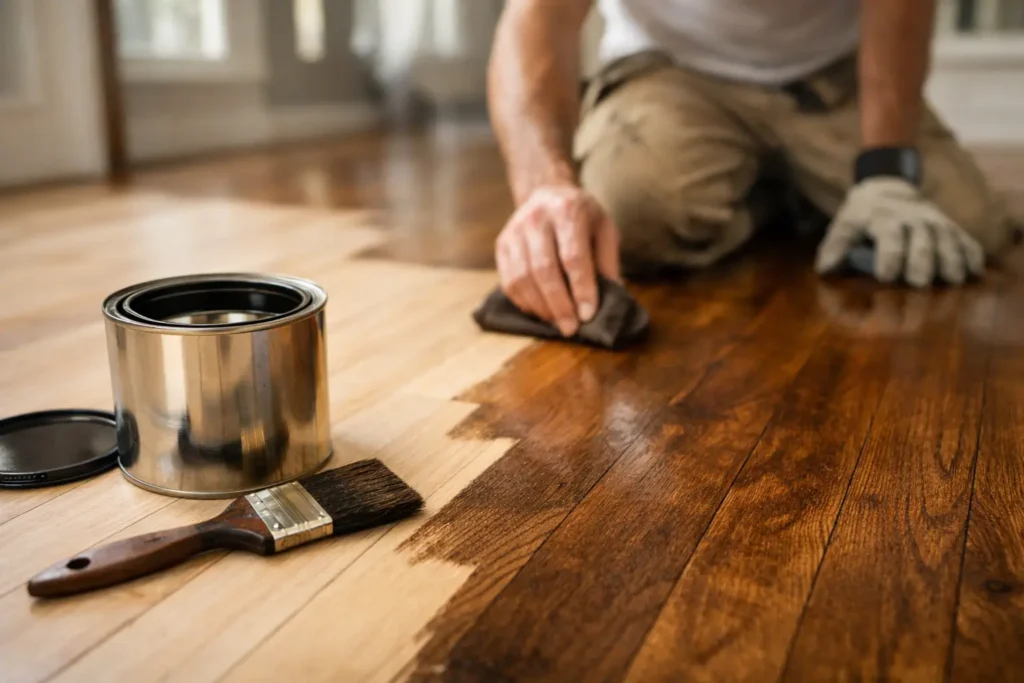
A floor stain rarely looks the way homeowners expect when they choose it from a tiny sample card. In a real home, the final color depends on wood species, existing wear, natural light, and how well the floor is prepared first. That is why a glastonbury wood floor staining project should never start with color alone. It should start with the condition of the floor, the look you want to live with every day, and a refinishing process that keeps your home clean and comfortable.
For many Connecticut homeowners, staining is not just about making old floors darker or trendier. It is about correcting faded areas, blending past repairs, refreshing a dated orange tone, or bringing consistency back to rooms that no longer feel polished. When the work is done with a true dustless sanding system, the transformation is easier on the household and far more comfortable for families with children, pets, or allergy concerns.
What makes a Glastonbury wood floor staining project successful
The biggest factor is preparation. Stain highlights the natural grain and character of hardwood, but it also highlights inconsistencies. If a floor has old finish buildup, uneven wear patterns, shallow pet scratches, sun fading, or minor water marks, those issues need to be addressed correctly before stain is applied.
That is where professional dustless sanding matters. A properly sanded floor gives the stain an even surface so the color develops more consistently from board to board. Just as important, a dustless sanding system keeps zero dust in the home, which is a major benefit for busy households that want restored floors without turning the space into a cleanup project afterward.
Color selection is the second piece. Some homeowners want a light natural finish that keeps the home bright. Others want rich medium-brown tones to add warmth, or darker stains that create contrast with white trim and modern interiors. There is no universal best choice. It depends on the age of the home, the wood itself, how much natural light the room gets, and how much day-to-day wear the floor will see.
Choosing the right stain color for your home
A stain has to work with the house, not just with a trend. In Glastonbury homes, that can mean very different things. A traditional colonial may look best with a classic warm brown that complements existing millwork. A newer open-concept layout may benefit from a cleaner, more neutral tone that feels current without looking cold.
Red oak and white oak also accept stain differently. Red oak tends to show more warmth and grain variation, while white oak often takes color in a slightly more muted, refined way. If your floor already has repairs or replacement boards, stain can help minimize visual differences, but only when the prep work and color testing are handled with care.
This is why on-site stain samples matter. A color that appears perfect in the can may look too dark in a hallway or too flat in a sunlit family room. Testing a few realistic options on the actual floor gives homeowners a better read on tone, depth, and how the finish will look at different times of day.
Why dustless sanding changes the experience
Homeowners often put off refinishing because they picture the process as a major household event. The better alternative is a professional dustless system designed to leave zero dust in the home. That means cleaner air, cleaner surrounding surfaces, and a more comfortable experience from start to finish.
For families in Glastonbury and throughout Hartford County, this is not a minor detail. It is one of the main reasons to refinish instead of replace. You get the beauty of renewed hardwood without the kind of residue that people worry about settling into furniture, vents, toys, or pet areas. It is a cleaner approach and a smarter one, especially in homes where health and indoor air quality matter.
Dustless Hardwood Floors LLC centers its refinishing work around that promise. The result is a floor restoration process that feels professional, controlled, and homeowner-friendly, while still delivering the dramatic visual improvement people want from staining.
When staining is the right choice and when it is not
Not every floor needs stain. Some hardwood floors look their best with a natural clear finish that highlights the original color of the wood. If the wood has attractive natural variation and the homeowner wants a lighter, cleaner look, skipping stain can be the better move.
Staining makes sense when the goal is to shift the tone of the floor, modernize the room, reduce the appearance of age-related fading, or create more cohesion throughout connected spaces. It is especially useful when floors have yellowed over time or when previous finishes no longer match the rest of the home.
Still, there are trade-offs. Very dark stains can look striking, but they may show surface debris and scratches more readily in active households. Extremely light finishes can feel fresh and open, but they may not hide older board variation as well. The best result usually comes from balancing style with how the home is actually used.
Common issues uncovered during a wood floor staining project
Once an old finish is removed, the real story of the floor becomes visible. This is often where homeowners discover pet wear near doorways, water staining around plant areas, old patchwork, or gaps caused by seasonal movement. None of that automatically means the floor cannot be stained. It just means the project needs experienced judgment.
Some boards may need repair before refinishing. In other cases, the floor is structurally sound but benefits from a stain color that softens visual inconsistencies rather than exaggerating them. This is one reason professional guidance matters. Stain is not just a decorative step. It is part of the overall strategy for making the floor look balanced, intentional, and well cared for.
For property owners preparing a home for sale or updating a rental, that strategy can have real value. Freshly stained and refinished hardwood floors make spaces feel cleaner, newer, and better maintained. They also photograph well, which matters in listing preparation.
Timeline and expectations for homeowners
A typical staining project moves through assessment, sanding, stain sampling, stain application, and protective finishing. The exact schedule depends on the size of the space, the condition of the wood, and whether repairs are needed first. Moisture levels, floor species, and finish choice can also affect timing.
What homeowners appreciate most is clarity. You want to know what the floor will look like, how the color decision will be made, and what to expect from the process before work begins. A licensed and insured contractor should be able to explain all of that in plain language, along with pricing and scope, so there are no surprises.
That matters even more with staining than with a simple clear refinish because color adds another decision point. A good contractor helps you narrow choices based on your wood, your lighting, and your goals instead of pushing a one-size-fits-all answer.
How to get the best result from your Glastonbury wood floor staining project
The best projects start with realistic expectations and a clear plan. If your goal is to preserve the character of an older floor, your stain choice should support that. If you want a more updated look, the finish should complement the rest of the home rather than fight it. And if your household includes kids, pets, or allergy-sensitive family members, a dustless refinishing process should be non-negotiable.
Homeowners also get better outcomes when they think beyond color. Sheen level matters. Satin is often a practical favorite because it looks elegant without showing every mark as quickly as a glossier finish. Room flow matters too. Floors should connect visually from space to space, especially in open layouts.
Most of all, choose a contractor who treats staining as part design decision and part craftsmanship. The floor has to be prepared correctly, stained evenly, and finished beautifully. Clean execution matters just as much as color.
A well-planned floor staining project can completely change how a home feels. Rooms look brighter, more finished, and more intentional. And when that transformation comes with zero dust in the home, it feels less like a renovation and more like a smart upgrade you will appreciate every day.