
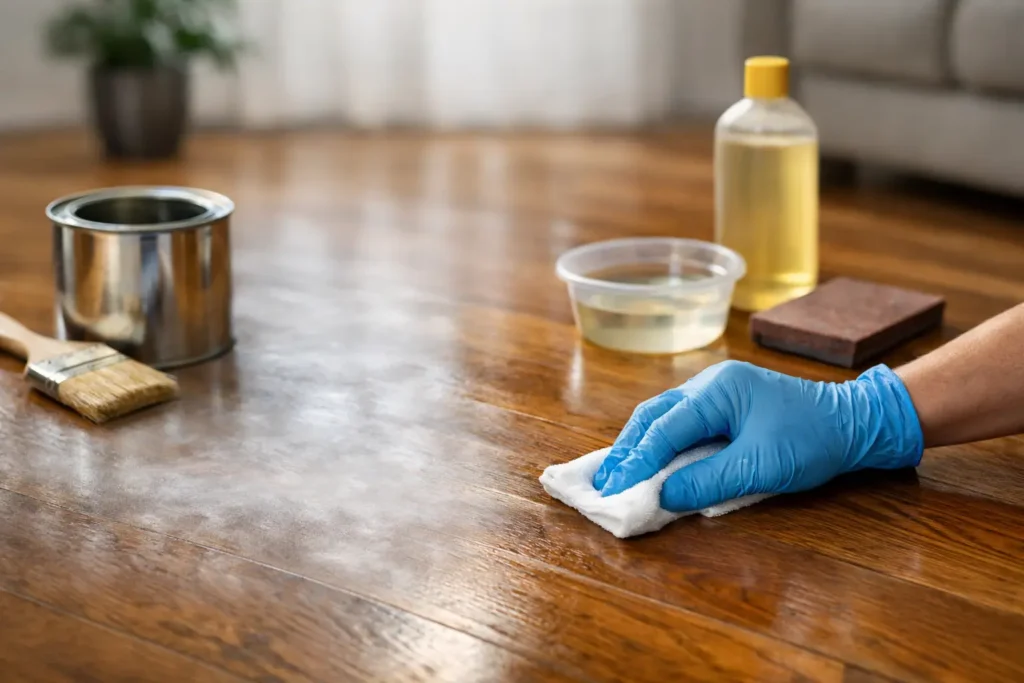
Cloudiness in a polyurethane finish usually shows up at the worst time – right after the floor dries and you expect that rich, clean sheen. If you need to fix cloudy polyurethane on hardwood floors, the first step is figuring out whether the haze is sitting on top of the finish, trapped inside it, or signaling a larger refinishing issue.
A cloudy floor can come from moisture, trapped contaminants, product incompatibility, over-application, or poor drying conditions. Sometimes the fix is simple. Sometimes the finish needs to be screened and recoated. And sometimes the only lasting answer is a full refinish, especially if the floor has multiple failing layers or visible wear under the haze.
What causes cloudy polyurethane on hardwood floors?
Polyurethane turns cloudy when light stops passing evenly through the finish. That can happen for a few different reasons, and the right fix depends on which one you are dealing with.
The most common cause is moisture. If polyurethane is applied when humidity is high, or if the floor was cleaned with too much water before coating, moisture can get trapped in the finish. Instead of drying clear, the coating dries with a milky cast.
Another common issue is contamination. Residue from floor cleaners, oil soaps, wax-based products, or even fine debris can interfere with adhesion and clarity. In homes that have seen years of off-the-shelf floor products, this is especially common. The floor may look clean, but the finish reacts badly once a new coat is applied.
Application mistakes matter too. A coat that is too thick often dries unevenly and can stay hazy longer than expected. Mixing the finish too aggressively can introduce tiny bubbles. Applying a fresh coat before the previous one has cured enough can also trap solvents and create a dull, cloudy look.
There is also the possibility that the finish is simply wearing out. On older hardwood floors, what looks like polyurethane haze may actually be micro-scratching, embedded grime, finish breakdown, or moisture damage in the wood itself.
How to tell whether it is a surface issue or a finish failure
Before you try to fix cloudy polyurethane on hardwood floors, look closely at where the haze appears and how it behaves.
If the cloudiness is only in small sections, especially near entryways, kitchens, pet bowls, or windows, moisture or cleaner buildup may be the main problem. If the entire floor looks milky from wall to wall after a recent coating, the issue is more likely related to application conditions or product failure.
Rub a small, hidden section with a clean, dry microfiber cloth. If the haze changes or improves slightly, there may be residue on the surface. If it does not change at all, the cloudiness is likely in the finish itself.
Look at the floor from different angles in daylight. Surface residue tends to sit unevenly and may smear. A true finish problem usually looks more uniform, like the haze is beneath the top layer. If you see peeling, flaking, white patches in the grain, or uneven gloss between boards, that points to a deeper issue than cleaning alone can solve.
Simple fixes that may work
If the polyurethane is fully cured and the cloudiness is mild, start conservatively. In some cases, the finish needs more time. Water-based polyurethane can appear slightly hazy during early drying, especially in humid weather. If the coat is recent, give it the full cure window recommended for the product before doing anything aggressive.
If you suspect residue, try dry buffing the area with a clean microfiber cloth or a soft buffing pad. Avoid soaking the floor. Extra water can make the problem worse.
For cleaner buildup, a manufacturer-approved hardwood floor cleaner may help remove film from the surface. Use a light application and dry the area thoroughly. This only helps if the haze is on top of the finish, not inside it.
A small test area matters. If the haze clears, you may be dealing with residue. If it stays the same, stop there. Repeated cleaning with stronger products often turns a repairable floor into a more expensive refinishing project.
When screening and recoating can fix cloudy polyurethane on hardwood floors
If the wood underneath is in good shape and the haze is trapped in the top finish layer, screening and recoating may be the best path. This process lightly abrades the existing finish and applies a fresh coat to restore clarity and even out the appearance.
This works well when the floor has no wax contamination, no deep stains in the wood, and no widespread finish separation. It is often the right middle ground for homeowners who want a cleaner, clearer result without a full sand-down.
The catch is preparation. If the floor has been treated with the wrong cleaning products over the years, a new coat may not bond properly. That is why professional evaluation matters. What looks like a simple recoat can fail if residue is still present.
For Connecticut homeowners, this is also where process quality matters. A floor should be restored without coating the home in airborne debris. Dustless Hardwood Floors LLC uses a proprietary dustless sanding system that leaves zero dust in the home, making refinishing cleaner, safer, and far more comfortable for families, children, pets, and allergy-sensitive households.
When a full refinish is the better fix
Some cloudy floors are past the point of a surface correction. If haze is mixed with scratches, dull traffic lanes, pet stains, water marks, or uneven old finish, a recoat may only hide the problem briefly.
A full refinish is usually the better long-term solution when the floor has multiple layers of old product, visible adhesion issues, finish peeling, or discoloration that extends into the wood. In those cases, partial fixes often lead to more frustration because the clarity never fully returns.
The benefit of full refinishing is control. The old finish is removed, the wood is restored evenly, and the new coating system is applied under the right conditions. That gives you a floor that looks truly renewed, not just temporarily improved.
For homeowners in Manchester, West Hartford, Glastonbury, Enfield, and surrounding Connecticut communities, a dustless refinishing process is especially valuable in occupied homes. You get the restored beauty of freshly finished hardwood floors without the cleanup concerns people often associate with older sanding methods.
DIY vs professional repair
DIY can work when the problem is limited to mild surface haze and you are certain the finish itself has cured properly. A careful cleaning test or a light buff on a small hidden area may be reasonable.
But once you move into abrasion, recoating, or trying to correct product failure, the risk goes up quickly. Using the wrong cleaner, abrasive pad, or finish can worsen the cloudiness, create adhesion problems, or leave the floor with uneven sheen.
The biggest mistake homeowners make is treating every cloudy floor the same way. Some floors need more drying time. Some need residue removal. Some need a professional recoat. Some need complete refinishing. The visual symptoms can look similar even when the solution is very different.
A professional assessment saves time and often saves the floor from trial-and-error damage. It also gives you a clearer idea of whether a targeted repair is realistic or whether investing in full restoration will give you the better result.
How to prevent polyurethane haze next time
Prevention comes down to clean prep, proper conditions, and the right finish system. Floors should be free of residue before any new coating goes on. Humidity and temperature should stay within the manufacturer guidelines. Coats should be applied evenly, not too thick, and allowed to dry and cure fully.
Long term, use only hardwood-safe cleaners and avoid products that leave shine-enhancing buildup. Many of the products marketed to homeowners create a short-term gloss but cause long-term coating problems.
It also helps to recoat a floor before the finish breaks down completely. Once wear reaches the wood, restoration becomes more extensive. Catching it earlier keeps your options open.
The right fix depends on the real cause
If you need to fix cloudy polyurethane on hardwood floors, resist the urge to guess. A milky finish can mean trapped moisture, surface residue, application error, or a finish that has simply reached the end of its life. The good news is that cloudy polyurethane is often fixable. The better news is that when the floor does need professional refinishing, it can be done with beautiful, clean results and zero dust left in the home.
When your floors should feel like an upgrade, not a project, the best next step is a clear diagnosis and a repair method that actually matches the condition of the wood.