
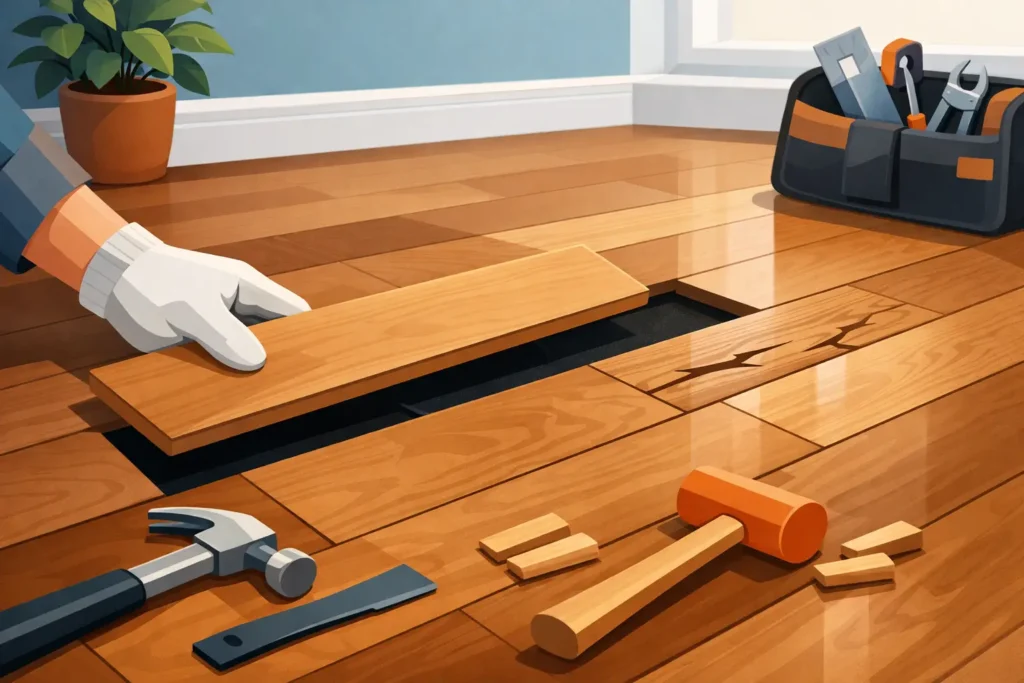
A dark water mark beneath a window, a split plank near the dishwasher, or deep pet damage in one high-traffic spot does not automatically mean your entire floor needs to be refinished. In many Connecticut homes, it is possible to replace damaged hardwood boards without full refinish when the damage is isolated and the surrounding floor still has good color, finish, and structural stability.
The key is making the repair look intentional rather than patched. A successful board replacement depends on matching the wood, fitting the new boards correctly, protecting nearby boards, and blending the repair into the existing floor. For homeowners who want a clean solution without turning a repair into a whole-house project, professional evaluation makes all the difference.
When a Board Replacement Is the Better Choice
Replacing individual boards is often the right option when damage is limited to a defined area. A few boards can be removed and replaced without disturbing the rest of a healthy hardwood floor. This is especially valuable when most of the floor still looks good and a complete refinishing project would be more than the room needs right now.
Localized replacement is commonly considered for boards affected by a plumbing leak, pet stains, gouges, cracks, burns, or severe dents. It can also solve problems caused by loose boards or damage from a dropped object. The goal is not simply to cover the damaged area. It is to restore a sound, level, visually consistent floor that holds up to daily use.
A repair is generally a strong candidate when these conditions are present:
- The damage is confined to a small number of boards.
- The floor around the damage is flat, stable, and free of widespread staining.
- The subfloor has dried fully and has no ongoing moisture issue.
- A compatible species, width, thickness, and grain pattern can be sourced.
If water damage extends beneath a large section of flooring, boards are cupped across the room, or the existing finish is worn throughout, a larger restoration plan may provide a better long-term result. The right answer depends on what caused the damage, not just what is visible on the surface.
Can You Replace Damaged Hardwood Boards Without Full Refinish?
Yes, but color matching is the deciding factor. New wood does not arrive with the same age, sun exposure, oxidation, or finish wear as an established floor. Even when the species and board width match perfectly, an unfinished replacement board may look noticeably lighter at first.
A skilled repair contractor accounts for that difference before installation. The replacement wood is selected as closely as possible to the existing floor, then fitted in a pattern that avoids an obvious straight-edged patch. In some cases, boards are staggered into the field of the floor so the repair follows the natural rhythm of the layout rather than ending in a visible rectangle.
The new boards can be carefully stained and finished to coordinate with the surrounding area. Exact invisibility is not always realistic, particularly with older floors, natural cherry, sun-faded oak, hand-scraped material, or floors with strong color variation. Still, an experienced repair can make the transition subtle enough that it blends into the room instead of drawing attention every time you walk by.
What Makes a Localized Repair Last
A beautiful repair begins below the finished surface. Before any boards are replaced, the source of the damage must be resolved. Installing new hardwood over an active leak, damp subfloor, or moisture-prone area only repeats the problem.
Once the area is dry and stable, damaged boards are removed with controlled precision to protect the surrounding floor. The replacement material is cut, fitted, secured, and leveled so it moves naturally with the rest of the floor. This matters in Connecticut, where seasonal humidity changes can affect hardwood over time.
The final blending work requires restraint. Sanding too broad an area can create a visible sheen or color change. Sanding too little may leave an uneven transition. The best approach is tailored to the board species, existing finish, damage location, and how much natural variation the floor already has.
At Dustless Hardwood Floors LLC, our proprietary dustless sanding system leaves zero dust in the home during the sanding portion of a repair. That means the work can be completed with a clean process that is comfortable for families, children, pets, and allergy-sensitive households. Homeowners can restore a damaged section without accepting airborne dust throughout their living space.
When a Small Refinish Area May Still Be Needed
“Without full refinish” does not always mean “without any finish work.” A replacement board usually needs a protective finish, and blending it with adjacent boards may call for focused sanding and recoating around the repair. That is still very different from sanding and refinishing every board in the room or throughout the home.
The trade-off is straightforward. Keeping the repair limited preserves more of the existing floor and can reduce the scope of the project. Refinishing a wider area offers more opportunity to create a uniform color and sheen. For a small repair in a closet, hallway edge, or naturally varied floor, localized work is often ideal. For a highly visible repair in the center of a sunlit living room with a uniform stain, blending a larger section may produce a better visual result.
A professional should explain this decision clearly before work begins. You deserve to know whether the repair is likely to blend closely, whether a slight variation may remain, and what options will improve the final appearance. Clear expectations protect the value of your home and prevent surprise costs later.
Matching Wood Is More Than Choosing “Oak”
Many homeowners are surprised by how many details affect a match. Red oak and white oak are different species. Oak itself can have different grain patterns, board cuts, and ages. A 2 1/4-inch strip floor will not blend naturally with 3-inch or 5-inch boards, even when the color is similar.
Wood thickness also matters. Older solid hardwood may have been sanded previously, while newer replacement stock may be thicker. The repaired section must sit flush with the surrounding boards to prevent a lip that catches socks, furniture, or bare feet.
Pre-finished flooring can add another challenge because the boards often have factory-applied bevels and a specific sheen. In some cases, the best match may come from salvaged material, leftover boards from the original installation, or new wood that is adjusted on site. A contractor who understands hardwood restoration will assess these details before recommending a repair plan.
Protecting Your Home During the Repair
A board repair should make your home feel better, not add unnecessary stress. The work area should be carefully prepared, nearby surfaces protected, and the repair performed with respect for the home around it.
This is where dustless sanding technology matters. Traditional assumptions about floor sanding do not have to define your experience. Our state-of-the-art dustless process contains the sanding output at the source, leaving zero dust in the home. It is a practical advantage for busy households, homes with children and pets, and owners who want to maintain cleaner indoor air while improving their floors.
For property managers and homeowners preparing a Connecticut property for sale, a localized repair can also be a smart presentation decision. Replacing visibly damaged boards can remove a major distraction during showings while preserving a floor that still has years of useful life.
Signs You Should Address Damage Soon
Some damaged boards are mainly cosmetic. Others allow moisture, movement, or splinters to become a bigger problem. It is wise to schedule an assessment when boards feel soft, flex underfoot, separate at the seams, develop sharp edges, or show dark staining that continues to spread.
Do not cover a suspected moisture issue with a rug and hope it settles. Hardwood responds to moisture from below as well as above, and early action can often limit how many boards need replacement. A focused repair today may help you avoid a much larger restoration later.
Get a Clear Repair Plan Before You Commit
The best first step is an in-home evaluation of the damaged area and the surrounding floor. A licensed and insured Connecticut hardwood professional can determine whether individual board replacement is practical, whether the subfloor needs attention, and how closely the new wood can be blended with the existing finish.
Dustless Hardwood Floors LLC is licensed in Connecticut, insured, and focused on restoring hardwood with clean, professional results and transparent pricing. Request a quote for your damaged area and ask for a repair plan that explains the expected match, the scope of finish work, and the result you can reasonably expect.
A few damaged boards do not have to define an otherwise beautiful hardwood floor. With the right repair approach, your floor can look whole, feel solid, and continue serving your home for years to come.