
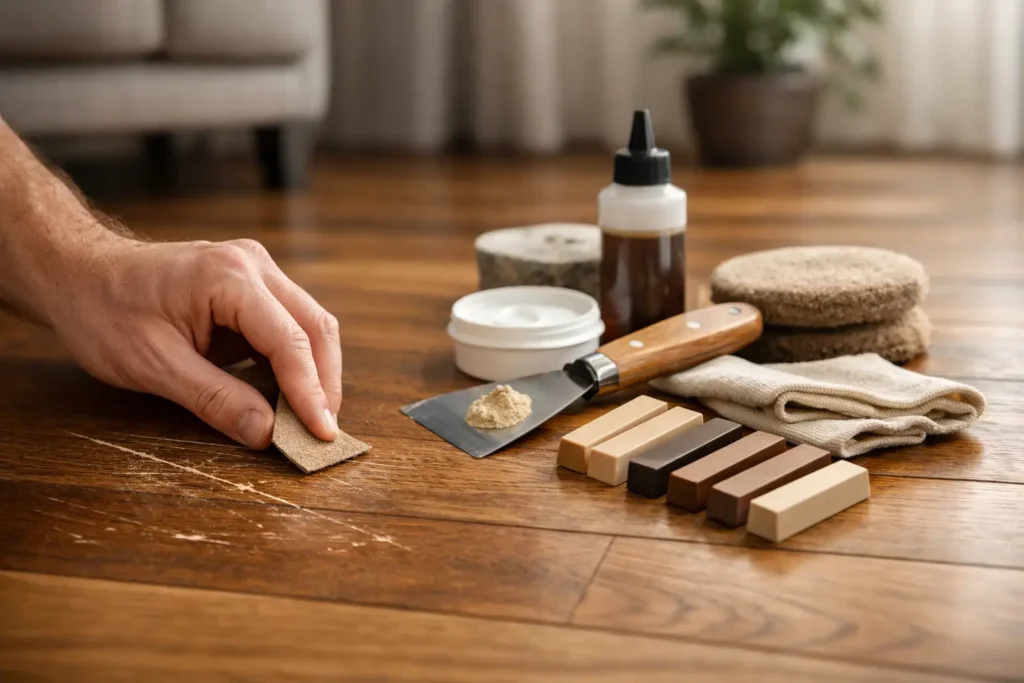
A scratched hardwood floor changes the whole room. What used to feel warm and finished starts looking tired every time light hits the boards just right. The good news is that a smart hardwood floor scratches repair guide is less about quick cover-ups and more about knowing what kind of scratch you are actually dealing with, what fix will hold up, and when professional dustless refinishing is the better investment.
For Connecticut homeowners, that distinction matters. A few light marks from chairs or pet nails may need a simple correction. Wider gouges, worn finish paths, and repeated surface damage usually point to a bigger issue – the protective finish is failing, and spot fixes will only go so far.
How to read scratches before you repair them
Not every scratch means your floor is damaged in the same way. Some marks sit only in the finish. Others cut into the wood itself. That difference decides whether you can improve the look with a small repair or whether the floor needs sanding and refinishing for a lasting result.
If the scratch looks white or lighter than the surrounding finish but the wood tone underneath still seems intact, it is often a surface-level issue. These are common in busy hallways, kitchens, and living rooms where furniture gets moved and traffic is constant. They usually respond well to light repair methods.
If the scratch looks dark, deep, or rough to the touch, it may have broken through the finish and exposed bare wood. Once that happens, moisture, dirt, and wear can work into the area. In older floors, repeated deep scratches can make the entire surface look uneven, even if only a few boards seem badly marked.
Then there is the in-between case. Many homeowners have floors with dozens of small scratches, dull traffic lanes, and a handful of deeper marks near doorways or under dining chairs. In that situation, treating one scratch at a time often becomes a cycle of temporary improvement. The floor may need a broader restoration plan.
Hardwood floor scratches repair guide for minor damage
For light surface scratches, the goal is to reduce visibility without creating a patch that looks worse than the original mark. The biggest mistake homeowners make is using the wrong color product or applying too much of it.
Start by cleaning the area gently so you can see the scratch clearly. Dirt caught in a scratch can make it appear deeper than it is. Once the floor is clean and dry, a color-matched hardwood repair marker or blending pencil can work well for very fine marks. These products are best when the finish is still mostly intact and the scratch is narrow.
For slightly more noticeable scratches, a hardwood floor repair kit with filler or wax can help disguise the damaged area. This works best on isolated spots, especially in lower-visibility areas. The challenge is color matching. Floors change over time due to sun exposure, age, stain variation, and wear, so a “close enough” repair can stand out more than expected.
If you are tempted to apply a shiny topcoat only over one repaired area, be careful. Spot sheen differences are one of the main reasons DIY touch-ups look obvious. Satin, semi-gloss, and matte finishes all reflect light differently. Even a good color match can fail if the sheen does not blend.
When scratches are telling you the finish is worn out
Scratches become more than a cosmetic issue when they show up everywhere the floor gets used. If your hallways, family room, stairs, or entry areas look dull and scuffed no matter how often you clean them, the problem may not be a few isolated marks. It may be widespread finish wear.
This is where many homeowners spend money twice. They try markers, wax sticks, polish products, or one-room touch-ups, only to realize the floor still looks aged because the surrounding finish is thin, cloudy, or uneven. A proper evaluation can save time and frustration.
In homes with children, pets, or frequent entertaining, finish wear tends to show up first in paths of travel. You might notice the center of the room looks decent while edges and walkways appear scratched and flat. Once that pattern starts, individual scratch repair becomes less effective because the floor needs overall renewal, not just camouflage.
Repair or refinish? It depends on depth and scale
A few isolated scratches on an otherwise healthy floor can often be repaired. Deep gouges limited to one or two boards may call for board-level repair or replacement. But if the damage is spread across a room, refinishing is usually the cleaner and more durable solution.
The benefit of refinishing is consistency. Instead of chasing one scratch after another, the floor surface is restored evenly so color, sheen, and protection match across the space. That matters in open-concept homes where patched areas stand out quickly.
For homeowners who have put off refinishing because they do not want the traditional sanding experience, this is where process matters. Dustless Hardwood Floors LLC uses a proprietary dustless sanding system that leaves zero dust in the home. That gives families in Connecticut a way to restore scratched, worn hardwood floors without turning the project into a cleanup problem. It is especially valuable for households with children, pets, or allergy concerns.
Why deep scratches should not be ignored
A deep scratch is not just an appearance issue. When bare wood is exposed, the floor becomes more vulnerable to moisture, staining, and splintering. In kitchens, entryways, and areas near exterior doors, that risk goes up fast.
Seasonal conditions in Connecticut can make this worse. Snow, rain, damp shoes, and fluctuating indoor humidity all put stress on exposed wood fibers. What begins as one dark scratch can turn into a rough, discolored patch that is harder to blend later.
There is also a resale factor. Buyers notice floors. So do renters and property managers preparing a unit for market. A floor covered in visible scratches can make the whole property feel less maintained, even when everything else is in good shape. Restoring the floor often improves the impression of the entire room.
What professional repair looks like in real homes
Professional hardwood scratch repair is rarely one-size-fits-all. A contractor should look at the wood species, stain color, age of the floor, finish type, and whether the damage is localized or widespread. The right recommendation might be a targeted repair, a buff and recoat, a board replacement, or full refinishing.
This is where experience matters more than product labels. Red oak behaves differently than maple. Site-finished floors offer different repair options than some prefinished products. Older boards may also have previous stain layers or finish buildup that affects how a repair blends.
For homeowners who want beautiful results without added stress, the method matters as much as the craftsmanship. A dustless sanding system leaves zero dust in the home, which means the restoration can feel far more manageable for active households and occupied properties. For light commercial spaces and investment properties, that cleaner process can also make scheduling and turnover easier.
How to prevent new scratches after repair
Once a floor is repaired or refinished, a few habits make a real difference. Felt pads under chairs, rugs near entry points, and regular trimming for pet nails all help reduce repeated scratching. The goal is not to make the floor untouchable. It is to protect the finish so it lasts longer.
Cleaning choices matter too. Grit acts like sandpaper under shoes, so frequent sweeping or vacuuming with a hardwood-safe setting helps more than occasional deep cleaning. It also helps to avoid harsh products or overly wet mopping, since the wrong cleaner can dull the finish or work moisture into vulnerable areas.
If you have one trouble spot that keeps getting scratched, look at the cause, not just the mark. Dining chairs, rolling stools, dog launch points near windows, and front-door traffic are common examples. Changing that pattern often protects your repair better than another touch-up.
When it is time to call a local hardwood floor expert
If scratches are multiplying, if the floor looks dull around the damage, or if past touch-ups are no longer blending, a professional assessment is the next practical step. Homeowners often wait until the floors look far worse than they need to because they assume restoration will be a major disruption. It does not have to be.
For Connecticut homeowners in places like Manchester, West Hartford, Glastonbury, and surrounding Hartford County communities, choosing a licensed and insured hardwood flooring contractor means you get guidance based on the actual condition of your floors, not a guess from the hardware aisle. You also get a plan that fits your home, your timeline, and the level of repair the floor truly needs.
A well-repaired hardwood floor should not look patched, cloudy, or temporary. It should look refreshed, protected, and ready to handle daily life again. If your floors are asking for more than a touch-up, the best next move is the one that restores the beauty of the wood and keeps your home clean, comfortable, and dust-free while it happens.