
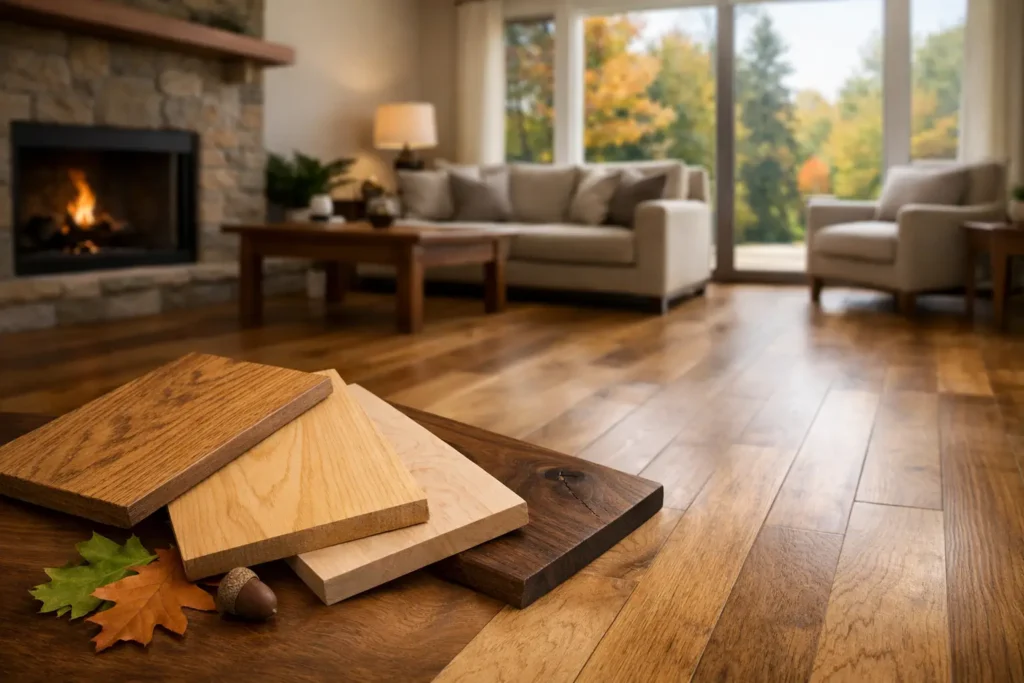
Connecticut floors have to handle a little of everything – snowy boots in winter, humid afternoons in July, muddy paws in spring, and dry indoor heat once the furnace kicks on. That is why choosing the best hardwood species for Connecticut homes is not just about color or grain. It is about how the floor will look, move, wear, and age in a real New England house.
For most homeowners, the right answer comes down to three things: climate stability, everyday durability, and the look you want to live with for years. Some species are better at hiding dents and scratches. Others stay more stable through seasonal humidity shifts. And if you already have hardwood floors, the species you choose for repairs, additions, or refinishing can shape how natural the final result feels.
What matters most in Connecticut hardwood selection
Connecticut homes see wide seasonal swings. Indoor air gets dry in winter and sticky in summer, even with good climate control. Hardwood naturally expands and contracts with those changes, so species stability matters more here than it might in a milder region.
Hardness matters too, but not in the way many people assume. A harder floor is not always the better floor. Very hard species can resist dents well, but they may show scratches clearly or feel less forgiving in certain finishes. Homes with children, pets, or frequent guests often benefit from a species and finish combination that balances toughness with a forgiving appearance.
Style also plays a practical role. A formal colonial in West Hartford may suit rift or quarter-sawn white oak, while a more casual home in Manchester or Glastonbury may look better with character-grade oak or hickory. The best floor is the one that fits both the house and the people living in it.
Best hardwood species for Connecticut homes by performance
White oak
If a Connecticut homeowner asks for the safest all-around recommendation, white oak is usually at the top of the list. It is durable, stable, and versatile across traditional and modern interiors. Its grain has enough movement to add character, but it does not feel overly busy.
White oak also handles humidity changes better than many species, which makes it a smart fit for New England conditions. It takes stain beautifully, from light natural tones to deeper browns, and it works especially well if you want a refined, long-term look that will not feel dated in a few years.
For busy households, white oak is one of the easiest species to live with because it tends to wear gracefully. Minor imperfections do not jump out the way they sometimes can on smoother, more uniform woods.
Red oak
Red oak has been a Connecticut staple for decades for good reason. It is widely available, dependable, and usually more budget-friendly than some premium species. Its grain is more open and pronounced than white oak, which can be an advantage if you want warmth and visible natural texture.
It is slightly less stable than white oak, but still a strong performer in most homes. For homeowners refinishing existing red oak floors, keeping that species often makes the most sense. A professional refinish can completely transform the look without the cost of a full replacement, especially when done with a dustless sanding system that leaves zero dust in the home. That clean process matters even more for families with children, pets, or allergy concerns.
Maple
Maple is a good choice when homeowners want a cleaner, smoother, more contemporary appearance. It has a subtle grain and a lighter natural tone, which can brighten a space nicely. In homes with an open layout or a simpler design style, maple can feel crisp without looking stark.
The trade-off is that maple can be less forgiving visually. Because the grain is so uniform, scratches and wear patterns may stand out more depending on the stain and sheen. Maple is also known for taking stain less evenly than oak, so it is usually best when the goal is a natural or lightly tinted finish rather than a dark, dramatic color.
Hickory
Hickory is one of the toughest domestic hardwoods commonly used in homes, and that makes it appealing for active households. If you have large dogs, kids who are always moving, or a property that sees heavier traffic, hickory deserves a look.
It has strong color variation and a bold grain pattern, so it is not for everyone. In the right home, though, that character is exactly the appeal. It feels grounded, natural, and a little more rustic. If you want a perfectly uniform, formal floor, hickory may not be the best fit. If you want personality and strength, it can be an excellent one.
Walnut
Walnut is chosen more for its beauty than for maximum hardness. It brings a rich, darker tone that many homeowners love, especially in older homes or spaces where warmth matters more than sheer durability. It has a more refined, furniture-like look than oak or hickory.
The trade-off is softness. Walnut can dent and mark more easily, so it is usually better for lower-traffic areas, bedrooms, home offices, or homeowners who prioritize appearance over rugged wear. It is a premium look, but it needs realistic expectations.
Which hardwood species is best for Connecticut families?
For most families, white oak and red oak remain the strongest practical choices. They offer the best balance of durability, repairability, style flexibility, and long-term value. Hickory is a strong contender if wear resistance is the top priority, while maple fits homeowners who want a lighter, more understated look.
This is also where finish selection matters just as much as species. A matte or satin finish usually hides everyday wear better than a high-gloss one. Natural tones and mid-tone stains also tend to age more gracefully than very dark finishes, which can highlight scratches and dust more easily.
If you already have hardwood floors, refinishing may give you a better result than replacing them. Many Connecticut homes have solid oak floors under worn finishes, surface scratches, or discoloration. With professional dustless sanding and refinishing, those floors can often be restored beautifully without filling the home with airborne dust. For homeowners who want clean results and a smoother project experience, that difference is significant.
Matching the species to the room
Not every room needs the same wood strategy. Main living areas benefit from species that wear evenly and can be refinished well over time, which is one reason oak performs so consistently. Bedrooms can support softer or more appearance-driven choices like walnut. Kitchens need extra thought because spills, chair movement, and heavier foot traffic all put more pressure on the floor.
If you are installing hardwood in a kitchen or entry-adjacent area, stability and ease of maintenance should lead the decision. White oak usually stands out here. In a formal dining room or quieter upstairs space, you may have more freedom to prioritize look over toughness.
Older Connecticut homes also deserve a tailored approach. If the house has original flooring in some rooms, blending species, board width, and grain pattern can matter just as much as selecting the hardest wood available. A floor should feel like it belongs in the home, not like it was dropped in from a completely different style era.
Installation is only part of the decision
Homeowners often spend a lot of time choosing species and very little time thinking about what happens after installation. But long-term appearance depends on maintenance, finish quality, and the skill of the contractor handling the work.
That is especially true when refinishing existing hardwood. A great species can still look disappointing if the sanding is uneven or the stain is poorly matched. On the other hand, a well-executed refinish can make standard red oak look exceptional. That is why many homeowners in Hartford County focus not only on the wood itself, but on finding a licensed and insured professional who can deliver beautiful results without turning the project into a stressful experience.
For households that want a cleaner process, dustless sanding changes the equation. Dustless Hardwood Floors LLC uses a proprietary dustless sanding system that leaves zero dust in the home, which helps protect indoor air quality and keeps the project comfortable for families, children, pets, and allergy-sensitive households. When you are improving your floors, the process should feel just as well handled as the final finish looks.
The smartest choice is usually the one you will still like in ten years
Trends move quickly. Connecticut homes do not. A floor should still make sense after the paint colors change, the furniture gets replaced, or the house goes on the market someday.
That is why white oak continues to lead for many homeowners, with red oak close behind. They are adaptable, proven, and easier to live with over time than species chosen only for novelty. If your home calls for something lighter, maple can work beautifully. If your priority is toughness and character, hickory has real advantages. And if the goal is warmth and richness in a quieter space, walnut can be the right luxury choice.
The best hardwood floor is not the one with the biggest name or hardest rating. It is the one that fits your home, your lifestyle, and your expectations – and when it is installed or refinished with skill and a truly dustless process, you get the beauty of hardwood without the hassle homeowners worry about most.