
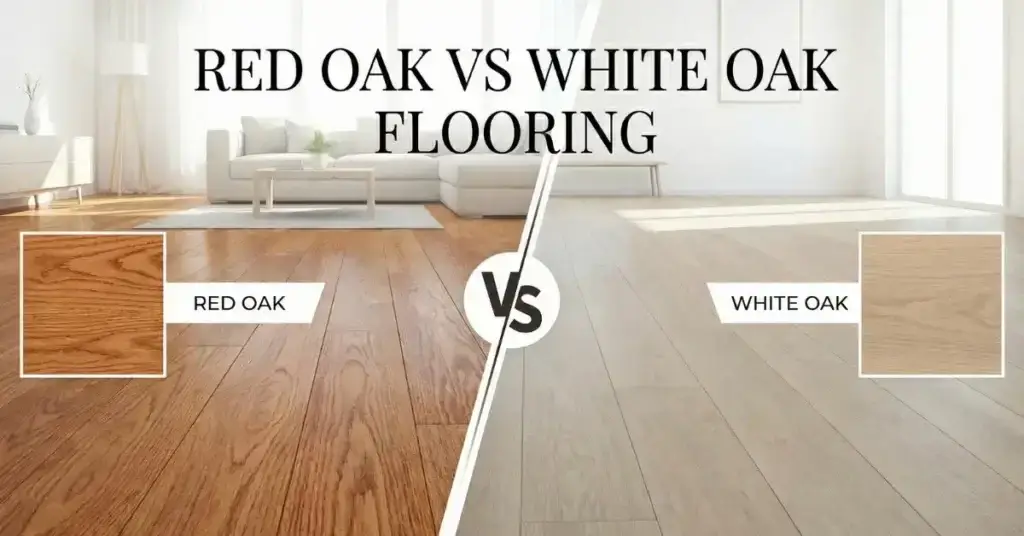
This comprehensive comparison of white oak vs red oak flooring will help you choose the best hardwood floor for your home. When choosing between white oak vs red oak flooring, consider the aesthetic, durability, and long-term value each option offers, ensuring you make an informed choice.
White Oak vs Red Oak Flooring
White Oak
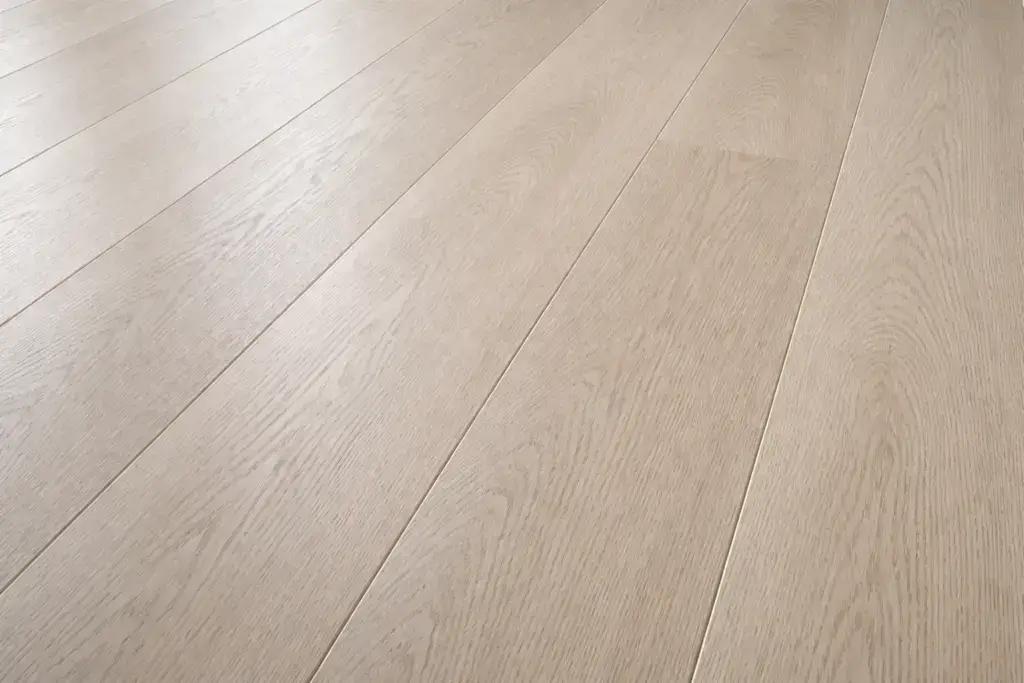
White Oak tends to have less colour variation, with cooler, grayish-brown or light tan undertones and features than Red Oak due to its tighter grain. This is also an important advantage, as it makes White Oak more water-resistant than Red Oak. White Oak is slightly harder and easier to stain with more modern colours. Because of its closed grain, White Oak is more water-resistant and is often used in areas that are frequently exposed to moisture and even outdoors. High-quality White Oak can last for 50 years. The colour alone is worth it.
For projects centered on aesthetics, knowing how each performs in different environments is critical when considering white oak vs red oak flooring.
Fact: As it is more water resistant, white Oak is widely used in the hills of Royal Navy Ships in the era of sail.
Red Oak
Let’s dive deeper into the characteristics that distinguish white oak vs red oak flooring.
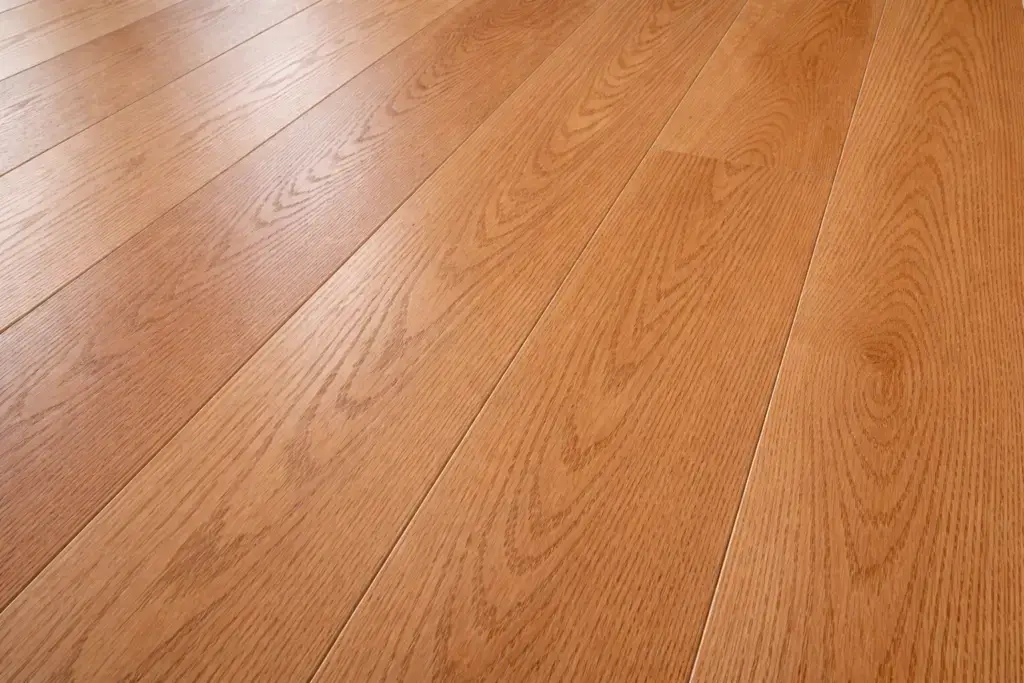
Red Oak tends to have a natural colour that features warmer pinkish or reddish-brown undertones, which can become stronger and more prominent with age, especially in the grain. Red Oak has much larger grains than White Oak, as discussed earlier, which makes it less water-resistant. In Red Oak, these pores are open, whereas in White Oak, the pores are filled. In fact, if Red Oak is placed in water, the open pores allow bubbles to pass through the sample, something that cannot happen with White Oak. Historically, Red Oak has been widely used in American homes and is often associated with a classic style.
Understanding the differences in characteristics will help you with your decision on white oak vs red oak flooring.
Consider how the choice of white oak vs red oak flooring impacts your home’s overall design.
Ultimately, your decision regarding white oak vs red oak flooring hinges on personal preference and intended use.
When evaluating the factors involved in white oak vs red oak flooring, consider the overall maintenance and care for each type.
Choosing between white oak vs red oak flooring requires understanding your style preferences and the durability that suits your home.
Key Differences between Red Oak and White Oak
The table below shows a quick comparison of the differences between White Oak and Red Oak in natural color tone, grain pattern, and pore structure.
The long-term value is another important aspect to weigh when considering white oak vs red oak flooring.
White oak vs red oak flooring is not just about aesthetics; it’s also about how well each holds up over time.
For many homeowners, the debate of white oak vs red oak flooring revolves around personal taste and functionality.
White Oak vs Red Oak Flooring: Making the Right Choice
| Factor | White Oak | Red Oak | What This Means for You |
|---|---|---|---|
| Natural Color | Light brown to beige with cool/neutral undertones | Light tan with pink/red undertones | White Oak looks cleaner & modern; Red Oak feels warmer |
| Grain Pattern | Tight, straight, subtle grain | Open, bold, pronounced grain | White Oak = minimal look; Red Oak = character & texture |
| Pore Structure | Closed pores | Open pores | Closed pores = better moisture resistance |
| Moisture Resistance | High (used historically in shipbuilding) | Low (water can pass through pores) | White Oak is safer for kitchens, basements & humid climates |
| Janka Hardness | ~1360 lbf | ~1290 lbf | Difference is negligible in real-world use |
| Dent Resistance | Slightly better | Slightly softer | Both perform the same in normal homes |
| Stain Absorption | Even, controlled | Absorbs fast & uneven without prep | White Oak = predictable results |
| Stain Color Range | Best for light, gray, natural, reactive stains | Best for dark, warm, rich stains | Red Oak excels in deep tones |
| Reactive Stains | Excellent (high tannin content) | Poor to moderate | White Oak needed for fumed/chemical stains |
| UV Color Change | Ambers slightly over time | Red tones brown out with age | Both change, Red Oak more noticeably |
| Design Style Match | Modern, Nordic, Contemporary, Farmhouse | Traditional, Rustic, Classic, Mid-Century | Style choice matters more than hardness |
| Availability | Less abundant | Widely available | Impacts pricing stability |
| Material Cost (USA) | $12–$24 per sq ft | $6–$12 per sq ft | Red Oak is more budget-friendly |
| Installation Cost | Higher for patterns (harder wood) | Slightly lower | Labor rises with complexity |
| Refinishing Potential | 3–5+ times | 3–5+ times | Both last decades |
| Scratch Visibility | Hides scratches better | Shows grain wear more | White Oak ages more subtly |
| Resale Value | Higher demand, higher ROI | Strong but lower premium | White Oak preferred in modern resale markets |
Table Summary
- Choose White Oak if you want a modern look, better moisture resistance, lighter or gray stains, and higher resale appeal.
- Choose Red Oak if you want warmth, bold grain, rich stain colors, and a lower upfront cost.
Aesthetic Considerations: White Oak vs Red Oak
White Oak’s Coolness:
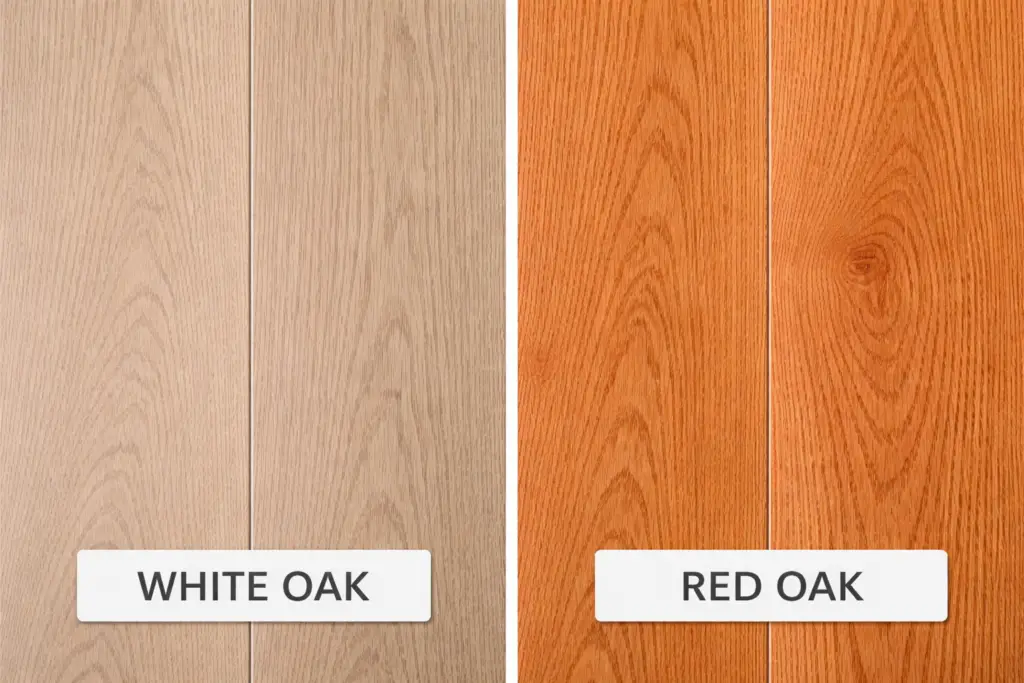
Most people go with White Oak because of the more subtle grain and cooler undertones, and it also feels a bit more modern, but it does not take stain really well. So if you want a richer look, you should not go with White Oak. White Oak can change your room aesthetic and complement different interior design styles. It also makes your interior brighter.
Red Oak Warmth:
Red Oak naturally has a pink tint to the lighter colored areas, and all red tones eventually brown out. The inherent Red/Pink pigment can influence your overall room warmth, especially when exposed to natural light. Red Oak does take Stain really well, which means you have a great choice in colors for a richer look.
Design Versatility: Complementing Interior Styles
White Oak for Modern & Nordic:
White Oak has tight and smooth grain with straight lines, which makes your room look sharper. You can use White Oak for your dining table and other kitchen furniture because of its closed grains and more water resistance, also in bright rooms, because white Oak reflects the natural light and makes your room look larger and more appealing because of the soft grain, which keeps the look clean.
Red Oak for traditional & farmhouse
Red Oak natural tones, Red/Pink make your place look rich, which never goes wrong with furniture like rolled arm sofas, carved wood legs. When it comes to choosing Oak for the Dining room, Red Oak feels warmer and more inviting. In the countryside, most people go with Red oak flooring because it echoes the natural and handcrafted look.
Designer’s pick- Oak for Every Style
Modern Farmhouse:
White Oak with a light stain provides a very clean look because natural light makes the space look even larger, which prevents the space from feeling heavy. It never makes you look overly modern.
Mid-century Modern:
Red oak’s warmth makes your room look cozy, and your furniture more appealing. Red oak creates a vintage but modern vibe.
Traditional:
For a traditional look, you can go with Red Oak with Medium Stain, which gives a timeless and enduring look, giving your room a vintage and warm look.

Janka Hardness: Why it measures
The Janka Hardness test is performed to measure the resistance to denting and wear of wood species.
What does this test measure?
It measures the amount of force required to press a 0.444-inch steel ball ( a size of pea or pencil eraser) into the wood until half the ball’s diameter is embedded.
The ball size is universal for every wood species.
It measures how easily a wood gets dents under pressure and also helps to measure the durability.
WHITE OAK VS RED OAK: Janka Hardness
Janka hardness plays an essential role in the durability factor because higher numbers = harder wood = more dent-resistant.
White Oak’s average janka rating is (approx.1360 lbf or 616.89 kg of force), while Red Oak’s janka rating is a bit less (approx.1290 lbf or 585.13 kg of force ), which is not a big difference and performs identically in everyday life. But for looks, you will find that white Oak is a more formal, traditional look, while Red Oak is more rustic and has much more grain fluctuations and patterns.
Moisture Resistance: White Oak vs Red Oak
White Oak Resistance:
As we described before, these resistance factors rely a lot on the pores of an Oak, so in white Oak, the pores are very tight, which makes it more water resistant. That’s why white Oak is used for the hulls of Royal Navy ships in the era of sail, because it is more water resistant. Which means that white Oak is a good choice for outdoors and wet areas.
Red Oak Resistance:
Red Oak pores are a lot bigger than White Oak, which means Red Oak has less water resistance because of the bigger pores, which means for wet areas, the Red Oak is not a good choice. In Red Oak, higher moisture can lead to contraction also.
EXPERT TIP: Humidity Control is Key: Maintain consistent indoor humidity (ideally 35-55%) to prevent Expansion, contraction, and potential damage to your oak floors
Staining And Finishing Performance
How White Oak takes Stain
Even absorption:
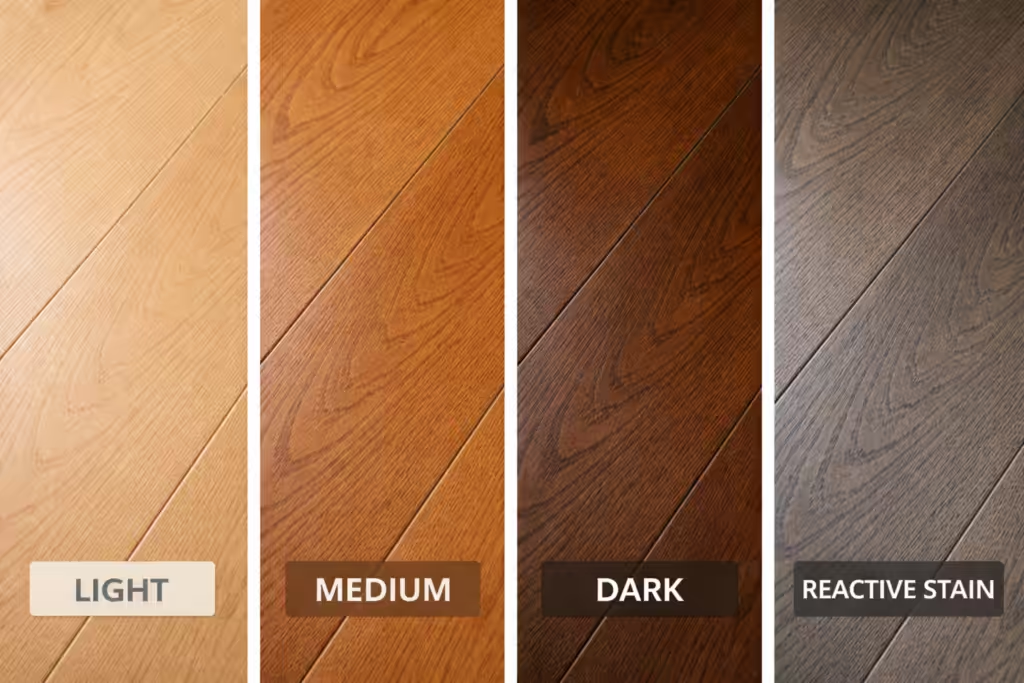
White Oak’s tighter grains and cooler undertones allow it to take Stain more evenly and nicely, and can achieve more looks, including grays and muted tones.
Ultimately, when deciding on white oak vs red oak flooring, your choice should reflect your unique style and needs.
Reactive stains:
Because of the high amount of tannins compared to other hardwoods, it can react strongly with chemicals, and it works inside the wood, so the outcome is gonna impressive.
How Red Oak takes Stain
Challenges with open grain:
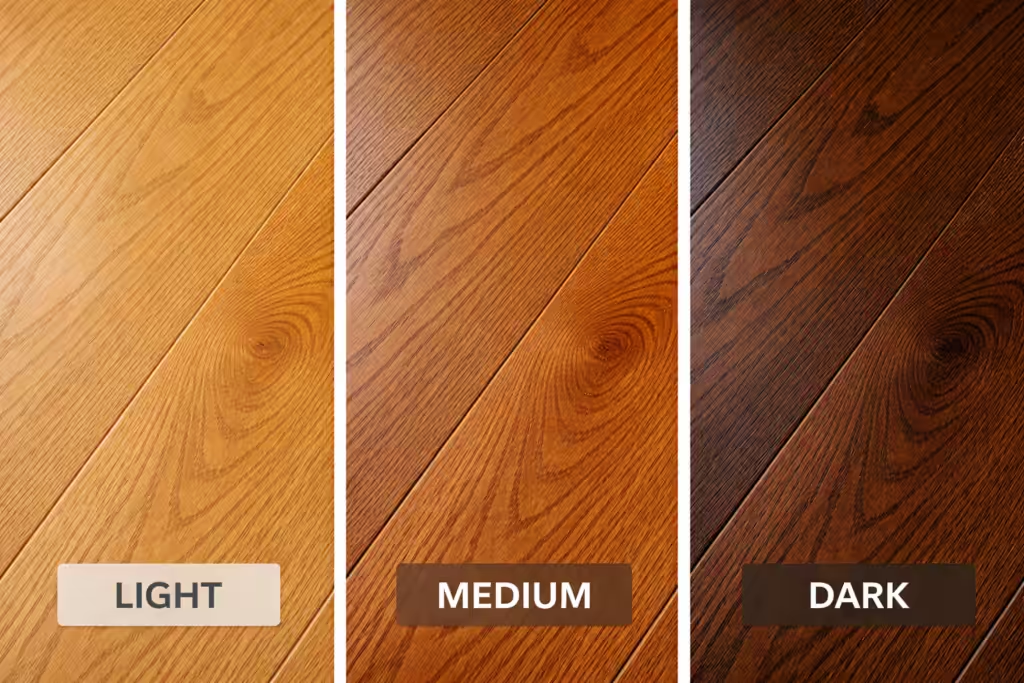
Red Oak contains big pores and an uneven grain pattern, which is why it soaks stain unevenly. Some parts absorb more Stain, and some less. It seems like a big problem, but good prep before Stain application can solve that problem.
Expert Tip: Apply a grain filler or use a pre-stain conditioner
Achieving Desired Tones:
Red Oak’s natural colour is red/pink, which plays an important role in the final result. How the wood looks after it is stained is influenced by this base tone, often making the colour appear warmer than originally imagined. Red Oak is well suited for warm, deep, or intense colours, especially if proper preparation is done before applying the stain.
In conclusion, understanding white oak vs red oak flooring can help you navigate your options more effectively.
Ultimately, the white oak vs red oak flooring debate is about what works best for your lifestyle.
Consider how the style of white oak vs red oak flooring will complement your existing decor.
Both white oak and red oak offer unique benefits, making the choice of white oak vs red oak flooring a matter of preference.
Cost Analysis: Purchase, Installation, and Long-Term Value
The overall cost from purchase to installation for Red Oak in the USA is about 6$-12$ per sq ft, and for 1000 sq ft, 10,000$-20,000$, and for White Oak, it costs 12$-24$ per sq ft and for 1000 sq ft, $12,000-$24,000. This price can vary from city to city and with quality grades.
| Category | Red Oak | White Oak | Notes / Expert Tips |
|---|---|---|---|
| Initial Material Costs | Generally slightly more affordable due to greater availability. | Typically higher due to demand and slower-growing supply. | Price varies by grade, cut (plain-, quarter-, rift-sawn), and market demand. |
| Price Influencing Factors | More abundant → lower cost fluctuations. | Higher demand for modern & luxury designs → higher cost. | Quarter-sawn & rift-sawn boards increase cost for both. |
| General Price Trends | Often marginally cheaper per sq. ft. | Considered premium; often 10–20% higher. | Trends fluctuate with regional availability. |
| Pattern Complexity | Herringbone/chevron raise installation cost significantly. | Same patterns cost even more due to difficulty cutting harder wood. | Custom inlays, stair nosing, borders also increase spending. |
| Subfloor Preparation | Same requirements as White Oak; costs vary by condition. | Same requirements; may require more moisture mitigation in humid climates. | Expert Tip: Proper leveling + moisture control is critical for longevity. |
| Maintenance Routine | Sweep, vacuum, and use hardwood-safe cleaners. | Same routine; White Oak slightly better at hiding scratches. | Use pads under furniture and maintain stable indoor humidity. |
| Refinishing Cycles | Can be refinished 3–5+ times over lifespan. | Can be refinished 3–5+ times as well. | Both last decades with proper care. |
| Refinishing Notes | Lightens/red undertones may show after sanding. | Develops amber/neutral tones when refinished. | Color changes occur with each sanding. |
| Long-Term Value & ROI | Strong value; slightly lower resale premium compared to White Oak. | Higher ROI due to modern design preference for White Oak. | Over 10–20 years: both offer excellent durability and refinishing value. |
| Investment Outlook (10–20 Years) | Cost-effective with solid longevity; great for budget-conscious homeowners. | Premium choice with higher resale value; ideal for long-term investment. | Both offer excellent life-span and refinishing potential. |
Pros and Cons of White Oak Flooring
- Slightly Harder: Janka rating of 1360 lbf provides a marginal edge in dent resistance.
- Excellent Moisture Resistance: Closed-grain structure makes it more resistant to moisture.
- Versatile for Stains: Takes stains very evenly, including grays and reactive stains.
- Modern Aesthetic: Cooler tones and subtle grain suit contemporary designs
- Higher Cost: Often slightly more expensive due to demand and specific applications
- Limited Warmth: Cooler tones might not appeal to those seeking a very warm, traditional look
- Less Prominent Grain: The subtle grain might be perceived as less “characterful” by some.
- Reactive Stain Learning Curve: Achieving specific reactive stain effects can be complex.
Pros and Cons of Red Oak Flooring
- Cost-Effective: Often more affordable than White Oak
- Traditional Aesthetic: Warm, reddish tones and prominent grain are classic.
- Good Durability: Janka rating of 1290 lbf offers sufficient hardness for most homes
- Easy to Work With: Generally easy to cut and install.
- More Porous: Open grain makes it less moisture-resistant than White Oak.
- Stain Challenges: Can sometimes appear blotchy with certain stains without proper conditioning
- Yellowing Over Time: Can exhibit more yellowing or ambering with age and certain oil-based finishes.
- Stylistic Limitations: Its strong grain and warm tones might not suit all modern aesthetics.
Conclusion: Your Perfect Oak Awaits
In the end, the best choice between White Oak and Red Oak is not universal; it depends on understanding the science of wood, the needs of your space, and the design you want to achieve.
Where White Oak offers a modern look, good water resistance, and a high Janka rating—making it ideal for high-traffic areas and a strong ROI in the future—Red Oak stands out for its excellent stain performance, giving a classy look to your home.
Since 2006, our experience has shown that the right choice becomes clear only after a professional evaluates your space, understands your budget, and considers where the flooring will be installed. Based on these factors, we guide you toward the oak species that fits your needs best, but the final decision is yours. In our view, both White Oak and Red Oak are winners.