
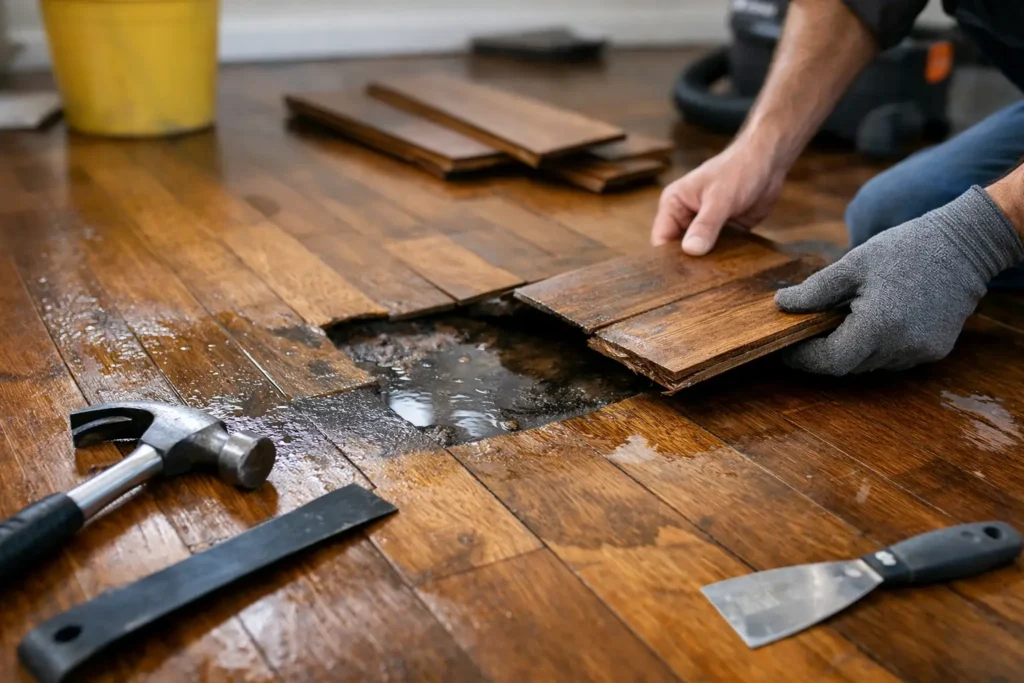
A few dark spots near the dishwasher can turn into cupped, swollen planks faster than most homeowners expect. If you need to repair water damaged hardwood floor boards, the right fix depends on how deep the moisture went, how long it sat, and whether the damage is limited to the finish or has changed the wood itself.
For Connecticut homeowners, the goal is not just making the floor look better for a few weeks. It is restoring the floor so it stays flat, stable, and beautiful over time. In some cases, a simple dry-out and refinishing process is enough. In others, individual board replacement is the only repair that will hold up.
What water damage does to hardwood floor boards
Hardwood is durable, but it reacts quickly to moisture. When water sits on the surface or seeps through seams, the boards absorb it and expand. That often leads to cupping, crowning, staining, finish failure, soft spots, or gaps that appear after the floor dries back out.
The first thing to understand is that not all water damage looks dramatic at the start. A small leak from a plant, pet bowl, refrigerator line, or entry door can create a localized problem that spreads below the finish before the surface shows major signs. By the time a board feels rough or lifts at the edges, the moisture event may have already affected neighboring planks.
This is why the repair approach matters. Cosmetic work on structurally damaged boards usually does not last. On the other hand, replacing boards too soon before the floor fully stabilizes can also create problems later.
How to tell whether you can repair water damaged hardwood floor boards
The best repair starts with an honest diagnosis. If the boards are only lightly stained and the wood is still flat and solid, sanding and refinishing may restore the area. If boards are swollen, split, permanently warped, or soft underfoot, replacement is usually the better option.
A few signs point toward refinishing rather than replacement. Surface discoloration that has not penetrated deeply, minor edge lift, and finish clouding from moisture can often be corrected once the floor is fully dry. This is especially true when the leak was caught early.
Other signs point toward board replacement. Deep black staining, severe cupping that does not relax after drying, delamination in engineered sections, and any softness in the wood indicate the board itself has been compromised. In those cases, keeping the original plank often means the problem returns.
Damage that may be repairable without replacing boards
If the finish is worn, hazy, or lightly discolored but the floor remains firm and mostly level, refinishing may solve the issue. A professional can determine whether the damage is limited to the top layer and whether the surrounding floor can be blended successfully.
For many homeowners, this is the best-case scenario. It preserves more of the original floor and can restore consistent color across the room.
Damage that usually requires board replacement
When the shape of the board has changed for good, the repair needs to go deeper. Planks that stay raised, split at the ends, or show heavy staining through the grain usually need to be removed and replaced. The same goes for boards that feel weak or loose after a leak.
In those situations, replacement protects the rest of the floor. It prevents hidden damage from being sealed over and showing up again later.
Why drying the floor properly comes first
Before any sanding, refinishing, or replacement begins, the floor has to reach a stable moisture level. This step is easy to overlook when you want the damage gone quickly, but it has a direct impact on the quality of the repair.
If boards are repaired while they still hold excess moisture, they can shrink, gap, or shift after the work is done. That is one reason professional assessment matters. The floor may look dry on top while still holding moisture below.
The timeline depends on the size of the affected area, the species of wood, the subfloor, and the source of the water. A brief spill near a sink is different from a slow plumbing leak under a wall or a larger appliance failure. A careful moisture check helps determine when the floor is truly ready for restoration.
The professional process for restoring a water-damaged hardwood floor
Once the source of moisture has been corrected and the floor is dry, the repair plan becomes much clearer. In many homes, the process includes targeted board removal, new board installation where needed, then sanding and refinishing to blend the repaired section with the surrounding floor.
That blending step is where craftsmanship really shows. A water-damaged area can stand out if the sheen, stain tone, or board alignment is off even slightly. The goal is not just replacing damaged wood. It is making the floor feel whole again.
For Connecticut homeowners who want clean results, this is also where the method matters. At Dustless Hardwood Floors LLC, our proprietary dustless sanding system leaves zero dust in the home, which means your floors can be restored without coating your living space in airborne debris. For families with children, pets, or allergy concerns, that makes a major difference in comfort during the project.
When refinishing the whole room makes more sense
Sometimes the water damage itself is limited, but the surrounding floor has enough wear that spot work will remain visible. Older finish, sun fading, and natural color variation can make a repaired section stand out if only a few boards are addressed.
In that case, refinishing the entire room often gives the better long-term result. It creates a uniform appearance, refreshes worn areas beyond the leak site, and helps the repaired boards blend naturally. It can also be more cost-effective than repeated patchwork over time.
This is one of those situations where it depends on the age and condition of the existing floor. If the room already has scratches, dull traffic lanes, or finish wear, full refinishing often gives the homeowner more value.
What homeowners should not ignore
Water damage is rarely just a surface issue until proven otherwise. Waiting too long can turn a straightforward repair into a larger restoration. Staining can deepen, boards can bond together unevenly, and moisture can affect the subfloor beneath the hardwood.
It is also worth paying attention to seasonal movement. In Connecticut, humidity shifts can exaggerate minor water damage. A board that seems only slightly raised in one month may become much more noticeable as the floor cycles through changing indoor conditions.
If you notice buckling, persistent dark marks, or boards that feel different underfoot, it is smart to have the area evaluated before trying store-bought fixes. Surface products cannot reverse board distortion or remove deep moisture damage.
Repair water damaged hardwood floor boards with the right finish in mind
Once the damaged area has been repaired, the finish you choose affects both appearance and daily performance. Homeowners often focus on color, but sheen and durability matter just as much in kitchens, entryways, mudrooms, and dining areas where water incidents often happen.
A lower-sheen finish can help minimize the visibility of everyday wear, while a strong protective coat helps guard against future spills that are cleaned up quickly. The right finish will depend on traffic, pets, and how the room is used.
This is another reason professional restoration pays off. The repair is only part of the job. Matching the repaired boards, sanding the area correctly, and applying a finish that fits the home all work together to create a result that lasts.
Choosing a contractor for water-damaged hardwood repair
When hardwood has been exposed to water, you want more than a cosmetic fix. You want a contractor who can evaluate whether the boards can be saved, replace damaged planks cleanly when needed, and refinish the floor so it looks consistent instead of patched.
For many homeowners, the process matters almost as much as the final look. A clean, controlled restoration is especially important in occupied homes, busy households, and allergy-sensitive spaces. That is why dustless sanding has become such a strong advantage for floor repair and refinishing work.
If your floor has water damage, the smartest next step is not guessing whether it will flatten on its own. It is getting a clear assessment while the repair options are still in your favor. A well-repaired hardwood floor should not just hide the damage. It should restore confidence every time you walk into the room.