
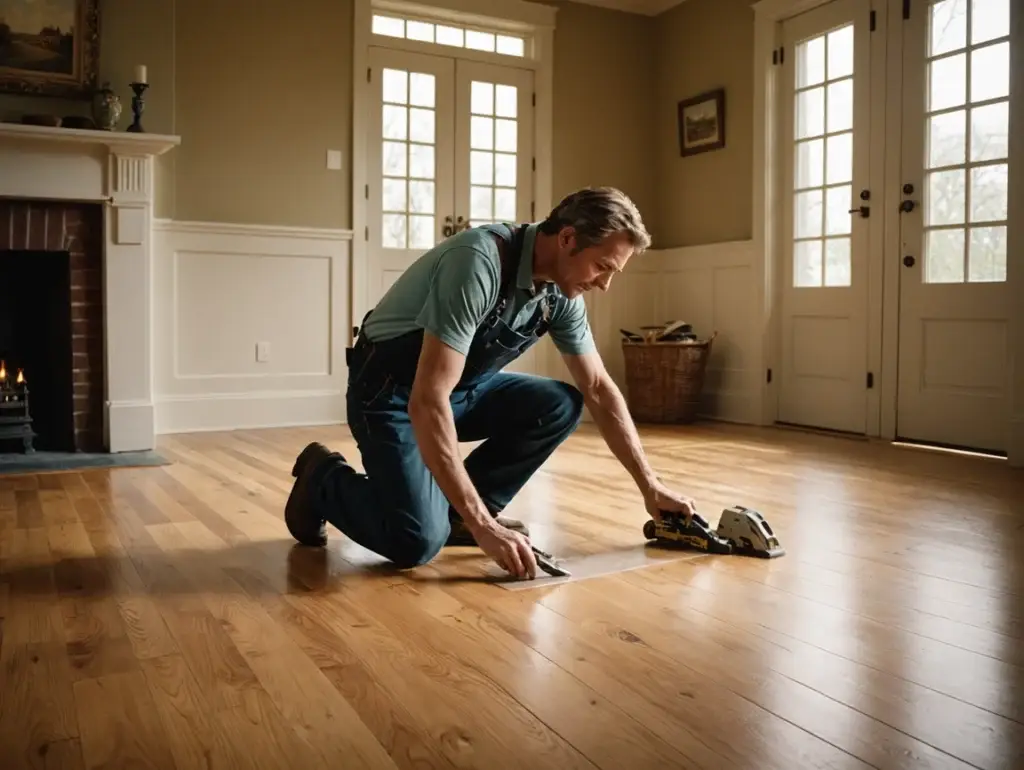
IMAGE Finished hardwood floor in living room / home interior
Are you dreaming of upgrading your home with beautiful new hardwood floors but feeling nervous about the cost? You are not alone. Many homeowners start this journey excited, only to feel overwhelmed once they begin seeing different prices, material options, labor fees, and unexpected add-ons. What looks simple at first can quickly turn confusing, especially when quotes vary so widely.
Using a Replacement Cost Guide, you can assess various flooring options and their associated costs more effectively.
A comprehensive Replacement Cost Guide will assist you in navigating through diverse costs associated with hardwood flooring.
Keep this Replacement Cost Guide handy to ensure budgeting is more straightforward and transparent.
With the help of a Replacement Cost Guide, you can make informed decisions on the materials to use in your flooring project.
This Replacement Cost Guide emphasizes the importance of understanding costs to avoid being overwhelmed during your flooring project.
Understanding the costs involved in hardwood flooring can be significantly aided by a comprehensive Replacement Cost Guide.
Consult the Replacement Cost Guide for detailed insights on how material options influence your budget.
Understanding the basics of costs through a Replacement Cost Guide is essential for a smooth flooring project.
This section will discuss the elements of a comprehensive Replacement Cost Guide that homeowners should be aware of.
Using the Replacement Cost Guide, you can gain insights into how to manage your budget effectively.
For more detailed insights, refer to this comprehensive Replacement Cost Guide available online.
Utilizing our Replacement Cost Guide can enhance your budgeting strategy significantly.
The Replacement Cost Guide also highlights common pitfalls to avoid during your renovation.
A reliable Replacement Cost Guide can help mitigate worries about expenses, ensuring you make informed choices throughout the process.
This Replacement Cost Guide serves as a resource for budgeting and understanding the nuances of hardwood floor expenses.
Check the Replacement Cost Guide for a breakdown of various material costs.
Without clear and honest guidance, hardwood floor replacement can feel risky. Homeowners often worry about going over budget, choosing the wrong materials, or hiring a contractor who does not deliver what was promised. Even small mistakes can lead to higher costs later, uneven floors, or regrets that last for years. The biggest challenge is that the real cost is not always obvious at the beginning. All pricing ranges in this guide reflect typical U.S. market conditions for 2024–2025, based on current contractor rates, material pricing trends, and industry cost databases. Actual costs may vary by region, timing, and project complexity.
This guide is designed to give you clarity and confidence. We break down the true cost of hardwood floor replacement in a simple and transparent way, covering materials, labor, hidden expenses, and practical ways to save money. You will learn how to compare quotes properly, ask the right questions, and decide whether professional installation or a DIY approach makes sense for your budget and skill level. By the end, you will be equipped to make smart decisions that protect your investment and help you enjoy your new hardwood floors for years to come.
Consult the Replacement Cost Guide to see how material choices impact your overall budget.
H2: Understanding the Basics of Hardwood Floor Replacement Costs
By referring to the Replacement Cost Guide regularly, you will keep track of your expenses throughout the project.
H2: A Comprehensive Replacement Cost Guide for Homeowners
Replacing hardwood floors is a major home improvement project, and for many homeowners, the biggest challenge is understanding where the money actually goes. Costs can look simple at first, but once the work begins, unexpected expenses often show up. Knowing the basics upfront helps you plan better and avoid budget surprises.
H3: What Hardwood Floor Replacement Entails
The Replacement Cost Guide outlines how different wood types will affect your overall budget.
Image Process infographic / diagram Steps: Old floor removal, Subfloor prep, Installation, Sanding & finishing
Hardwood floor replacement is a multi-step process, and each step adds to the total cost.
The first step is removing the existing flooring. This can be fairly simple if the floor is floating, but glued down or nailed hardwood takes more time and effort to remove.
Always refer to the Replacement Cost Guide for budgeting to avoid overspending.
Next is subfloor preparation. Contractors inspect the subfloor for damage, moisture issues, or uneven areas. Repairs or leveling may be required before new flooring can be installed properly.
For accurate estimates, always refer back to the Replacement Cost Guide to understand market trends.
The Pricing and services outlined in the Replacement Cost Guide will give you a clearer picture of what to expect.
To mitigate confusion, make sure to have the Replacement Cost Guide available during negotiations with contractors.
Understanding your costs using the Replacement Cost Guide can save you from future regrets.
Consult the Replacement Cost Guide not just for costs but also for tips on maintenance and care.
Factors affecting the total expense are thoroughly covered in the Replacement Cost Guide.
Once the subfloor is ready, the new hardwood is installed. This includes measuring, cutting, fitting, fastening or gluing the boards, and making sure everything lines up correctly.
The final stage includes sanding, staining if needed, sealing, trim installation, and cleanup. Each phase requires different skills, tools, and time, which is why replacement costs are rarely one flat number.
The Replacement Cost Guide includes essential information on how labor rates can vary.
In simple terms, every step affects the total cost, and mistakes at any stage can lead to long-term issues like squeaking, gaps, or premature wear.
H3: Initial Factors That Influence Overall Project Cost
Several key factors determine how much you will ultimately pay.
In addition, the Replacement Cost Guide explains the implications of your choices.
The type of hardwood matters a lot. Solid hardwood typically costs more than engineered hardwood, and premium wood species increase material costs even further.
Project size plays a role as well. Larger areas need more materials and labor, while smaller spaces may have higher per-square-foot costs due to setup time.
Refer to the Replacement Cost Guide to ensure you understand the full cost spectrum.
Labor rates vary depending on whether the job includes demolition, subfloor prep, installation, and finishing. These are often priced separately.
This Replacement Cost Guide details the financial implications of each component of the hardwood floor replacement process.
Geographic location affects pricing due to differences in labor availability, local demand, and material costs.
The condition of the existing subfloor can significantly impact the budget. Uneven or damaged subfloors usually require extra work before installation can begin.
The Replacement Cost Guide will be your key to successful planning and budgeting.
Utilizing the Replacement Cost Guide will enhance your understanding of cost fluctuations in different regions.
H3: Why Hardwood Floor Costs Vary So Widely
image: Comparison image
One of the most common homeowner concerns is not knowing the true total cost until the project is already underway.
For clarity on pricing, refer to the Replacement Cost Guide outlining national averages.
Contractor experience plays a major role. Highly experienced installers with proper insurance, crews, and warranties often charge more, but the workmanship is usually more reliable.
Material quality also varies widely. Lower grade wood may reduce upfront costs but can show wear faster or have more visible defects.
For clarity, always keep the Replacement Cost Guide in hand when discussing options with your contractor.
Installation complexity increases labor time and cost. Simple straight installs are less expensive than detailed layouts, angled cuts, or difficult to access areas.
For a more comprehensive understanding, the Replacement Cost Guide is a must-read.
Regional economic factors also influence pricing. In some areas, strong housing demand or limited skilled labor can push costs higher.
H3: Typical Hardwood Floor Replacement Costs
image: Cost infographic / bar chart
For installation only, homeowners often pay around $3 to $4 per square foot when the subfloor is already in good condition.
A full replacement, including removal of old flooring, subfloor prep, installation, sanding, and finishing, commonly falls between $14 and $18 per square foot depending on materials and location.
Refinishing existing hardwood is usually more affordable when floors are structurally sound. Costs typically range from $2 to $8 per square foot.
H3: DIY Options and Cost Considerations
Some homeowners choose DIY for sanding or refinishing to save money. Renting equipment like drum sanders and edgers can cost a few hundred dollars, but the process takes time and requires careful handling.
DIY installation may work for smaller areas or engineered hardwood, but improper prep or mistakes can lead to uneven floors or early failure.
Every homeowner should consult the Replacement Cost Guide before starting their project.
Understanding the Replacement Cost Guide will prepare you for the entire process.
H3: Repair Costs for Minor Damage
Small repairs such as replacing damaged planks can cost several hundred dollars depending on the wood type and availability. Matching older flooring can be difficult, which may affect the final appearance.
H3: Average Hardwood Floor Replacement Cost: National and Regional Overview
Once homeowners understand what goes into a hardwood floor replacement, the next big question is cost at a national and local level. This is where confusion usually sets in, because numbers online can look very different depending on the source. The goal here is to give realistic ranges so you can plan a budget that actually makes sense.
H3: National Average Cost Ranges
The Replacement Cost Guide is essential for understanding how geographical variances can affect your project.
At a national level, hardwood floor replacement costs are usually calculated per square foot. These numbers are averages pulled from contractor pricing, homeowner reports, and industry cost databases. Your final price may still move up or down, but these ranges are a solid starting point.
For materials only, most homeowners pay anywhere from $4 to $12 per square foot. Engineered hardwood sits on the lower end, while solid hardwood and premium wood species push costs higher.
For labor only, installation typically ranges from $3 to $6 per square foot. This usually covers basic installation but does not always include demolition, floor prep, or finishing.
For a full project, including materials, labor, removal of old flooring, prep work, and finishing, the combined national average usually falls between $14 and $18 per square foot. More complex installs or higher-end materials can push that number higher.
These figures align with pricing shared by contractors and homeowners across multiple regions and reflect current industry norms.
The Replacement Cost Guide can also help you recognize when to seek professional help.
H3: Regional Hardwood Floor Replacement Cost Ranges (2024–2025)
Hardwood floor replacement costs can change a lot depending on where you live. Labor rates, local demand, and permit requirements all play a role in how much you will pay.
In higher cost areas like large West Coast cities and major Northeast metro areas, homeowners usually spend around $16 to $22 per square foot for a full replacement. Labor is more expensive in these locations, and contractors often have higher operating costs, which raises overall pricing.
In mid cost regions such as much of the Midwest and parts of the South, total replacement costs are usually lower. Most homeowners in these areas pay between $13 and $18 per square foot. Labor tends to be more affordable, and material prices are often more consistent throughout the year.
In lower cost regions, including rural areas and smaller cities, hardwood floor replacement is generally more affordable. Total costs in these areas often fall between $11 and $16 per square foot. Contractors typically have less overhead, and projects are often simpler to complete.
It is also worth knowing that even within the same state, prices can vary. Urban areas usually cost more than nearby rural locations because skilled labor is in higher demand and contractor expenses are higher.
H3: Understanding Regional Cost Differences
image: USA map infographic OR High-cost vs low-cost regions
Where you live has a big impact on how much you will pay for hardwood floor replacement.
In some areas, especially smaller cities or more affordable regions, labor costs are usually lower. This can bring down the overall project price, even when using the same type of hardwood.
Local demand also plays an important role. During busy renovation seasons, or when contractors are fully booked, prices often go up because availability is limited.
If you want a more accurate idea of pricing in your area, it helps to check local contractor estimates and regional cost tools. These sources give a clearer picture than national averages and help you plan a more realistic budget.
H3: Budget Examples Based on Home Size
image: Budget cards infographic Small room, Medium area, Large home
Looking at square footage helps translate per-square-foot pricing into real-world budgets.
For small rooms around 100 to 200 square feet, total replacement costs often land between $1,400 and $3,600, depending on material choice and prep work.
For medium-sized areas between 500 and 800 square feet, homeowners usually spend somewhere between $7,000 and $14,000 for a full replacement.
For large projects of 1,000 square feet or more, total costs commonly range from $14,000 to $18,000, with premium hardwood or extensive prep work increasing the total further.
These estimates assume a full replacement and help set realistic expectations when planning room-by-room or whole-home upgrades.
H3: Additional Cost Factors That Affect the Final Price
Several extras often surprise homeowners if they are not discussed upfront.
Demolition and removal alone can cost $5 to $10 per square foot, especially for glued-down hardwood.
Subfloor preparation may add around $1.50 per square foot, depending on the condition of the existing surface.
Baseboards, trim, and transitions are sometimes priced separately and can add a few hundred dollars to the project.
H3: DIY Cost Considerations
DIY installation can reduce labor costs significantly, but it comes with trade-offs. Homeowners who install floors themselves often save thousands, but mistakes can lead to uneven floors or costly fixes later.
DIY works best for smaller areas, engineered hardwood, or homeowners with time and patience to learn the process.
H3: Key Factors Affecting Hardwood Floor Replacement Cost
Hardwood floor pricing can feel overwhelming because there is no single rule that applies to every home. Two projects with the same square footage can end up costing very different amounts. The sections below explain the biggest factors that drive those differences, so you know exactly what to look for when reviewing estimates.
H3: Hardwood Type and Species Selection
image: Side-by-side comparison, Solid vs Engineered hardwood
One of the biggest sources of confusion for homeowners is the wide price gap between different hardwood options.
Solid hardwood is made from a single piece of wood and is usually more expensive upfront. It can be sanded and refinished multiple times, which appeals to homeowners planning to stay long term.
Engineered hardwood is made with a hardwood veneer over layered plywood. It is often more affordable, more stable in changing humidity, and easier to install, which can reduce labor costs.
Wood species also play a major role. Common domestic options like oak, maple, and cherry are generally more affordable and widely available. Exotic woods such as Brazilian cherry or acacia cost more due to import, hardness, and limited supply.
This is where many budgets get stretched. A floor can jump several dollars per square foot just by switching species, even before installation begins.
H3: Project Size and Scope
Square footage directly affects both material and labor costs. Larger projects require more wood, more fasteners or adhesive, and more labor hours.
A single-room update is usually straightforward. Multi-room projects add complexity, especially when floors need to flow continuously through hallways, closets, or stairs.
An important expert tip many homeowners miss is material waste allowance. Reputable contractors usually add 5 to 10 percent extra material to account for cuts, defects, and layout adjustments. This should be included in your estimate, not added later as a surprise cost.
H3: Labor Rates and Installation Complexity
Labor pricing is typically charged either per square foot or hourly, depending on the contractor and job type.
Basic installations with straight layouts cost less. Prices increase when the job includes angled patterns, borders, stairs, tight corners, or heavy furniture moving.
Licensed contractors often price labor based on time, skill level required, and job difficulty. A simple install may run a few dollars per square foot, while complex layouts can double that amount.
Homeowners are often surprised to learn that installation is not the same as floor prep, demo, or finishing. Those are usually separate line items.
H3: Existing Floor Removal
Removing old flooring can be one of the most labor intensive parts of the project.
Carpet and laminate are usually quicker to remove. Glued-down hardwood, tile, or older flooring systems take much longer and require heavier tools.
In many cases, demo alone can cost several dollars per square foot, especially when adhesives or nails are involved. This step often gets underestimated during early budgeting.
H3: Subfloor Condition and Preparation
A solid, level subfloor is critical for long-lasting hardwood floors.
If the subfloor has dips, moisture issues, or damaged sections, repairs are necessary before installation begins. This may include leveling compounds, plywood repairs, or full subfloor replacement in severe cases.
Skipping or rushing subfloor preparation can lead to long-term problems such as squeaking, uneven boards, and premature wear. These issues often appear months after installation, when repairs are far more expensive.
Expert insight:
“Skipping proper subfloor leveling is one of the most expensive mistakes homeowners make. It’s often the hidden reason behind squeaks, gaps, and premature floor failure.”
— Licensed flooring contractor, NWFA-certified installer with over 15 years of experience
H3: Geographic Location
Local market conditions heavily influence pricing.
In high-cost-of-living areas, labor rates are higher and material prices often increase due to shipping and demand. In lower cost regions, installation may be more affordable, but availability of skilled installers can still affect pricing.
Even within the same state, urban areas usually cost more than rural ones due to demand and contractor overhead.
H3: Finish Type and Customization
Finishing choices affect both cost and timeline.
Pre-finished hardwood is factory-finished and installed faster, which can reduce labor time. On-site finishing allows for custom stains and a seamless look but adds sanding and finishing labor.
Custom stains, protective coatings, and finish types also add to the budget. Oil-based finishes, water-based finishes, and polyurethane all vary in price, durability, drying time, and maintenance needs.
Choosing the right finish is not just about appearance. It affects long-term upkeep and how often the floor may need refinishing in the future.
H3: Hardwood Material Costs: Solid vs. Engineered and Wood Species Comparison
When homeowners start comparing hardwood prices, this is usually where things get confusing. Two floors may look similar, but the price difference can be several dollars per square foot. That gap almost always comes down to the type of hardwood and the wood species you choose.
Material costs are only one part of the total project, but they set the foundation for your entire budget. The figures below reflect estimated 2024–2025 market averages and should be treated as general guidance. Actual prices vary by supplier, quality grade, and region.
Industry durability ratings and material characteristics are based on standards commonly referenced by organizations like the National Wood Flooring Association and established wood suppliers.
H3: Solid vs. Engineered Hardwood at a Glance
Solid hardwood is made from a single piece of wood. It usually costs more upfront but can be sanded and refinished multiple times over its lifespan.
Engineered hardwood uses a real hardwood surface layer bonded to plywood or fiberboard layers. It is typically more stable in areas with humidity changes and often costs less than solid hardwood, especially in wider planks.
Neither option is better for every home. The right choice depends on where the floor is installed, moisture levels, and how long you plan to keep it.
Expert insight:
“Engineered hardwood is often the smarter choice in basements or homes with humidity swings. It’s more stable and can significantly reduce long-term repair costs.”
— Certified flooring specialist and installation manager
H3: Average Hardwood Material Costs and Characteristics
| Hardwood Type or Species | Avg. Material Cost per sq ft | Durability Rating | Pros | Cons | Best Use |
| Solid Oak, Red Oak | $5.00 to $8.00 | 1290 | Classic look, very durable, can be refinished multiple times | Sensitive to moisture, expands and contracts | Living rooms, bedrooms, dining rooms |
| Solid Maple, Hard Maple | $6.00 to $10.00 | 1450 | Very hard, fine grain, resists dents | Harder to stain evenly, higher cost | High-traffic areas, modern interiors |
| Solid Brazilian Cherry (Jatoba) | $8.00 to $12.00 | 2350 | Extremely hard, rich color, long-lasting | Darkens over time, difficult to cut, higher price | Luxury homes, heavy-use spaces |
| Engineered Oak | $4.00 to $9.00 | 1290 | More stable than solid wood, works in basements | Thinner wear layer, fewer refinishing cycles | Basements, kitchens, moderate moisture areas |
| Engineered Acacia | $5.00 to $10.00 | 1750 | Distinct grain, good durability, stable | Color variation, finish quality matters | Rustic or eclectic designs |
| Reclaimed Pine (example) | $7.00 to $15.00 | 690 | Unique character, eco-friendly, historic appeal | Softer wood, dents easily, sourcing costs | Low-traffic areas, heritage properties |
image: Wood grain images, Oak, Maple, Brazilian Cherry etc.
H3: How Wood Species Impact Your Budget
Domestic species like oak and maple are usually more affordable because they are widely available and easier to source. Exotic woods cost more due to import fees, hardness, and limited supply.
You might find tips in the Replacement Cost Guide that can lead to significant savings as you plan your project.
Durability ratings, known as Janka ratings, measure how resistant a wood is to dents and wear. Higher numbers mean harder wood, but harder is not always better. Very hard woods can be tougher to cut and install, which may increase labor costs.
Another overlooked factor is appearance over time. Some species, like Brazilian cherry, darken significantly as they age. That change is beautiful to some homeowners but unexpected for others.
H3: Important Cost Notes Homeowners Should Know
Material prices listed here do not include waste allowance. Most professionals recommend adding 5 to 10 percent extra to cover cuts and defects.
Cheaper hardwood does not always mean lower long-term cost. Floors that dent easily or cannot be refinished may need replacement sooner.
Engineered hardwood prices vary widely based on the thickness of the top wear layer. Thicker layers cost more but allow for future refinishing.
H3: Labor Costs Breakdown: Installation, Removal, and Subfloor Prep
Image: Labor cost breakdown infographic
Labor is often the most misunderstood part of a hardwood flooring quote. Many homeowners expect one flat price, but labor is usually broken into several steps. Each step depends on time, skill level, and the condition of your home. Understanding how labor is priced helps you spot fair estimates and avoid surprise add-ons.
H3: Old Flooring Removal Costs
Removing existing flooring is usually priced separately from installation, and costs vary based on what is being removed.
Carpet removal is generally the least expensive. It is lighter, easier to pull up, and faster to haul away. Homeowners often see costs around $0.50 to $1.00 per square foot for removal and disposal.
Laminate flooring takes more effort than carpet but is still fairly straightforward. Pricing often falls in the $1 to $3 per square foot range.
Tile removal is more labor-intensive. Breaking tile, removing cement board, and hauling debris takes time and heavy tools. Costs often range from $3 to $6 per square foot, sometimes more.
Old hardwood removal can be one of the toughest jobs, especially when it is glued down. Nail-down hardwood is easier to remove, while glue-down floors can push removal costs to $4 or more per square foot.
If asbestos is suspected in older flooring or adhesives, removal costs increase significantly due to testing and safety requirements.
Expert tip: If you plan to handle removal yourself, renting proper tools like floor scrapers, pry bars, and knee pads can save time, reduce strain, and help prevent injury.
H3: New Hardwood Installation Costs
Installation labor is usually priced per square foot and depends heavily on the installation method.
Nail-down installation is common for solid hardwood and typically costs $3 to $5 per square foot.
Glue-down installation, often used for engineered hardwood or concrete subfloors, usually costs more due to adhesive and cleanup. Pricing often ranges from $4 to $6 per square foot.
Floating floors are usually the least expensive to install, often falling between $2.50 and $4 per square foot, depending on layout and room shape.
Patterned layouts such as herringbone or chevron significantly increase labor costs. These designs require more cutting, planning, and precision, which can double installation labor compared to straight layouts.
Industry labor averages are typically based on time, difficulty, and installer experience rather than just square footage.
H3: Subfloor Repair and Leveling Costs
Subfloor work is critical for a long-lasting hardwood floor and is often underestimated during budgeting.
Minor repairs, such as patching small areas or sanding uneven spots, usually cost $1 to $2 per square foot.
Major repairs, including replacing damaged sections or extensive leveling, can range from $2.50 to $5 per square foot, depending on severity.
Moisture testing is another important step, especially over concrete or in basements. Contractors often use moisture meters to confirm the subfloor is within acceptable limits. If moisture mitigation is needed, this adds to the labor and material cost but helps prevent future damage.
H3: Trim Work and Molding Costs
Trim work is often not included in basic installation pricing.
Installing or replacing baseboards, quarter-round, or shoe molding typically costs $1 to $3 per linear foot, depending on material and complexity.
Painting or finishing trim is often priced separately and can add a few hundred dollars to the project, especially in larger spaces.
H3: Staircase Installation Costs
Hardwood stairs are priced very differently than flat flooring.
Use the Replacement Cost Guide to plan for potential subfloor repair costs.
Each stair tread and riser requires precise cutting, fastening, and finishing. Costs are commonly charged per step, and pricing can be several times higher than standard floor installation.
For homes with staircases, this is often one of the most expensive labor line items in the entire project.
H3: Additional and “Hidden” Costs to Anticipate
image: Warning / alert style infographic
Even with a detailed quote, hardwood floor replacement projects often come with extra costs that homeowners do not expect. These are not always signs of dishonest pricing. In many cases, the issues simply cannot be seen until the old flooring is removed. Knowing about these possibilities ahead of time helps you plan smarter and avoid stress mid-project.
H3: Subfloor Repair and Preparation
One of the biggest homeowner concerns is discovering subfloor problems after demolition begins.
Beyond basic leveling, some homes need deeper repairs such as fixing damaged joists, addressing pest damage, or repairing areas affected by past water leaks. These issues are common in older homes and can significantly increase labor and material costs.
A thorough inspection by a certified or experienced professional is critical before final pricing. While not every problem can be spotted in advance, early inspections reduce the risk of major surprises once work begins.
H3: Old Flooring Disposal Fees
Removing flooring is only part of the cost. Disposing of it is another.
Landfill and dump fees are often charged separately, especially for large projects. Heavier materials like tile or glued hardwood increase hauling costs.
If hazardous materials such as asbestos are present in older vinyl or linoleum, disposal becomes more complex and expensive. Specialized handling and testing may be required, which adds both time and cost to the project.
H3: Furniture Moving and Storage
Some contractors include basic furniture moving in their quotes, while others charge extra.
If professionals handle moving and protecting furniture, expect additional labor costs. For larger projects, temporary storage may also be needed.
Homeowners can reduce this expense by clearing rooms ahead of time and arranging their own storage when possible.
H3: Permit Fees
Flooring projects usually do not require permits, but there are important exceptions.
Permits may be needed if the project involves structural changes, major subfloor repairs, or work that affects load-bearing areas. Failing to obtain required permits can lead to fines and create problems during future home sales.
Checking with your local building department before starting work is a simple step that can prevent legal and financial issues later.
H3: Custom Stains, Finishes, and Sealants
Standard finishes are often included in base pricing, but custom options come at a premium.
Unique stain colors, high-gloss finishes, or commercial-grade protective coatings increase material and labor costs. These finishes may also require additional drying or curing time, extending the project timeline.
While they add upfront cost, higher-quality finishes can reduce long-term maintenance and extend the life of your floors.
H3: Transition Pieces and Thresholds
Transitions between rooms or flooring types are often overlooked during budgeting.
Matching or custom transition pieces, thresholds, and reducers add to material and installation costs, especially in homes with multiple flooring surfaces.
These details affect both appearance and safety, making them an important but commonly underestimated expense.
H3: Moisture Testing and Acclimation
Moisture issues are a leading cause of hardwood floor failure.
Professional moisture testing ensures the subfloor and wood are within safe limits before installation. In some cases, extended acclimation periods are needed so the wood can adjust to indoor conditions.
These steps may add time or small costs upfront, but they help prevent warping, cupping, and long-term damage.
H3: Contingency Budget Planning
Even well-planned projects can uncover unexpected challenges such as hidden wiring, plumbing adjustments, or additional trim work.
A common expert recommendation is to set aside 10 to 15 percent of your total budget as a contingency. This buffer allows you to handle surprises without pausing the project or compromising quality.
H3: Cost-Saving Strategies for Your Hardwood Floor Replacement Project
Hardwood floor replacement does not have to break the bank. With smart planning and a few strategic choices, many homeowners are able to reduce costs without sacrificing quality. This section focuses on practical, real-world ways to save money while still getting results you can feel good about.
H3: Strategic Material Sourcing
Where you buy your hardwood matters just as much as what you buy.
Purchasing directly from wholesalers or manufacturers can reduce markup costs compared to retail showrooms. Some suppliers also offer contractor pricing to homeowners who ask.
Sales, clearance items, and discontinued lines are another major opportunity. These products are often high quality but discounted to make room for new inventory.
For trustworthy sourcing, homeowners can also explore supplier directories and educational resources provided by organizations like the National Wood Flooring Association, which help identify reputable vendors and industry standards.
H3: Choosing Less Expensive Wood Species or Grades
Wood species selection has a direct impact on material cost.
Common domestic woods like red oak, ash, and maple are typically more affordable than exotic imports and still offer excellent durability and long-term performance.
Understanding wood grades also helps manage costs. Select and premium grades have fewer visual variations and cost more. Number one common and number two common grades include natural knots and color variation but are often significantly cheaper and still structurally sound.
For homeowners who value character over a perfectly uniform look, lower grades can offer serious savings.
H3: Partial DIY Options That Actually Save Money
Many homeowners consider partial DIY work, and when done carefully, it can reduce labor costs without risking the installation.
Safely removing old flooring yourself is one of the most common cost-saving steps. This can lower labor charges, especially for carpet or laminate removal.
Handling furniture moving on your own also reduces labor time and keeps contractors focused on installation.
Painting or finishing new baseboards yourself is another easy task that saves money and does not affect floor performance.
Homeowners who share their experiences on forums often report success by combining professional installation with DIY prep work, especially when they stay realistic about their skill level.
H3: Negotiating Smartly with Contractors
Price negotiation does not mean cutting corners. It means asking the right questions.
Always get multiple detailed quotes so you can compare labor, materials, and scope clearly. Many contractors are open to package pricing when materials and labor are bundled together.
Make sure every quote clearly states what is included and excluded. Demolition, floor prep, trim work, and disposal should all be spelled out to avoid confusion later.
An expert best practice is to collect three to five written quotes from licensed and insured contractors. This gives you leverage and a clearer picture of fair market pricing.
H3: Scheduling Your Project Strategically
Timing can influence cost more than many homeowners realize.
Peak renovation seasons often come with higher labor rates due to demand. Scheduling during slower months may lead to better availability and occasional discounts.
Being flexible with start dates also helps contractors fit your project into their schedule more easily, which can work in your favor during pricing discussions.
H3: Balancing Upfront Cost with Long-Term Value
The cheapest option is not always the most affordable in the long run.
Higher-quality materials and proper installation often last longer, require less maintenance, and improve resale value. Cutting costs on critical steps like subfloor prep or moisture protection can lead to expensive repairs later.
A smart approach is to compare upfront savings against long-term durability and return on investment. In many cases, spending slightly more now reduces future expenses and stress.
H3: DIY vs. Professional Hardwood Floor Replacement: Cost-Benefit Analysis
image: Split comparison infographic
One of the biggest decisions homeowners face is whether to install hardwood floors themselves or hire professionals. The choice is not just about money. It also affects time, stress, long-term durability, and even warranty protection. Understanding where DIY makes sense and where it often goes wrong helps you choose the option that fits your home and skill level.
H3: When DIY Makes Sense
DIY hardwood floor replacement can work well in the right situation.
Small rooms with simple, straight layouts are usually the safest DIY projects. Bedrooms, offices, or spare rooms are common examples.
Homeowners who already have experience with home improvement tasks often feel more confident taking this on. Knowing how to measure accurately, cut cleanly, and prep surfaces makes a big difference.
Access to proper tools is critical. This includes saws, floor nailers or adhesives, moisture meters, and leveling tools. Renting equipment is possible, but learning to use it correctly takes time.
The biggest advantage of DIY is labor savings. When installation goes well, homeowners can save thousands by doing the work themselves.
H3: DIY Challenges and Real Risks
DIY projects also come with real challenges that are easy to underestimate.
Hardwood installation requires precision. Small mistakes in cutting, spacing, or leveling can affect the entire floor.
Subfloor preparation is where many DIY projects fail. Uneven surfaces, moisture issues, or weak spots lead to squeaks, gaps, or warped boards later.
Time commitment is another major factor. What professionals finish in days can take weeks for first-timers, especially evenings and weekends.
Many manufacturers require professional installation to keep warranties valid. Incorrect DIY installation can void material warranties, leaving homeowners fully responsible for future problems.
The work is also physically demanding. Heavy materials, long hours on knees, and power tools increase the risk of injury.
H3: What Went Wrong? DIY Disaster: The Unlevel Subfloor
A common real-world scenario goes like this.
A homeowner installs new hardwood over a subfloor that looks fine at first glance. They skip detailed leveling and moisture checks to save time. Within months, the floor begins to squeak. Boards start to separate, and some areas feel soft underfoot.
Fixing the issue requires removing sections of the new floor, repairing the subfloor properly, and reinstalling the hardwood. The final cost ends up higher than hiring a professional from the start.
This is one of the clearest examples of why subfloor prep is not optional.
H3: Benefits of Hiring Professionals
Professional installers bring experience that goes beyond basic installation.
They work efficiently, spot issues early, and know how to handle unexpected problems like uneven joists or moisture concerns.
Professionals also use specialized tools that most homeowners do not own, which improves accuracy and consistency.
Most reputable installers provide labor warranties, giving homeowners protection if something goes wrong after installation.
Certified flooring contractors often point out that their value lies in prevention. Fixing problems before boards go down saves money, time, and frustration later.
For many homeowners, the biggest benefit is peace of mind. The project moves faster, stress is lower, and results are more predictable.
H3: Cost Comparison in Simple Terms
With DIY, you pay for materials and tools, and you invest your own time. That time has value, especially if mistakes lead to rework.
With professionals, you pay for materials and labor, but you gain speed, expertise, and warranty coverage.
The right choice depends on project size, complexity, confidence level, and tolerance for risk.
H3: How to Get Accurate Quotes and Vet Hardwood Flooring Contractors
image: Checklist infographic
Getting quotes for hardwood flooring can feel confusing. Prices vary. Line items look different. Some quotes feel vague. Others feel too good to be true. This section helps you cut through the noise and compare contractors with confidence.
H3: Preparing for the Quote Process
Before calling contractors, get clear on your project.
Know which rooms are included. Decide whether you want solid or engineered hardwood. Have a rough idea of wood species and finish preferences.
If you already have measurements, keep them handy. If not, ask for an on-site measurement. Accurate measurements lead to accurate quotes.
One common homeowner frustration is comparing quotes that do not include the same things. One quote may include demo and disposal. Another may not. This is why preparation matters.
H3: Essential Questions to Ask Every Contractor
These questions help you understand what a contractor is really offering and avoid surprises later. Ask them before discussing price in detail.
Licensing and experience
- Are you licensed and insured?
- Can you show proof of both?
- How much experience do you have with my specific wood type and installation method?
Project details
- What is the estimated project timeline?
- What exactly is included in this quote, such as materials, labor, old flooring removal, subfloor preparation, disposal, and trim work?
Warranty and payments
- Do you offer a warranty on labor? If yes, how long does it last and what does it cover?
- What is the payment schedule? Never assume this is standard.
Reputation and reliability
- Can you provide references from recent clients?
Clear, confident answers to these questions usually signal a professional and reliable contractor.
H3: Verifying Credentials and References
Do not skip this step.
Check reviews on trusted platforms like Better Business Bureau, Google Reviews, and Yelp.
Look for patterns. A single bad review happens. Repeated complaints do not.
Ask past clients about communication, cleanliness, timeline, and how issues were handled.
Confirm licenses and insurance with local authorities if possible. This protects you from liability if something goes wrong.
H3: Comparing Quotes the Right Way
Do not compare totals only.
Line up quotes side by side and compare scope. Check materials, square footage assumptions, prep work, and finish details.
A higher quote may include steps another contractor skipped. That difference often explains the price gap.
If something is unclear, ask for clarification in writing.
H3: Red Flags to Watch Out For
Watch out for these warning signs when reviewing contractor quotes. Any one of these can signal potential trouble.
Major warning signs
- Unusually low bids that undercut everyone else
- High-pressure sales tactics
- No written contract
- Requests for large upfront payments
- No proof of insurance or recent references
Professional contractors expect questions and give you time to review details. They do not rush decisions or avoid clear answers.
Expert tip: Never choose based on price alone. Reputation, communication, warranties, and project timeline matter just as much as the final number.
H3: What Went Wrong? The “Too Good to Be True” Bid
A homeowner chooses the lowest bid to save money. The quote is short. Details are missing. The contractor starts late, skips subfloor prep, and rushes installation.
Midway through the project, communication stops. The contractor disappears. Repairs and rework cost more than the original higher quotes.
This situation is common and avoidable with proper vetting.
H3: One Smart Differentiator
Create or use a simple vetting checklist. Include questions about scope, insurance, warranties, and payment terms. Having everything in writing protects you and keeps expectations clear.
H3: Hardwood Floor Replacement Cost Calculator and Estimator Guidance
image: Calculator / worksheet style graphic
Many homeowners turn to online calculators to get a quick idea of cost. These tools can be helpful, but only if you understand what they do well and what they leave out. This section explains how to use estimators wisely and how to build a more realistic budget for your own project.
H3: Understanding Online Flooring Calculators
Most flooring calculators work the same way. You enter your square footage, choose a material type, and sometimes select an installation method. The tool then gives you a rough cost range.
These calculators are useful as a starting point, especially for understanding material price differences. They help answer basic questions like how much wood you might need and how costs change when you switch from engineered to solid hardwood.
The limitation is that many calculators do not fully account for labor, subfloor repairs, old flooring removal, or regional pricing differences. They also rarely include trim work, stairs, or disposal fees.
Use these tools for early planning, not for final budgeting.
H3: Building Your Own Personal Budget Worksheet
Breaking your budget into simple parts makes it much easier to track costs and compare contractor quotes. A basic worksheet often gives you more control than any online calculator.
Start by dividing your project into clear categories.
Materials
- Hardwood flooring
- Underlayment
- Adhesives or fasteners
- Waste allowance
Labor
- Hardwood installation
- Old flooring removal
- Subfloor preparation or leveling
Additional costs
- Disposal and hauling fees
- Trim and molding
- Moisture testing
- Contingency budget for unexpected issues
Once you have these categories, you can estimate your total cost using a simple formula.
Square footage multiplied by material cost
Plus square footage multiplied by labor cost
Plus estimated additional expenses
This approach helps you clearly see where your money is going and makes it much easier to compare quotes side by side.
H3: Using Remodeling Cost Estimators for Broader Insight
For regional pricing context, remodeling cost platforms can be helpful.
Sites like HomeAdvisor and Fixr aggregate homeowner and contractor data to show average price ranges by location.
These tools are useful for checking whether a quote is generally in line with your local market. They should not replace professional estimates, but they help set expectations.
Local contractor directories can also provide insight into typical labor rates in your area.
H3: Why On-Site Estimates Matter Most
No calculator can replace an on-site inspection.
Professional flooring installers measure accurately, factor in waste, check transitions between rooms, and inspect subfloor conditions. They also assess moisture levels and identify potential issues that are invisible in online forms.
Certified professionals follow structured estimating methods. They account for material waste, installation complexity, and prep work before finalizing pricing. This is why on-site quotes are almost always more accurate than online estimates.
Skipping this step often leads to price changes once work begins.
H3: A Practical Way to Use All These Tools Together
Using multiple tools together gives you the most accurate picture of your hardwood floor replacement costs. Each tool serves a different purpose, and when combined, they help you plan with confidence.
A simple step-by-step approach
- Start with an online calculator to get a general idea of cost ranges.
- Build a personal budget worksheet to outline your real numbers.
- Use regional cost estimators to double-check pricing in your local area.
- Finish with on-site contractor estimates for the most accurate and reliable figures.
This layered approach helps you avoid surprises and makes it easier to spot unrealistic quotes before committing to a contractor.
Review the Replacement Cost Guide to aid in your decision-making process for future renovations.
H3: Is Hardwood Floor Replacement Worth the Investment?
Hardwood floor replacement is not just a cosmetic upgrade. It is a long-term investment that affects durability, maintenance costs, and home resale value.
Homes with professionally installed hardwood floors often appeal more strongly to buyers and can command higher resale prices compared to carpet or laminate. While upfront costs are higher, hardwood floors typically last decades when properly installed and maintained.
Choosing quality materials and prioritizing proper subfloor preparation reduces the likelihood of costly repairs later. Cheaper installations that skip critical steps often lead to premature wear, refinishing issues, or full replacement far sooner than expected.
From a value perspective, the smartest approach balances upfront cost with longevity. Spending slightly more on stable materials, experienced installers, and moisture protection often results in fewer problems, lower lifetime costs, and greater peace of mind.
For homeowners planning to stay long term, hardwood floors offer daily comfort and durability. For those considering resale, they remain one of the most consistently attractive flooring options in the housing market.
FAQs
1. How much does it really cost to replace hardwood floors per square foot?
This is the number one question homeowners ask. People want a clear, realistic range that includes materials, labor, removal, and finishing, not just the price of wood. Your article addresses this by explaining that full replacement commonly falls between $14 to $18 per square foot, depending on materials, labor, and location.
2. What factors cause hardwood floor replacement costs to vary so much?
Users frequently ask why quotes differ widely. They want to know what actually drives price changes. This includes hardwood type (solid vs engineered), wood species, subfloor condition, labor complexity, geographic location, and finishing choices.
3. Is it cheaper to refinish existing hardwood floors instead of replacing them?
Many homeowners want to know if they can save money by refinishing rather than replacing. This question comes up especially when floors are worn but still structurally sound. Refinishing is usually much cheaper, often costing $2 to $8 per square foot, compared to full replacement.
4. Can I save money by installing hardwood floors myself (DIY)?
Understanding your investment is crucial, and the Replacement Cost Guide provides that insight.
This is a very common concern for budget-conscious homeowners. People want to know whether DIY installation is worth the risk, what costs it actually saves, and where mistakes can become expensive. Your article clearly explains that DIY can reduce labor costs but carries risks related to subfloor prep, tools, time, and warranties.
5. What hidden or unexpected costs should I plan for when replacing hardwood floors?
Homeowners often ask this after hearing stories of budgets going over. They want to know what surprises may appear after work begins. Common hidden costs include subfloor repairs, old flooring disposal, trim work, moisture issues, furniture moving, permits, and the need for a contingency budget.
Conclusion: Making an Informed Decision for Your Hardwood Floors
Hardwood floor replacement is a meaningful investment that affects both the look and long-term value of your home. Making the right choice starts with understanding the true costs involved, not just materials, but labor, subfloor conditions, finishes, and regional pricing.
The Replacement Cost Guide can streamline your planning process, making it more straightforward.
This guide shows why careful planning matters. When you understand cost factors, compare detailed quotes, and properly vet contractors, you reduce the risk of surprises and costly mistakes. Prioritizing quality workmanship over the lowest price often results in better durability and fewer issues down the road.
Using the Replacement Cost Guide, you can make better decisions regarding the types of materials to select.
By following the Replacement Cost Guide, you can avoid common pitfalls and pitfalls.
Setting aside a contingency budget helps you handle unexpected problems without compromising essential work. Most importantly, you are now equipped to make a confident decision based on your budget, needs, and design preferences.
To ensure ongoing accuracy, the pricing information in this guide will be reviewed and updated regularly to reflect market changes and industry standards. With the right preparation, hardwood floor replacement becomes a well-informed and rewarding investment.
The Replacement Cost Guide can be an indispensable tool for budgeting your hardwood floor installation.
Homeowners should also familiarize themselves with the Replacement Cost Guide to balance quality and cost effectively.
After evaluating your options, use the Replacement Cost Guide to help make a confident decision about your flooring investment.
Utilize the Replacement Cost Guide to make informed decisions regarding your flooring options.
Familiarize yourself with the Replacement Cost Guide to optimize your investment.
The Replacement Cost Guide serves as a crucial resource throughout the replacement process.