
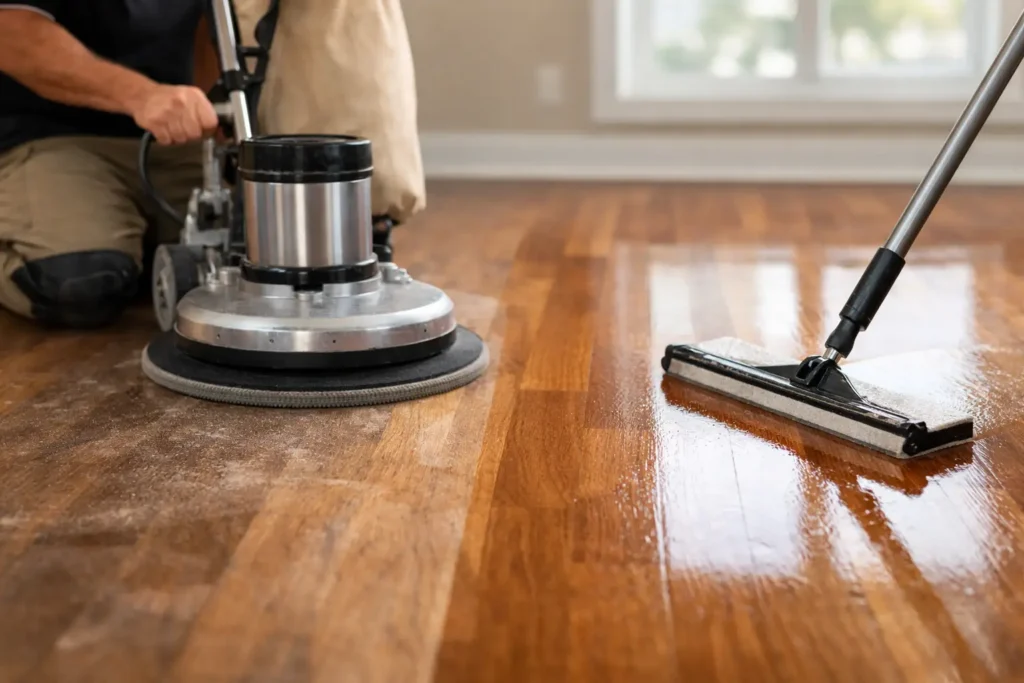
Your hardwood floors still look decent from across the room, but up close the finish tells a different story. Light scratches, dull traffic paths, a hazy look near the kitchen, maybe a few spots where the shine has worn away. This is the stage where many Connecticut homeowners ask the right question: should you screen and recoat hardwood floors, or is it time for full refinishing?
The answer depends on what is actually worn out – the protective finish, or the wood itself.
What it means to screen and recoat hardwood floors
A screen and recoat is a maintenance service for hardwood floors that still have a solid finish layer overall but are starting to lose their luster. The existing topcoat is lightly abraded so a fresh coat of finish can bond properly. That new coat restores sheen, improves protection, and helps extend the life of the floor.
This is not the same as sanding down to bare wood. It does not remove deep damage, change the stain color, or flatten significant wear patterns. It is best thought of as refreshing the finish before the floor slips into full refinishing territory.
For homeowners, that distinction matters. If your floor only needs the top layer renewed, a screen and recoat can be a smart way to preserve its appearance and delay a larger restoration project.
When a screen and recoat is a good fit
The best candidates are floors with surface-level wear. You may notice light scratches from pets, minor scuffing in hallways, or a finish that looks tired even after cleaning. If the wood underneath is still in good shape, recoating can restore the clean, finished look you remember.
This service often makes sense in homes with children, dogs, or heavy foot traffic, especially in entryways, family rooms, and kitchens where the finish takes the daily hit. It is also a practical option for landlords and property owners preparing a home for sale or turnover when the floors need improvement but not a complete reset.
A simple way to think about it is this: if the problem is mostly what you see on top of the wood, screening and recoating may work. If the problem is in the wood itself, it usually will not.
Signs your floors may need more than a recoat
Some floors are past the maintenance stage. If you can see gray or darkened wood fibers, black water stains, board damage, deep gouges, pet stains that have penetrated, or finish worn completely off in traffic lanes, a new topcoat alone will not correct it.
The same is true if you want to change the stain color or if old finish layers are failing unevenly. A recoat cannot erase those issues because it is not designed to cut deep enough to remove them.
In those cases, full refinishing is the better investment. For Connecticut families who want restored beauty without turning the home upside down, that is where professional dustless sanding becomes the clear advantage. Dustless Hardwood Floors LLC uses a proprietary dustless sanding system that leaves zero dust in the home, giving homeowners the benefits of a full floor restoration without the usual cleanup concerns. For families with kids, pets, or allergy sensitivities, that difference is hard to overstate.
Why timing matters more than most homeowners think
Waiting too long is one of the most expensive mistakes with hardwood floors. Once the finish wears through and the wood is exposed, everyday traffic starts damaging the boards themselves. At that point, what could have been handled with a maintenance coat often turns into a full sanding and refinishing job.
This is especially common in Connecticut homes through winter and spring. Salt residue, tracked-in grit, moisture near exterior doors, and busy indoor traffic can wear down finish faster than many people realize. Floors near mudrooms, kitchens, and back entries usually show it first.
Recoating at the right time protects the floor you already have. It is less about chasing shine and more about preserving the hardwood before visible wear turns into structural surface damage.
What a recoat can improve – and what it cannot
A screen and recoat can make a noticeable difference in the overall appearance of a room. It can revive a dull floor, reduce the look of fine surface scratches, and create a more even, refreshed sheen. In many homes, that alone makes the whole space feel cleaner, brighter, and better maintained.
What it cannot do is perform miracles on heavily damaged wood. Deep scratches will usually still be there. Color variation caused by sunlight will remain. Worn spots that have gone through the finish may still show. If there are repairs needed, board replacement or full sanding may need to come first.
That is why honest evaluation matters. Homeowners do best when they are shown the trade-off clearly: a recoat is a protective refresh, not a reset button.
Screen and recoat vs. dustless refinishing
If you are deciding between the two, the main question is how much correction your floors need.
A screen and recoat is ideal when the floor is fundamentally healthy and only the finish needs renewal. It is a maintenance-focused service. It helps protect the floor and improve appearance, but it does not remove meaningful damage.
Dustless refinishing is the right solution when the floor needs deeper restoration. It removes old finish, corrects more serious wear, and creates the opportunity for a fuller transformation. If the floor has visible damage, stain issues, uneven wear, or you want a fresh look, refinishing gives you that flexibility.
For many Connecticut homeowners, the deciding factor is not whether they want better floors. It is whether they can get those better floors without a stressful process. A zero-dust sanding system changes that conversation. It allows families to pursue a real restoration with clean results that are safer and more comfortable for children, pets, and allergy-sensitive households.
Why professional evaluation is worth it
Hardwood floors can be deceptive. A floor that looks “not too bad” may actually be worn through in key areas. Another floor that looks scratched may only need the finish refreshed. The difference is not always obvious from a quick visual check.
A professional can tell whether your existing finish will accept a recoat, whether contaminants from past cleaning products may interfere with adhesion, and whether isolated damage points to a larger refinishing need. That kind of assessment protects you from spending money on the wrong service.
This is also where working with a licensed and insured Connecticut hardwood flooring contractor matters. You want straightforward guidance, no hidden fees, and recommendations based on what will actually hold up in your home, not what sounds easiest in the moment.
Best homes and situations for this service
Screening and recoating tends to work especially well in newer hardwood installations, well-maintained older floors, and homes where owners want to stay ahead of wear. It is also a strong option for property managers maintaining occupied homes or preparing listings where appearance matters and the floors are not deeply damaged.
If you live in places like West Hartford, Manchester, Glastonbury, Windsor, or surrounding Hartford County communities, seasonal wear patterns can make regular floor maintenance more valuable than you might expect. Homes with active families often benefit most from catching finish wear early.
Still, every floor has its own history. Cleaning products, past coatings, moisture exposure, sun exposure, and pet activity all affect whether a recoat is appropriate.
How to know what to do next
If your floors are dull, lightly scratched, or losing their protective finish but the wood underneath still looks intact, it may be time to screen and recoat hardwood floors. If the boards show deeper wear, discoloration, water damage, or exposed bare wood, full refinishing is likely the better call.
The good news is that you do not have to guess. A professional inspection can tell you which option makes the most sense for your floors, your timeline, and your budget. And if full restoration is needed, modern dustless sanding makes that process far cleaner and easier than many homeowners expect.
Beautiful hardwood floors do not always need a complete overhaul. Sometimes they need timely protection. And when they need more, choosing a zero-dust refinishing specialist means you can restore the space you love without bringing the jobsite into your home.
If your floors are starting to show their age, this is the moment to act while you still have options.