
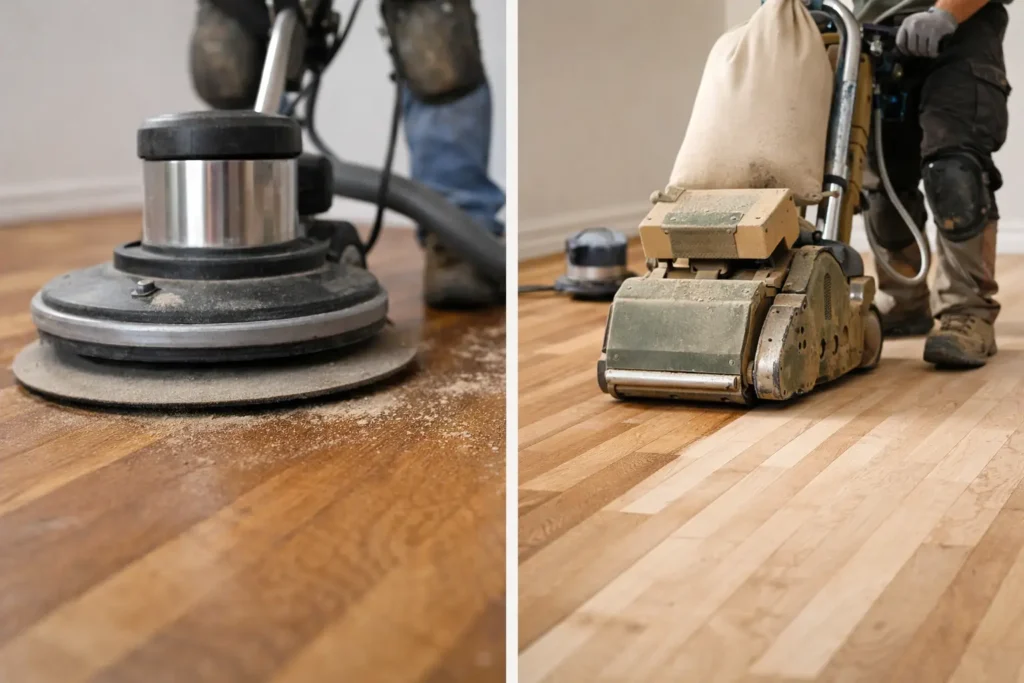
If your hardwood floors still look structurally sound but have lost their shine, the question usually is not whether to restore them – it is whether you need a screen and recoat or full refinishing. In the screen and recoat vs full refinishing decision, the right choice depends on how deep the wear goes, whether the color needs to change, and how much damage is already in the wood.
For Connecticut homeowners, this decision matters because choosing too little leaves you paying twice, while choosing too much can mean unnecessary cost. The good news is that a professional assessment can quickly tell you which service will actually restore the floor you have, not just temporarily improve the way it looks.
Screen and Recoat vs Full Refinishing: What is the Difference?
A screen and recoat is a maintenance service. The existing topcoat is lightly abraded so a new coat of finish can bond to the surface. It refreshes dull floors, improves sheen, and helps protect the wood from future wear, but it does not remove deep scratches, stains, pet damage, gray traffic lanes, or boards with finish worn down to bare wood.
Full refinishing is a restoration service. It removes the old finish, addresses wear that has gone deeper, and allows the floor to be brought back to a fresh surface before new finish is applied. This is the better fit when floors have visible damage, uneven color, water marks, heavy scratching, or outdated stain that the homeowner wants to change.
That difference is the heart of the decision. A screen and recoat works on the finish layer. Full refinishing works on the floor itself.
When a Screen and Recoat Makes Sense
If your floors are mostly in good condition and the problem is loss of luster, a screen and recoat can be a smart, cost-conscious option. Many homeowners in West Hartford, Manchester, Glastonbury, and surrounding Hartford County towns choose this service when the finish looks tired but the wood underneath is still healthy.
This option usually makes sense when you see light surface scratches, minor scuffing, and a dull appearance in high-traffic areas. It is also a good fit when you want to extend the life of your floor before damage becomes more serious. Done at the right time, it can help delay the need for a full refinish.
What it will not do is erase damage that has already cut through the finish. If you can see black marks, water staining, exposed raw wood, pet stains, or deep gouges, a recoat alone will not solve the problem. It may make the floor shinier, but it will not make the damage disappear.
When Full Refinishing Is the Better Investment
Full refinishing is worth it when your floor needs a real reset, not just a refresh. If the finish is worn away in traffic paths, if scratches are obvious from across the room, or if the color looks uneven and dated, this is usually the right path.
It is also the better choice if you want to change stain color. A screen and recoat cannot turn orange-toned oak into a more current medium brown or natural matte look. If the goal is transformation, not maintenance, refinishing gives you that flexibility.
For property owners preparing a home for sale or upgrading rental units, full refinishing can also make more financial sense when the floor condition is limiting the appeal of the space. Freshly refinished hardwood often changes the way a room feels immediately – cleaner, brighter, and more cared for.
The Biggest Mistake Homeowners Make
The most common mistake is choosing a screen and recoat for a floor that is already past that stage. Homeowners understandably want the simpler service, but if the finish has broken down too far, recoating will not hide the wear. You end up spending money and still seeing the same damage lines, dark spots, or rough areas.
The second mistake is waiting too long for maintenance. Floors that could have been protected with a timely recoat sometimes deteriorate until full refinishing becomes the only real option. Neither choice is wrong on its own. The problem is choosing the wrong one for the current condition of the floor.
How to Tell Which Service Your Floors Need
A few visual clues can help. If the floor still has an even color and most scratches look light and surface-level, a screen and recoat may be enough. If the floor looks flat rather than damaged, that is another sign the finish may simply need to be renewed.
If you notice discoloration, rough wood fibers, deep marks, edge wear near kitchens or entryways, or old coating failure, full refinishing is usually the more reliable answer. The same goes for floors with previous waxes, certain cleaning residue issues, or patchy wear patterns that would keep a new coat from bonding evenly.
That is why an on-site evaluation matters. Photos can help, but hardwood floors often tell a different story in person, especially under natural light.
Cost, Longevity, and Value
Screen and recoat is typically the lower-cost service upfront because it involves less restoration work. For floors that qualify, it can be an excellent value. It restores clarity, improves protection, and helps homeowners maintain a beautiful floor without overcommitting to a full refinish before it is needed.
Full refinishing costs more because it is more comprehensive, but the result is also more dramatic. You are not just renewing gloss. You are restoring the floor’s surface and, in many cases, the entire look of the room.
From a long-term value standpoint, the better option is the one that actually matches the condition of the floor. A lower initial price is not a better value if the floor still looks worn afterward.
Why the Process Matters as Much as the Service
For many homeowners, the hesitation is not only about price. It is about what the project will feel like inside the home. Families with kids, pets, or allergy concerns want beautiful floors, but they also want a clean process that feels safe and manageable.
That is where professional dustless hardwood refinishing stands apart. At Dustless Hardwood Floors LLC, our proprietary dustless sanding system leaves zero dust in the home. For full refinishing, that means homeowners can restore heavily worn floors without turning the house into a cleanup project. The result is a cleaner, more comfortable experience that is especially important for families, pet owners, and allergy-sensitive households across Connecticut.
This matters even if you are still deciding between services. A floor contractor should not just recommend the right treatment. They should deliver it in a way that protects your living environment and makes the process easier from start to finish.
Screen and Recoat vs Full Refinishing for Connecticut Homes
Connecticut homes often have real hardwood worth saving, from older oak floors in classic colonials to newer wood floors in busy family homes. Seasonal moisture changes, winter grit, pets, and daily traffic can all affect how those floors wear over time. Some floors simply need a protective refresh. Others need a full restoration to bring back their beauty and strength.
The right answer is rarely based on age alone. A ten-year-old floor with heavy wear may need refinishing, while an older floor that has been well maintained may only need a recoat. The better question is not how old the floor is. It is how far the wear has gone.
What to Expect From a Professional Recommendation
A trustworthy contractor should explain why your floor qualifies for one service over the other. If a screen and recoat is enough, they should say so clearly. If full refinishing is necessary, they should show you the wear patterns or damage driving that recommendation.
Homeowners deserve straightforward advice, transparent pricing, and results that make sense for the condition of the floor. That is especially true when the project is happening inside an occupied home. Licensed and insured professionals should make the process feel clear, clean, and predictable.
If you are weighing screen and recoat vs full refinishing, the smartest next step is not guessing based on cost alone. It is getting your floors evaluated by a local expert who can tell you what will truly restore them and what will not. The best hardwood floor project is the one that leaves you with beautiful results, strong protection, and a home that still feels comfortable every step of the way.